
Close Menu
Alpha Dad ModeAlpha Dad Mode
    What's Hot

    Table Saw Rip Fence​: Achieve Perfect Cuts Safely

    April 19, 2026

    Find Your Ideal Project Turntables

    April 19, 2026

    Carhartt WIP Detroit Jacket​: Your 2026 Style Guide

    April 19, 2026
    Facebook X (Twitter) Instagram
    Alpha Dad ModeAlpha Dad Mode
    • Home
    • Parenting
    • Health
    • Finance
    • lifestyle
    • Sex & Relationships
    • Dad Gear
    • DIY
    Alpha Dad ModeAlpha Dad Mode
    Home - Uncategorized - Table Saw Rip Fence​: Achieve Perfect Cuts Safely
    Uncategorized

    Table Saw Rip Fence​: Achieve Perfect Cuts Safely

    The Dad TeamBy The Dad TeamApril 19, 2026No Comments
    Facebook Twitter Pinterest LinkedIn WhatsApp Reddit Tumblr Email
    Share
    Facebook Twitter LinkedIn Pinterest Email

    You can spot a bad table saw rip fence before you can usually explain it. The board starts straight, then drifts. One side of a shelf panel ends up a hair wider than the other. You dry-fit a simple garage bookshelf or a toy bin for the kids, and the pieces technically go together, but nothing feels crisp.

    Most dads blame the blade first. Sometimes that’s fair. Blade choice matters, and this guide on choosing the best blade for every type of cut is worth a look if your saw leaves burn marks or rough edges. But in a home shop, the actual troublemaker is often the fence.

    A solid fence turns a table saw into a repeatable, trustworthy machine. A sloppy one turns every cut into a negotiation. If you're building out a garage workspace, get your setup right from the start, including a sturdy bench like the ideas in this guide on how to build a workshop bench.

    Why Your Rip Fence Is Your Saw’s Most Critical Part

    Saturday morning in the garage, you finally get an hour to rip parts for a toy chest or a set of shop shelves. The blade is sharp, the plywood is decent, and the measurements are right. Then the cuts still come out inconsistent. In a home shop, that usually points back to the fence.

    The table saw rip fence controls whether the saw cuts predictably or keeps asking you to compensate. If it locks a little out of parallel, flexes under pressure, or lands in a slightly different spot each time, every project gets harder than it should be.

    A female woodworker examines a piece of wood in her workshop while working near a table saw.

    The fence sets the whole cut up

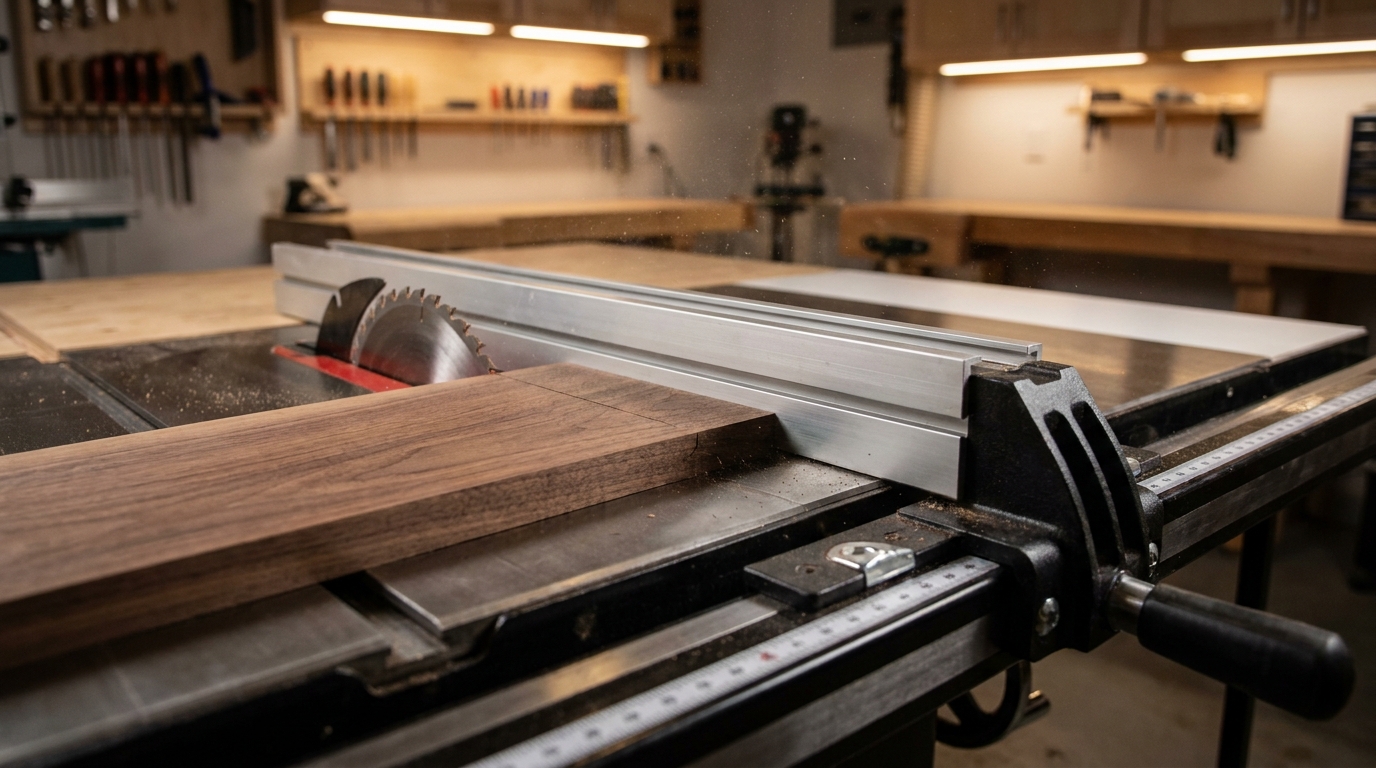
    A rip fence does two jobs at once. It sets the width of the rip, and it keeps the stock tracking in a straight line beside the blade. If either one is off, you see it fast in the work.

    That shows up in familiar weekend-shop headaches. One shelf panel ends up a hair wider at the back than the front. Face-frame parts need trimming just to match each other. A simple batch of drawer sides turns into extra setup, extra measuring, and extra frustration.

    I’d put money into a dependable fence before I’d chase a fancier accessory. A good blade still matters, and choosing the best blade for every type of cut helps a lot, but blade quality cannot fix a fence that wanders. A modest contractor saw with a straight, repeatable fence can produce better results than a pricier saw with a sloppy one.

    For a weekend DIY dad, that repeatability is the primary payoff. You measure once, lock the fence, and cut your whole stack without second-guessing every board.

    Bad fence behavior affects safety fast

    Accuracy is only half the story.

    If the fence points the wood into the blade instead of guiding it cleanly past, the board can bind, burn, or lift. That is how a routine rip starts feeling tense. The U.S. Consumer Product Safety Commission tracks thousands of table saw injuries each year, which is a good reminder that setup matters as much as technique: https://www.cpsc.gov/Safety-Education/Safety-Guides/Home/Table-Saw-Safety

    In a garage shop, the trade-offs are real. Many home saws are lighter, rails can get bumped, and setups often live on mobile stands instead of a dead-flat cabinet base. If your saw shares space with bikes, storage bins, and yard tools, the fence takes more abuse than it would in a dedicated shop.

    That’s why I like simple checks and solid support around the saw. A flat outfeed surface or sturdy workshop bench build helps keep stock from twisting as it leaves the blade, which takes strain off both you and the fence.

    One practical rule has saved me more than once. If you feel like you need to steer the board during the cut, stop and check the fence before making the next rip.

    Decoding the Main Types of Table Saw Fences

    Not every fence is built for the same shop.

    Some are made for a heavy cabinet saw that never moves. Some are designed for a folding jobsite saw you roll out to the driveway and tuck away before dinner. Some are serviceable. Some are frustrating from day one.

    One thing applies across all of them. A fence has to lock securely, stay aligned, and move without fighting you. If you care about durable handles, striking tools, and wood choice in the shop more broadly, this piece on the best wood for axe handle is another good example of how material and design choices change performance.

    Rip Fence Type Comparison

    Fence Type Best For Accuracy Cost
    Biesemeyer style Stationary garage saws, heavier work High Higher
    T-square fence Most home shops and contractor saws High Mid to higher
    Rack and pinion fence Portable and jobsite saws Good to very good when well-made Mid

    Biesemeyer style fence

    This is the bruiser.

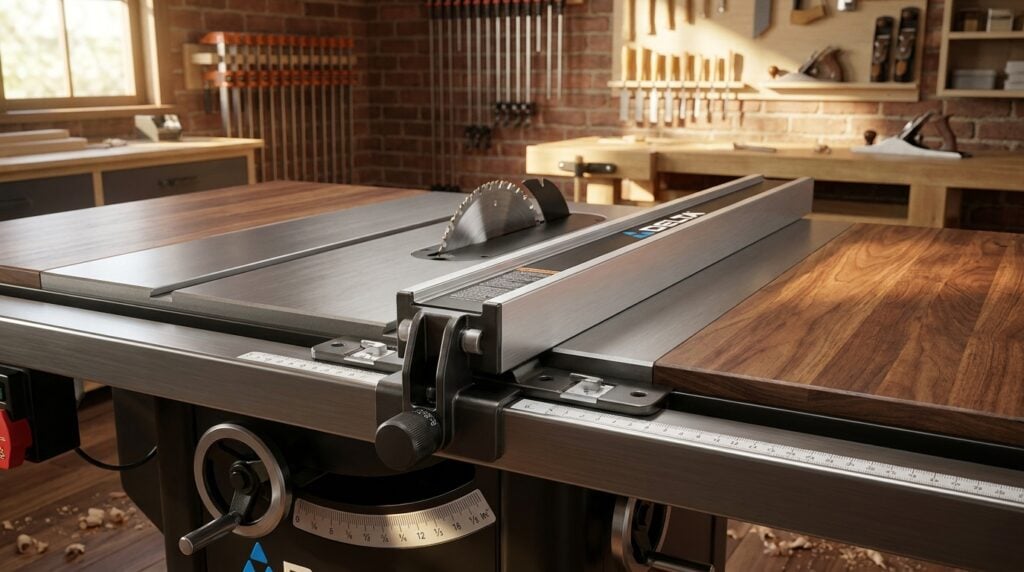
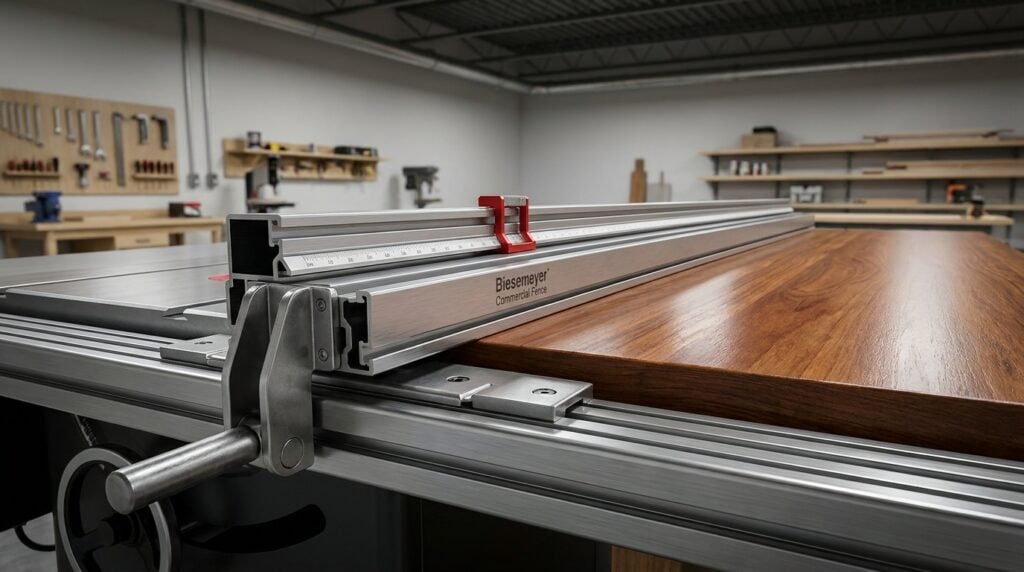
    A Biesemeyer-style fence usually locks from the front and rides on a stout rail. The appeal is simple. Once it’s set up right, it feels planted. You slide it, lock it, and it stays where you told it to stay. That makes it a strong fit for dads who’ve got a dedicated garage saw and want a long-term upgrade instead of a workaround.

    The trade-off is size and weight. This style makes the most sense on a saw that lives in one place. If your saw folds up between uses, a big heavy fence can feel like too much hardware for the job.

    T-square fence

    This is the all-rounder.

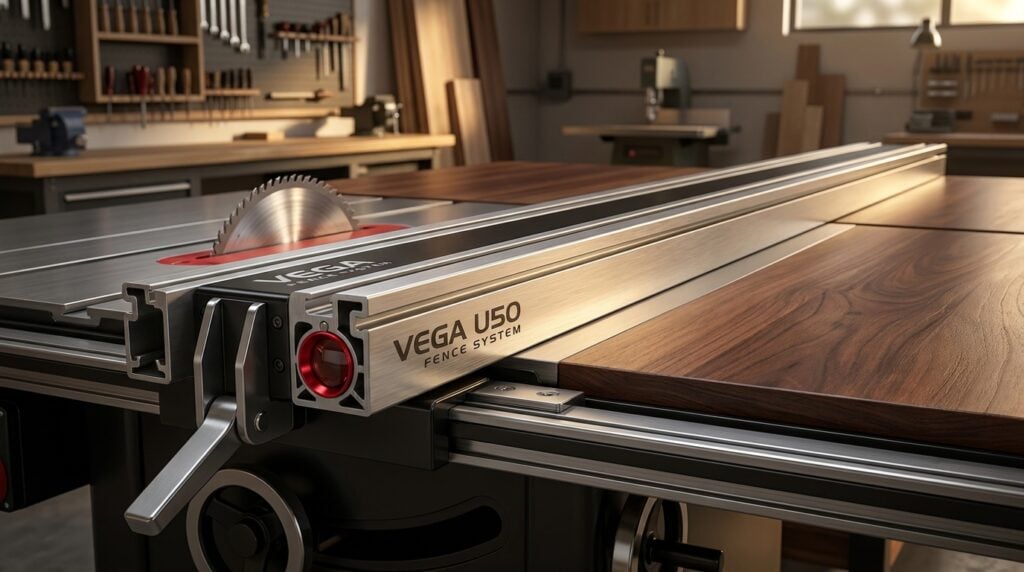
    T-square fences are common because they balance accuracy, simplicity, and ease of use. For many home shops, this is the sweet spot. You get a familiar front-locking feel, solid repeatability, and easier alignment than cheaper stamped systems.

    A good T-square fence feels predictable. A bad one feels “almost there” forever. That’s the difference between enjoying a Saturday build and burning half the morning checking every setting twice.

    The best fence for a home shop usually isn’t the most complicated one. It’s the one you can trust without second-guessing.

    Rack and pinion fence

    This is the practical pick for portable saws.

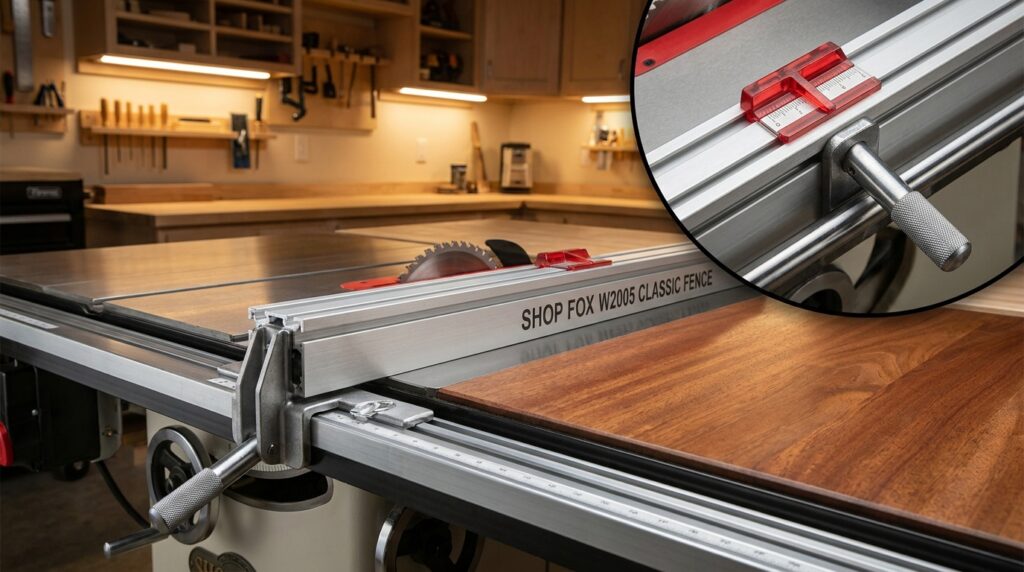
    Rack and pinion systems use gears to move both ends together. On a compact saw, that’s a smart solution because it helps the fence stay square as you adjust it. If your saw gets stored against the wall or loaded into a truck, this style often makes more sense than trying to retrofit a full-size heavy fence onto a small frame.

    The downside is that it’s more tied to the saw’s original design. When it works well, it’s fast and tidy. When it gets sloppy, you usually don’t “upgrade around it” as easily as you can with a more traditional rail-and-fence setup.

    Which one wins

    For a permanent garage setup, Biesemeyer-style and T-square fences are hard to beat.

    For a portable jobsite saw, rack and pinion is often the better answer because it matches how the saw is built and used. The winner isn’t universal. It depends on whether your saw lives in one place, how often you reset it, and whether your projects lean toward rough framing, furniture parts, or repeatable home-shop work.

    How to Choose the Right Rip Fence Upgrade

    If you’re shopping for a fence upgrade, ignore the marketing language first. Look at the parts that decide whether the fence will still be accurate after the honeymoon period.

    A professional woodworker in his workshop adjusting a high-precision table saw fence system on a workbench.

    A strong fence doesn’t earn its keep on the first cut. It earns it after repeated adjustments, sheet-good rips, hardwood pushes, and the normal bumps of a garage shop. If you’re building out your workshop kit at the same time, this roundup of best tools for dads fits the same practical mindset.

    Check the lockup first

    The lockup matters more than fancy scale markings.

    When you clamp the fence down, it should feel positive, not vague. You shouldn’t be able to nudge the back end sideways with light hand pressure. If the rear of the fence can drift under load, the board can start rubbing where it shouldn’t.

    Look for these signs:

    • Firm engagement: The handle should lock with authority, not feel mushy.
    • No rear wiggle: Push on the outfeed end after locking. Movement is a red flag.
    • Repeatable position: Release, move, relock, and verify that the fence returns consistently.

    Inspect the rail and spine

    In this, pro-grade designs separate themselves from bargain ones.

    Professional-grade fences feature cast iron construction and extruded aluminum faces, with the fence spine being stout enough not to flex. The rail itself should measure 1 ½" square tube on professional models. Success in fence performance depends on these cumulative specifications; deviation from precision standards in any component cascades into reduced cut accuracy as described in this fence assembly reference.

    That sounds technical, but the takeaway is simple. Stiff parts stay aligned better. Flexy parts don’t.

    Don’t ignore face flatness

    A fence can lock hard and still cut badly if the face isn’t flat.

    The board rides that surface for the full cut. If the face is bowed, twisted, or rough, your workpiece won’t register consistently. That’s when you get subtle taper, extra friction, or a cut that looks fine until you try to assemble the project.

    Buy for stiffness, flatness, and lockup. Smooth paint and flashy knobs don’t fix a weak fence.

    Compatibility beats wishful thinking

    Not every fence belongs on every saw.

    Before buying, check the saw size, table width, rail mounting points, and whether the upgrade is meant for your saw class. A heavy retrofit on a light base can create a mismatch. A compact saw may be better served by improving alignment and adding a sacrificial face instead of forcing a full replacement.

    The 5-Minute Rip Fence Alignment Check

    Most DIY fence advice stops at building or buying. The part that gets neglected is the regular check that keeps the fence safe to use.

    That gap matters. Many resources don’t adequately address regular alignment verification for non-professionals, and improper fence alignment directly increases kickback risk, which is why this is such an important habit for beginners and weekend woodworkers alike as noted in this alignment discussion.

    A woodworker uses a dial indicator to calibrate a table saw rip fence for precise cutting.

    A lot of dads assume alignment means special gauges and a full afternoon. It doesn’t. You can do a solid check with a combination square, a straightedge, or feeler gauges if you have them. If you’ve ever handled simple maintenance tasks around the house, like this guide on garage door sensor cleaning, you already understand the principle. Small checks prevent bigger problems.

    Use the miter slot as your reference

    This is the key move.

    Don’t use the blade as your main reference for the fence. Use the miter slot. The slot is the fixed reference built into the saw top. Blades can have runout, tooth set, pitch buildup, or slight wobble that makes them a less trustworthy measuring point for this check.

    You want the fence parallel to the saw’s fixed geometry first.

    Set your fence to the machine, not to whatever one blade happens to be doing today.

    The quick check

    Use this routine before a project run, after moving the saw, or anytime a cut feels off.

    1. Unplug the saw
      Start there every time. Fence checks put your hands close to the blade area.

    2. Clean the rails and fence faces
      Dust packed into the rail or clamping surface can fake an alignment problem. Wipe the front rail, rear contact point, and fence face.

    3. Lock the fence near the miter slot
      Bring the fence close enough to measure easily, but don’t let it touch your square or gauge.

    4. Measure at the front
      Use a combination square registered in the miter slot. Slide the rule to just meet the fence face.

    5. Measure at the rear
      Without changing the square setting, move to the back and compare the gap.

    6. Adjust if needed
      If the rear is closer to the blade side than the front, don’t cut until you fix it. On many fences, a small adjustment at the mounting bolts or rear contact point is all it takes.

    What “good enough” looks like in a home shop

    For weekend work, consistency matters more than perfection theater.

    If your fence reads the same front and rear against the miter slot and stays that way after you release and relock it, you’re in good shape. The bigger test is repeatability. Lock it down in a few different positions and check again. A fence that aligns only in one spot is still a problem.

    Make it a habit

    Fence checks shouldn’t feel like punishment. They should feel like sharpening a pencil before you mark a line.

    Do it monthly if you use the saw regularly. Do it after transporting a jobsite saw. Do it after a hard bump, a frustrating cut, or anytime the fence suddenly feels different.

    Essential Rip Fence Safety and Simple Jigs

    You are halfway through a Saturday cabinet project, the kids are in and out of the garage, and one board suddenly starts to pinch as it passes the blade. That is the kind of moment that reminds a weekend DIY dad what the rip fence is really doing. It is not just setting width. It is helping you control the cut.

    A table saw fence supports safe, repeatable ripping only when the stock stays flat to the table and tight to the fence face. If the board twists, if the reference edge is rough, or if the fence setup encourages the offcut to bind, the saw can punish you fast. Kickback is the risk everyone talks about for good reason, and it usually starts with a small setup mistake, not some dramatic shop disaster.

    A woodworker wearing safety gear uses a table saw with a rip fence to cut wood.

    Fence habits that actually matter

    In a home garage shop, a few habits do more for safety than a pile of fancy accessories:

    • Start with a straight reference edge: If the edge against the fence is bowed or wavy, fix that first with a jointer, track saw, or a simple straight-line rip jig.
    • Keep steady pressure where it counts: Press the board against the fence and down to the table. Do not shove sideways so hard that the stock twists.
    • Finish with a push stick or push block: Your hand should not be the thing passing close to the blade at the end of the cut.
    • Support long boards: Roller stands, an outfeed surface, or even a well-placed sawhorse keeps the stock from dropping and pulling away from the fence.
    • Stop if the cut feels wrong: Burning, chatter, drifting, or pinching means something needs attention before the next pass.

    That last one matters more than many hobbyists admit. If a board feels squirrelly, I do not try to muscle it through and hope for the best. I shut the saw off and sort out the cause.

    Build a simple sacrificial fence

    One of the most useful fence add-ons for a dad shop is a sacrificial face you can make in an afternoon.

    It is just a straight, replaceable piece of wood or MDF attached to your main fence so you can cut close to the blade without chewing up the factory fence. It also helps with thin rips, bevel work, and zero-clearance style support. If your saw uses an aftermarket system or a jobsite fence with accessory holes, purpose-built versions exist from TSO Products for Dewalt full-size jobsite table saws.

    Most home shops do not need the store-bought version.

    A shop-made one works well if it is flat, mounted securely, and easy to replace. Straight plywood works. MDF works too if you keep it dry and avoid overtightening fasteners near the edges.

    A simple garage-shop version

    This is the kind of jig I like because it solves a real problem without eating up half a day:

    • Cut a straight auxiliary face a little taller than your factory fence.
    • Attach it with knobs, machine screws, clamps, or a simple L-block setup that does not interfere with locking the fence.
    • Confirm the fence still locks solidly before turning on the saw.
    • Raise the blade slowly into the sacrificial face only as much as the cut requires.

    The goal is a jig you trust. Not a pretty one.

    Common mistakes

    The usual problems are boring, and that is exactly why they catch people. A bowed auxiliary face transfers that error right into the cut. Hardware that sticks out can snag stock or keep the fence from locking fully. A jig that takes ten minutes to install often gets used only once, then forgotten on a shelf.

    Keep these shop-made fence jigs simple, visible, and easy to inspect. In a weekend garage setup, the best jig is the one you can build after lunch, check in thirty seconds, and use safely every time.

    Table Saw Rip Fence FAQs for the DIY Dad

    Can I use the miter gauge and rip fence together

    Yes, but only in a very specific way.

    The warning needs nuance. For repeatable cuts, using the rip fence as a stop block is safe, but not as a guide at the same time as the miter gauge. The workpiece should register against the stop, then be free of the fence before it reaches the blade. That positive registration method is the safe way to batch out matching parts as explained in this guidance on fence setup decisions.

    Is a fence upgrade worth it for a hobbyist

    Usually yes, if your current fence drifts, flexes, or won’t relock consistently.

    A better fence improves cut quality fast. It also removes a lot of frustration from simple weekend builds. If your saw already has a decent fence, though, alignment, cleaning, and a sacrificial face may deliver more value than a full replacement.

    How do I know if an aftermarket fence will fit my saw

    Start with the saw size and mounting pattern.

    Check whether the fence is meant for a full-size stationary saw, a contractor saw, or a compact jobsite saw. Then confirm rail length, table width, and how the system mounts. Don’t assume “universal” means painless.

    What’s the first sign my fence needs attention

    Usually it’s not dramatic.

    You’ll notice burn marks on one side of a rip, repeated cuts that don’t match, or a board that feels like it wants to pinch or drift during the cut. When that happens, stop and check alignment before you blame the blade or your technique.


    If you like practical, no-nonsense guides that help you build better, work safer, and get more done in the garage without wasting your weekend, Alpha Dad Mode is worth a look. It’s built for dads who want useful skills, better gear decisions, and real-world advice they can use.

    diy dad projects table saw guide table saw rip fence woodworking safety workshop tools
    Share. Facebook Twitter Pinterest LinkedIn Tumblr Telegram Email
    The Dad Team
    • Website

    Related Posts

    Find Your Ideal Project Turntables

    April 19, 2026

    Carhartt WIP Detroit Jacket​: Your 2026 Style Guide

    April 19, 2026

    Best collapsible trunk organizer​ Picks for 2026

    April 18, 2026
    Leave A Reply Cancel Reply

    Recent Posts
    • Table Saw Rip Fence​: Achieve Perfect Cuts Safely
    • Find Your Ideal Project Turntables
    • Carhartt WIP Detroit Jacket​: Your 2026 Style Guide
    • Best collapsible trunk organizer​ Picks for 2026
    • Neon Air Max 95​ Review: Worth the Hype in 2026?
    About Us

    Alpha Dad Mode is built for fathers who refuse to settle for average. We believe being a great dad starts with becoming the strongest version of yourself—physically, mentally, and emotionally. Our mission is to equip men with practical tools, honest guidance, and real-world motivation to lead their families with confidence, discipline, and integrity.

    Email Us: support (at) alphadadmode.com

    Our Picks

    Table Saw Rip Fence​: Achieve Perfect Cuts Safely

    April 19, 2026

    Find Your Ideal Project Turntables

    April 19, 2026

    Carhartt WIP Detroit Jacket​: Your 2026 Style Guide

    April 19, 2026
    Most Popular

    Table Saw Rip Fence​: Achieve Perfect Cuts Safely

    April 19, 2026

    What is the Worst Age for Divorce for Children (What Studies Really Say)

    January 28, 2026

    10 Actionable Date Night Ideas at Home in 2026

    January 28, 2026
    © 2026 Alpha Dad Mode. Designed by Alpha Dad Mode.
    • Home

    Type above and press Enter to search. Press Esc to cancel.