


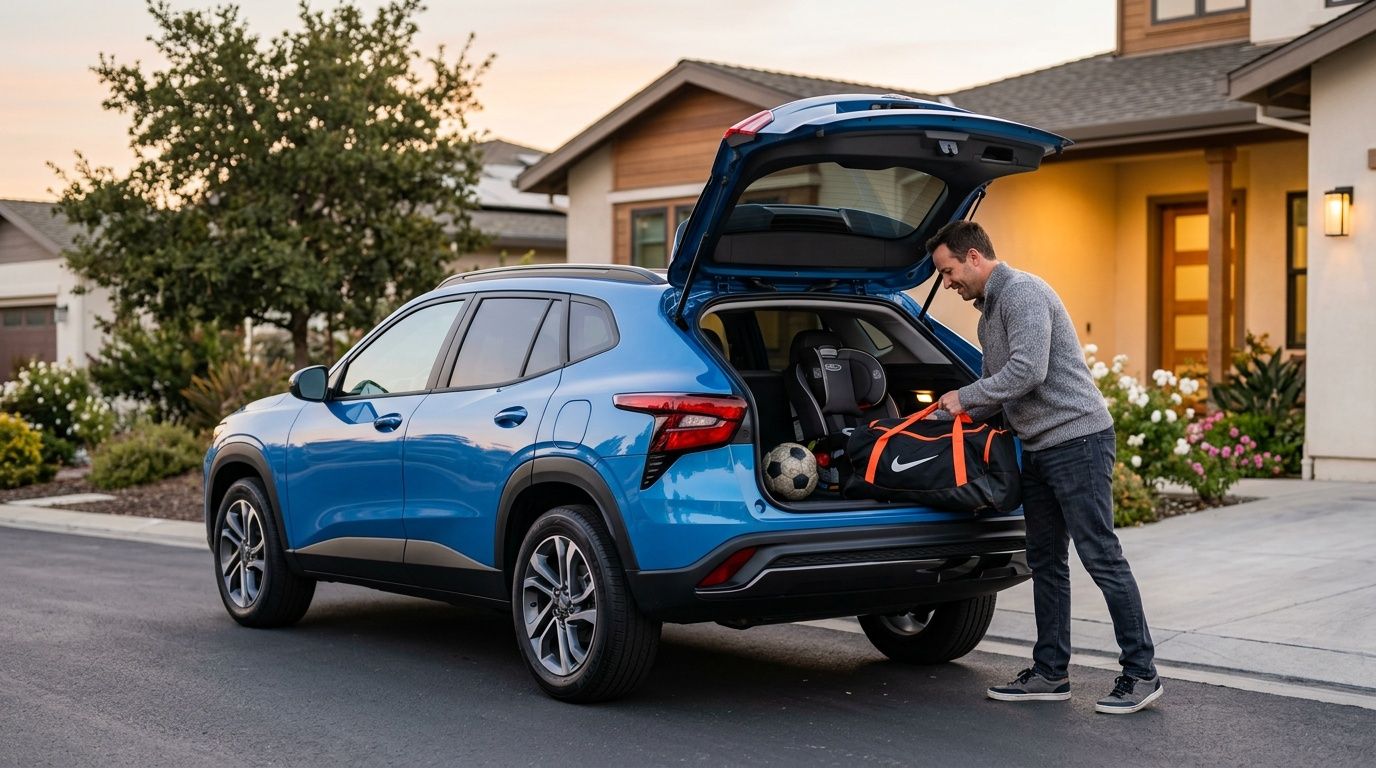
If you’re staring at dealer photos of a blue Chevy Trax and wondering whether it’s the smart buy or just the cheap buy, the short answer is yes, for the right driver. It makes a strong case if you want a modern-looking small SUV with useful tech, solid efficiency, and a price that doesn’t punish your budget.
The catch is simple. The Trax works best as an everyday family-and-commute vehicle, not as the answer to every need. If your life involves bulky kid gear, frequent full-load highway runs, or rough winter conditions where you want AWD, you should look harder before signing.
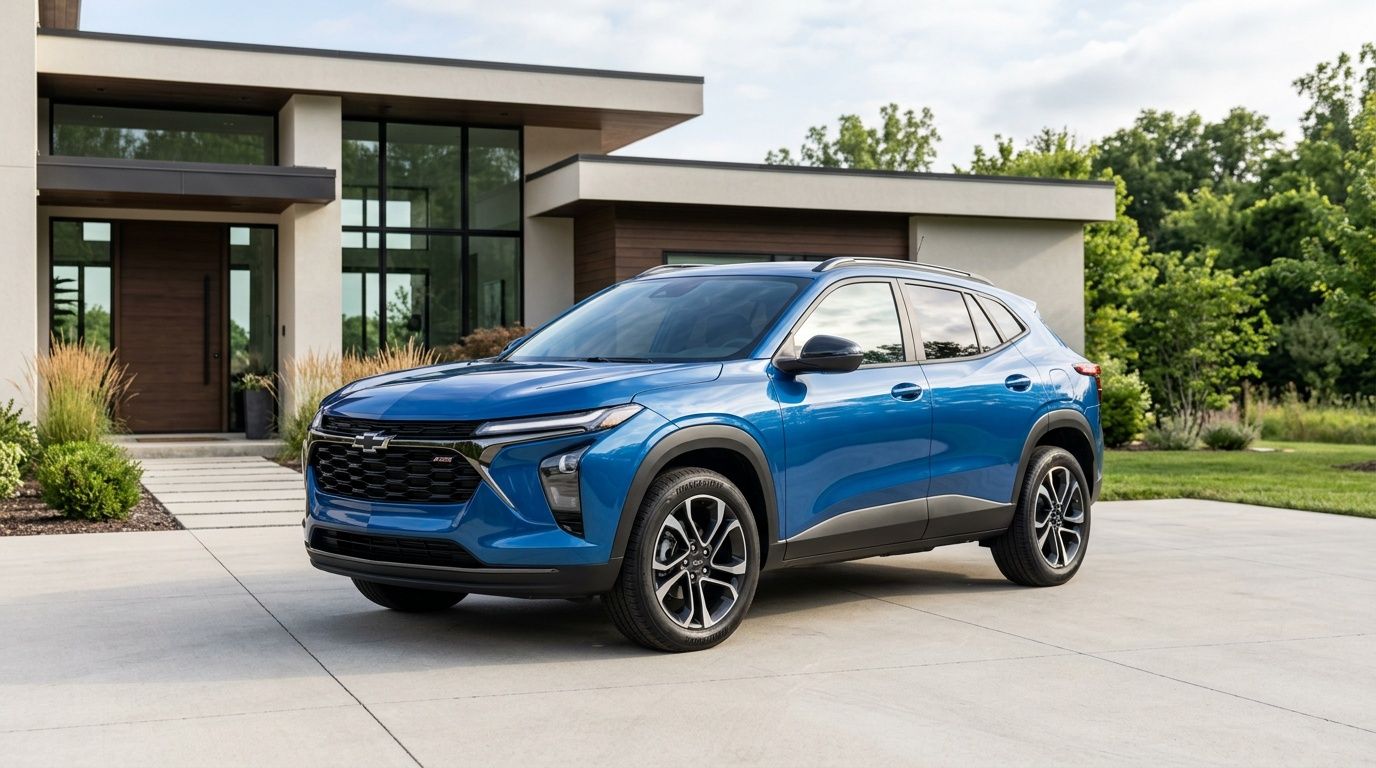
A lot of men land on the Trax for the same reason. They want something that looks sharp, fits a realistic monthly budget, handles workdays and errands without drama, and doesn’t feel like surrendering to a boring appliance.
That’s where this review matters. The blue Chevy Trax has real appeal, especially in shades like Marina Blue Metallic and Fountain Blue, but color alone doesn’t make it a smart purchase. Daily drivability, stroller space, long-term value, and the new platform’s reliability matter a lot more.
What Exactly Is the Chevy Trax
The Chevy Trax is a front-wheel-drive subcompact SUV built for buyers who want SUV practicality, better seating height, and modern cabin tech without moving into a much higher price bracket.
Simple definition: The Chevy Trax is a small, affordable crossover that gives you useful cargo room and strong everyday value.
The current Trax matters because Chevrolet changed the formula with the latest generation. It’s no longer just a basic entry-level crossover. It now feels more like a budget-conscious urban family vehicle with better style, better screen tech, and more usable interior room than many people expect.
Chevrolet positions it as a practical choice, and the numbers support that. The 2026 Trax starts around $21,700, returns an EPA-estimated 30 mpg combined, and offers 54.1 cubic feet of max cargo space according to Chevrolet’s official Trax page at chevrolet.com/suvs/trax.
Who the Trax is really for
The Trax makes the most sense for drivers who want:
- Low entry cost
- Good fuel economy
- A compact footprint for city parking
- Enough space for groceries, work gear, and normal family duty
- Modern infotainment without paying for a larger SUV
It makes less sense if you expect it to behave like a bigger crossover.
What the blue Chevy Trax says about the vehicle
A blue Chevy Trax is still the same vehicle underneath. What changes is the vibe. Blue gives the Trax a less rental-fleet look and more personality, especially on trims with sportier styling.
The Trax is best understood as a value-first small SUV that looks more expensive than it is.
Performance Fuel Economy and Driving Feel
The Trax uses a 1.2-liter inline-3 that makes 137 hp and 162 lb-ft of torque, with torque arriving at 2,500 rpm, and Edmunds lists a 0-60 mph time of 8.8 seconds while also noting a combined 30 MPG rating at edmunds.com/chevrolet/trax/2026/suv/features-specs.
How it feels in normal driving
Around town, the engine setup makes sense.
That low torque peak helps the Trax feel responsive when pulling away from lights, slotting into traffic, and handling the stop-start routine of school drop-offs, grocery runs, and commuter driving. It doesn’t feel fast, but it usually feels awake enough.
On a light throttle, it matches the mission well. This is a vehicle for real roads, not ego.
What works and what doesn’t
-
What works
- City response: The low-end torque helps in urban driving.
- Fuel use: A combined 30 MPG is a meaningful advantage for drivers stacking weekly errands.
- Easy manners: Small size and front-wheel-drive simplicity make it easy to place in traffic.
-
What doesn’t
- Loaded acceleration: With passengers and gear onboard, highway merging takes more planning.
- No AWD option: If you want extra traction as part of the package, this won’t be your SUV.
- Not a back-road toy: It’s competent, not exciting.
Direct answer
Is the blue Chevy Trax quick enough? Yes, for daily driving. No, if you expect strong reserve power with a full cabin and cargo area.
Practical rule: If most of your miles are commuting, errands, and family duty in town, the Trax powertrain is adequate. If you regularly drive long, fast highway stretches with a full load, it may feel thin.
For the kind of driver who cares about the drive itself, not just the destination, a small crossover like the Trax is best judged. It’s fine for scenic runs, but if your idea of a rewarding drive is carving up routes like the best driving roads in Wales, this isn’t the machine you buy for thrills.
Design Interior and Family Friendliness
Blue is one of the easiest ways to make the Trax stand out. On this shape, it works.
Marina Blue Metallic gives the SUV a cleaner, more youthful look. Fountain Blue pushes it a little further into playful territory. On a vehicle like this, that matters more than many buyers admit. A compact crossover can look anonymous fast. Blue helps the Trax avoid that.
Exterior appeal and everyday ownership
The smart part of choosing blue isn’t just style. It also gives the Trax a less stripped-down appearance, especially on trims with darker trim pieces and larger wheels.
From a practical angle:
- Blue looks intentional: The Trax comes across as chosen, not merely purchased.
- It suits the redesign: The newer body shape carries brighter colors well.
- It feels less generic: That matters if you want a budget vehicle that still has some personality.
I’d call that one of the strongest reasons to shop a blue Chevy Trax instead of defaulting to white, gray, or black.
Cargo space for real family use
The situation becomes more nuanced.
The Trax offers 54.1 cubic feet of max cargo space, but real-world family hauling can still get tight with larger kid gear in play. The same source notes that bulky items like double strollers can be a squeeze when the rear seats are occupied, while the Toyota Corolla Cross offers up to 66.8 cubic feet at spotlightepnews.com/all-new-2024-chevy-trax-bigger-better-and-cheaper-2.
That tells you something important. The Trax is practical, but it’s not magically roomy.
If you have one child, a compact stroller, and normal grocery duty, you’ll probably be fine. If you have two young kids, a big stroller, diaper bags, and sports gear, packing becomes more deliberate.
Child seat installation and passenger room
Parents should think beyond official capacity claims.
A vehicle can seat five on paper and still become annoying when you’re dealing with rear-facing seats, awkward buckles, and the daily routine of loading kids in a tight parking lot. Before you buy, review basic car seat safety guidelines and then test your actual seat in the Trax at the dealership.
A few practical observations matter here:
-
Rear-seat life matters more than brochure language
Bring your car seat. Don’t trust generic fit claims. -
Stroller-first thinking saves regret
Put your stroller in the cargo area before you decide the trunk is “big enough.” -
Adult passengers still count
If grandparents or taller friends ride often, check rear comfort with the front seats set for real adults, not for the sales demo.
A small SUV can feel spacious on a solo test drive and cramped the first Saturday you load it like a parent.
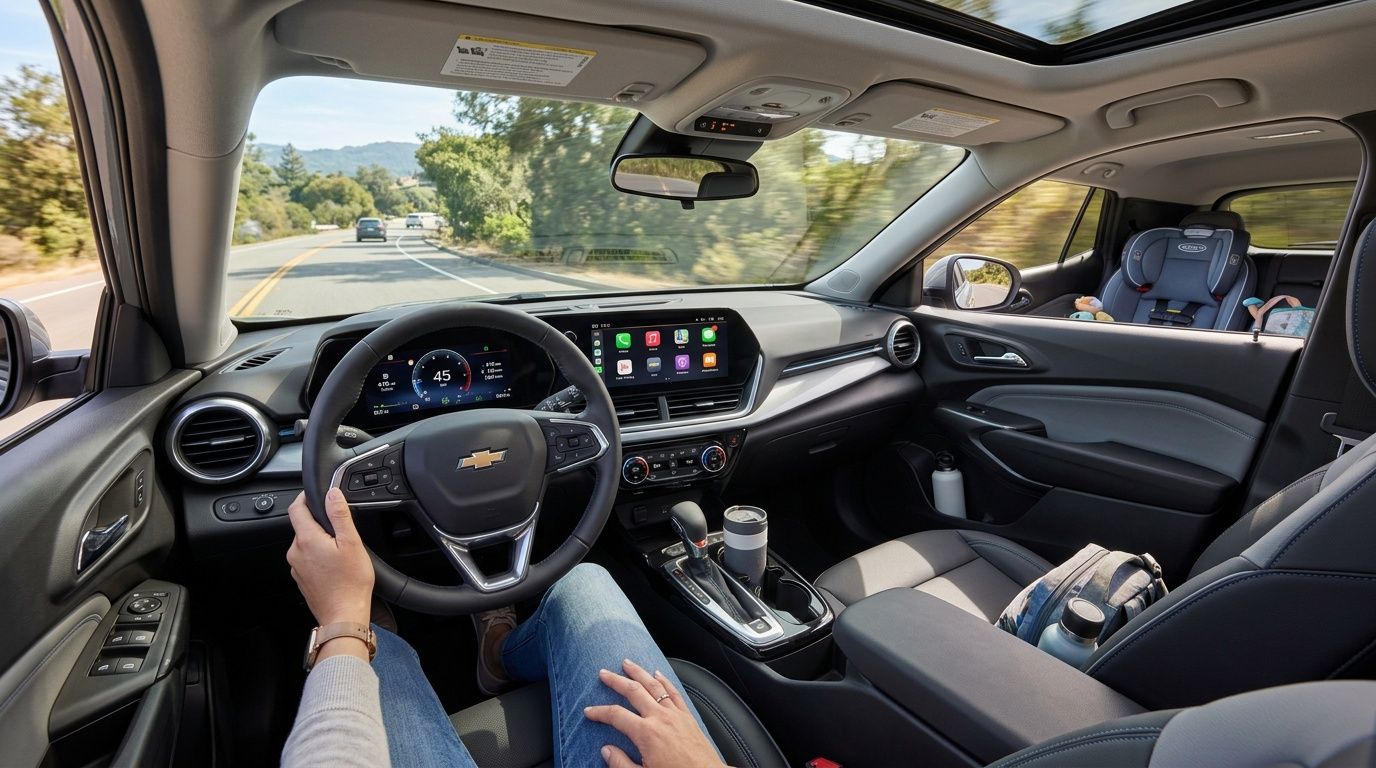
Interior tech and daily usability
The Trax’s cabin strength is usability. An available 11-inch touchscreen and wireless smartphone integration make the interior feel newer than the price suggests, and that’s one reason the vehicle lands well with practical buyers.
Direct answer
Is the blue Chevy Trax family-friendly? Yes, for smaller families and normal daily duty. No, if your routine regularly includes bulky child gear with all seats occupied.
2026 Chevy Trax Trims and Pricing
The 2026 Trax comes in five trims and ranges from about $21,600 for the LS to $25,300 for the top-tier RS, with Fountain Blue typically adding $395, according to the cited review at youtube.com/watch?v=nfU13prroac.
A lot of buyers overbuy trim. The Trax lineup is one of those cases where the best answer depends on whether you care more about appearance, comfort features, or just keeping the monthly payment down.
2026 Chevy Trax Trim Comparison
| Trim | Starting MSRP (est.) | Key Features | Best For |
|---|---|---|---|
| LS | $21,600 | Entry price, core Trax value | Budget-focused buyers |
| 1RS | Higher than LS | Sportier styling touches | Buyers who want a sharper look |
| LT | Mid-range | Better comfort and feature balance | Most shoppers |
| ACTIV | Higher trim | Distinct styling, popular Marina Blue pairing | Style-conscious daily drivers |
| RS | $25,300 | Top trim, stronger feature set, heated features on higher trims | Buyers who want the fullest package |
Which trim makes the most sense
Generally, the sweet spot is the trim that balances comfort and cost instead of chasing every appearance add-on.
- LS: Best if price is your top concern.
- LT: Usually the practical middle ground.
- ACTIV or RS: Better if the blue exterior is part of the appeal and you want the Trax to feel less basic.
If your household needs more room and a different format entirely, a bigger vehicle category may be worth considering before you get emotionally attached to a compact crossover. This look at a Chevy conversion van for sale shows how quickly “enough room” changes once family hauling becomes serious.
Takeaway: The best-value Trax trim is usually the one that gives you the cabin features you’ll use every day without pushing the price too close to larger alternatives.
Long Term Ownership Costs and Reliability
The Trax looks strongest on paper when you shop sticker price. Ownership is where you need to slow down and think.
Chevrolet positions the vehicle as a value buy, and the broader ownership picture helps explain why. Verified data lists a 5-year cost to own of $37,288 and says the Trax retains 48% of its value after five years, both tied to Chevrolet-based and review data cited earlier in the brief.
That’s the good side. The caution side is reliability.
What early reliability signals say
Early owner data from 2024 to 2025 models shows a rise in complaints about drivetrain vibrations and electrical issues, and J.D. Power’s 2025 study ranked the Trax below the segment average for dependability, as summarized in the cited source at blog.smithmotorsoflowell.com/2020/09/15/frequently-asked-questions-about-the-chevy-trax.
That doesn’t mean every Trax is trouble. It does mean the new-generation model hasn’t earned the kind of “buy it and forget it” reputation that some shoppers assume from the badge alone.
Resale value and the blue color factor
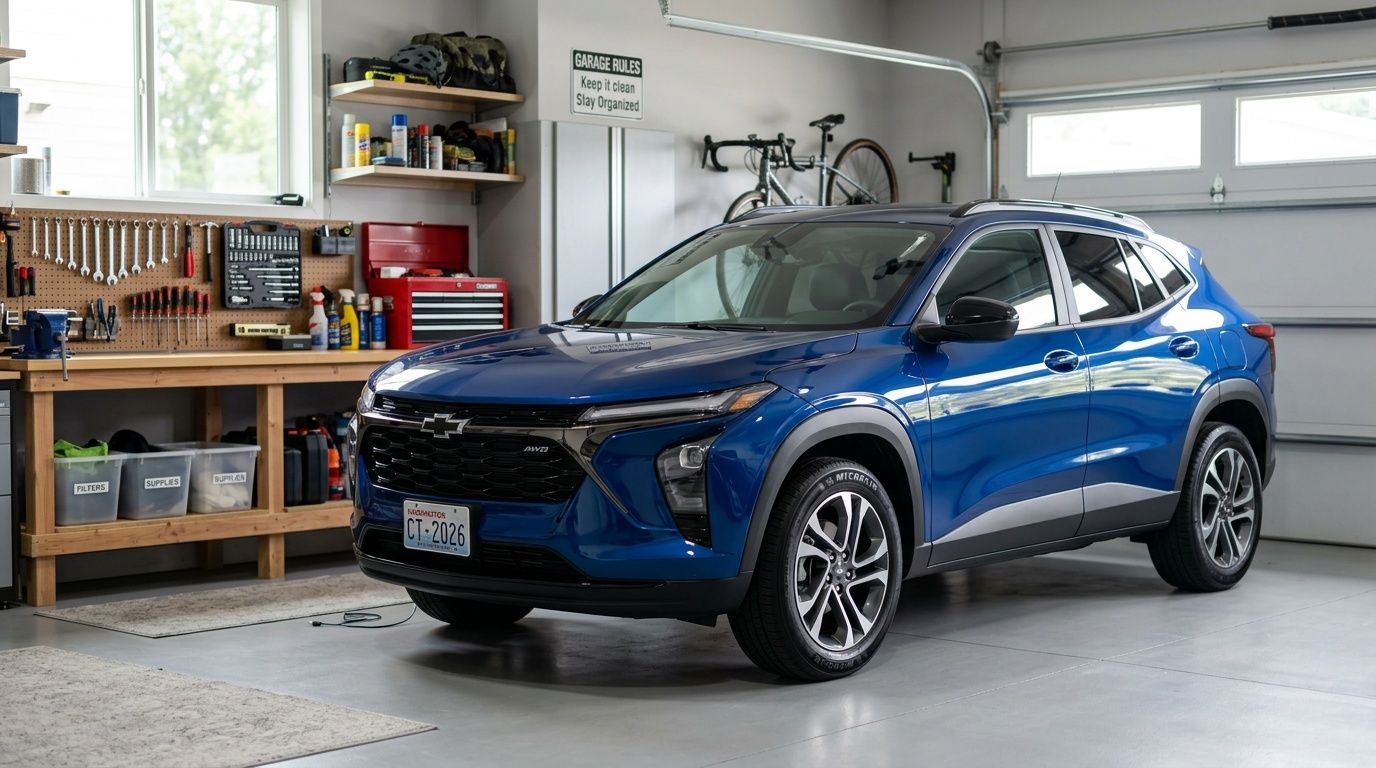
Blue can help or hurt depending on the next buyer.
My view is straightforward. On a Trax, blue is a positive if you choose a tasteful factory shade and pair it with a trim that fits the look. It gives the SUV more character than the usual grayscale choices. But resale still depends far more on condition, maintenance history, and mileage than paint color.
So the right question isn’t “Will blue guarantee stronger resale?” It won’t. The better question is whether blue makes the vehicle easier to enjoy and easier to spot in a crowded market of bland small crossovers. I think it does.
Ownership advice that actually matters
- Keep records: This matters more than color when you sell.
- Drive it within its mission: Small turbo engines don’t like being treated like performance engines.
- Stay on top of maintenance: Good habits matter on any newer small-displacement turbo vehicle.
For practical maintenance habits, this list of tips to extend your car’s life is worth reading. It lines up with the basic ownership mindset that helps any budget-friendly daily driver stay useful longer.
If you’re still deciding whether a new Trax makes more sense than a proven pre-owned alternative, it’s smart to compare it against the broader field of best used cars to buy.
Reliability is where the Trax asks for the most buyer discipline. You’re buying value, not bulletproof certainty.
Chevy Trax vs The Competition
The Trax competes in one of the toughest parts of the market. That matters because “good for the money” isn’t the same as “best for everyone.”
Where the Trax stands out
The Trax is especially appealing if you want:
- A low starting price
- A modern-looking cabin
- Sharp exterior styling
- A compact size that’s easy to live with
Its strongest pitch is simple. It gives many buyers enough SUV without pushing them into a much higher price class.
Where rivals may fit better
The Honda HR-V, Toyota Corolla Cross, and Kia Seltos all appeal to slightly different buyers.
- HR-V: Worth a look if cabin flexibility is high on your list.
- Corolla Cross: Worth a look if cargo concerns are already bothering you.
- Seltos: Worth a look if you want a different mix of design and utility.
For shoppers comparing the whole category, a broader look at the best family cars can help frame whether a Trax-sized vehicle is really the right class in the first place.
Direct answer
Is the Trax the class winner? Not universally. It’s one of the smartest picks for buyers who prioritize price, style, and everyday usability, but it gives up ground if you want AWD, maximum cargo flexibility, or the most reassuring long-term track record.
Final Verdict Who Should Buy the Blue Chevy Trax
The blue Chevy Trax gets a lot right. It looks better than many budget crossovers. It keeps the price accessible. It offers solid everyday efficiency and enough practicality for a lot of real lives.
But it’s not a universal recommendation.
Pros and cons
Pros
- Sharp styling: Blue suits the Trax especially well.
- Strong value: The price is one of its biggest advantages.
- Useful tech: The cabin feels modern where it counts.
- Good everyday efficiency: It fits commuting and errand duty well.
- Easy size: Parking and urban driving are low-stress.
Cons
- Limited cargo reality: Big kid gear can expose the size limits.
- Highway power is modest: Especially with passengers and stuff onboard.
- No AWD: Some buyers will rule it out immediately.
- Reliability questions remain: Early owner concerns deserve attention.
Who should buy it
Yes, if:
- You want a small SUV that looks good without spending big.
- Most of your driving is commuting, errands, school runs, and normal weekend use.
- You have one child or a lighter family-hauling routine.
- You care about getting modern features at a realistic price.
Who should avoid it
No, if:
- You need all-wheel drive.
- You regularly carry bulky cargo with the back seat occupied.
- You want stronger highway power with a full load.
- You only buy vehicles with a stronger dependability reputation.
Edge cases that matter
Snow-belt drivers
Front-wheel drive can be fine, but some buyers want AWD as built-in peace of mind.
Families with twins or double-stroller life
At some point, compact dimensions stop feeling efficient and start feeling restrictive.
High-mileage commuters
Fuel economy helps, but long-term confidence matters more when you stack miles fast.
Empty nesters who still want utility
This might be one of the best Trax buyer profiles. You get cargo flexibility without paying for unused size.
Strong conclusion
The blue Chevy Trax is a smart buy if you want style, efficiency, and value in one affordable package, but it stops being the right answer once your cargo needs or reliability expectations move beyond what a small budget crossover does best.
Frequently Asked Questions
Is the blue Chevy Trax worth buying?
Yes, if you want affordable SUV styling, useful tech, and good daily efficiency. It’s a weaker fit if you need AWD or regularly haul bulky gear.
Which blue color looks best on the Chevy Trax?
That’s subjective, but Marina Blue Metallic tends to look the most upscale, while Fountain Blue feels brighter and more playful.
Is the Chevy Trax good for families?
It can be. It works best for smaller families with normal daily cargo needs, not for households constantly packing large stroller setups and extra gear.
Does the 2026 Chevy Trax have good fuel economy?
Yes. Verified data lists the Trax at 30 mpg combined on EPA estimates from Chevrolet.
Is the Chevy Trax reliable long term?
It’s too early to call it a long-term standout. Early owner reports and dependability concerns mean cautious buyers should pay attention.
Which Trax trim is the best value?
For most buyers, a mid-range trim is the logical place to shop because it balances price and everyday features better than either extreme.
- The blue Chevy Trax is a strong value buy for drivers who want style, efficiency, and modern tech at an affordable price.
- Its 1.2-liter turbo engine is adequate for daily driving but can feel modest on loaded highway runs.
- Cargo space is useful, but real family hauling can get tight with bulky child gear.
- Blue improves the Trax’s visual appeal, but long-term value still depends more on condition and maintenance than paint color.
- Reliability is the main caution point for the current-generation Trax.
Author Bio
This review was written by an auto-focused writer with a practical family lens. The approach is simple: cut through marketing, focus on daily use, and judge vehicles by how they work in real life, not just on a spec sheet.
If you want more practical, no-fluff reviews that help you buy smarter and lead your family better, visit alphadadmode.com.
