


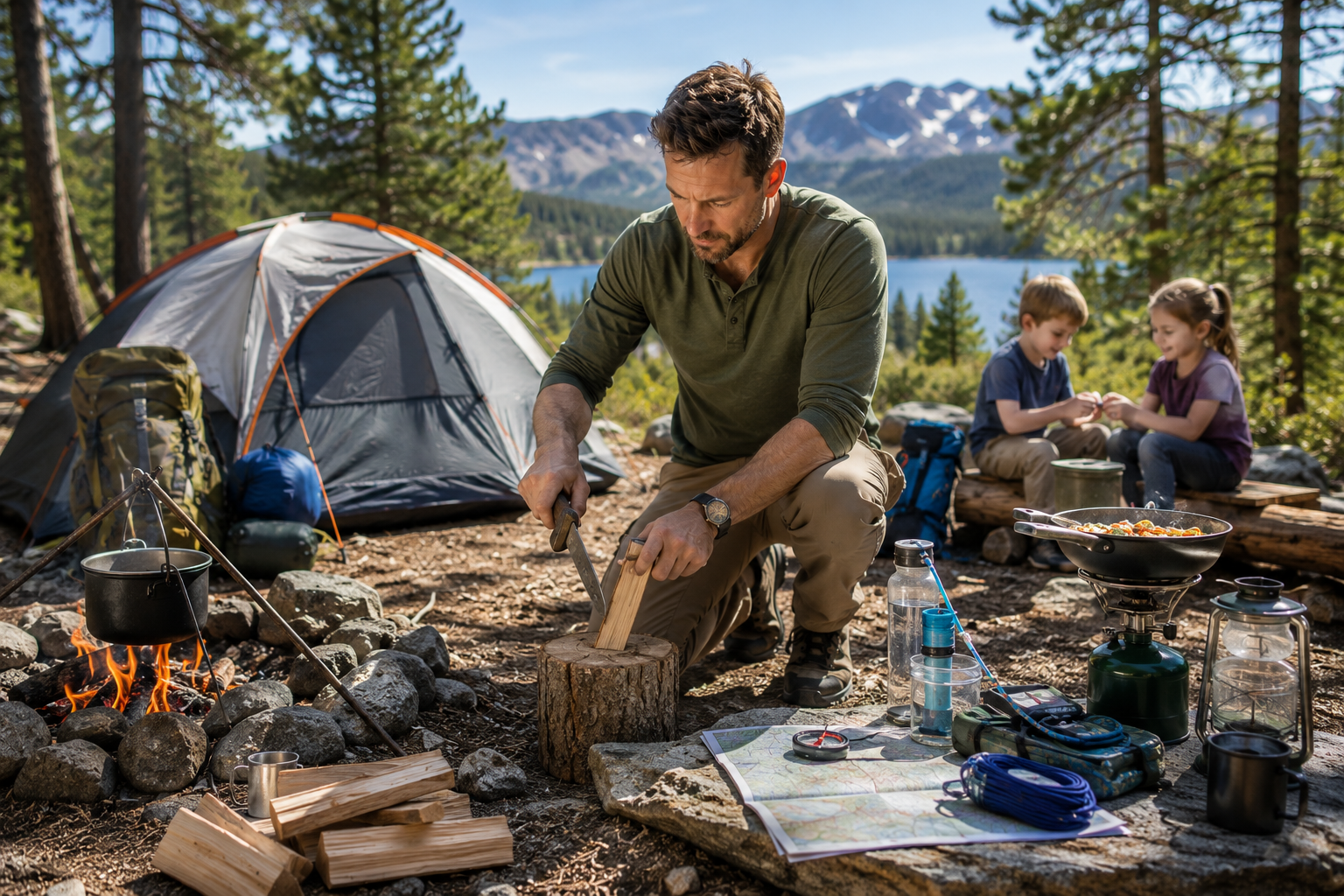
There was a time when basic outdoor skills were simply part of everyday life.
People knew how to start a fire, navigate without Google Maps, sharpen tools, grow food, identify weather patterns and repair things that broke.
Today, many adults can operate five different streaming services but couldn’t tell north from south without checking their phone.
That’s not necessarily a criticism. Modern life has made us incredibly dependent on technology. The problem is that technology doesn’t always work.
Batteries die.
Signals disappear.
Apps crash.
And sometimes life throws situations at us where practical skills matter more than digital ones.
The good news is that many of these Easy to Learn Skills Outdoors don’t require years of training or expensive equipment. In fact, most can be picked up with a little practice and a willingness to spend more time outside.
As dads, I think there’s something valuable about being capable outdoors. Not because we’re preparing for the apocalypse or planning to disappear into the wilderness and live off squirrels. Although let’s be honest, after a particularly chaotic family holiday, the thought may cross your mind.
It’s about confidence.
It’s about self-reliance.
It’s about teaching our kids that there are useful skills beyond scrolling TikTok videos for six hours.
I’ve spent most of my adult life working as a tradesman. Commercial sites, residential builds, rural properties and everything in between. I’ve learned that practical skills can sometimes solve problems faster than expensive gadgets.
That’s why I’ve put together this list of Easy to Learn Skills Outdoors that anyone can start practicing today, regardless of experience level.
Why Every Dad Should Learn Outdoor Skills
Before we get started, it’s worth asking why outdoor skills matter in the first place.
Because let’s face it, most of us aren’t trekking across the Amazon rainforest next weekend.
The real benefits include:
- Increased confidence
- Better problem-solving ability
- Reduced dependence on technology
- Improved resilience
- More quality time with your kids
- Greater self-reliance
- Better mental health
Research from organizations such as the National Park Service has consistently shown that spending time outdoors improves physical and mental wellbeing.
Engaging in these easy to learn skills outdoors not only enhances your abilities but also enriches family bonding time.
I’ve noticed this myself.
Whenever life becomes stressful, I naturally gravitate outdoors.
Whether that’s working around our property, going camping, walking or simply sitting outside with a coffee before everyone wakes up.
Fresh air seems to fix problems that social media creates.
Funny how that works.
Quick Comparison Table
| Skill | Difficulty | Time to Learn | Useful for Families | Cost |
|---|---|---|---|---|
| Fire Starting | Easy | 1 Day | High | Low |
| Navigation | Easy | Weekend | High | Low |
| Knot Tying | Easy | Few Hours | High | Very Low |
| Basic First Aid | Easy | Weekend | Very High | Low |
| Shelter Building | Moderate | Weekend | Medium | Low |
| Tool Sharpening | Easy | Few Hours | High | Low |
| Gardening | Easy | Ongoing | High | Medium |
| Wildlife Identification | Easy | Ongoing | Medium | Free |
| Water Collection | Easy | Weekend | Medium | Low |
| Weather Reading | Easy | Ongoing | High | Free |
| Fishing Basics | Easy | Weekend | Medium | Medium |
| Wood Splitting | Easy | Few Hours | Medium | Low |
| Outdoor Cooking | Easy | Weekend | High | Low |
| Tracking | Moderate | Ongoing | Medium | Free |
| Emergency Preparedness | Easy | Weekend | Very High | Low |
1. Fire Starting
Every dad should know how to start a fire.
Not because you’re planning to become Bear Grylls.
Because it’s useful.
A campfire provides:
- Warmth
- Cooking capability
- Light
- Comfort
- Emergency signalling
Learn multiple methods:
- Matches
- Lighter
- Ferro rod
- Magnesium fire starter
The ferro rod is particularly useful because it works when wet.
Unlike that cheap lighter floating around your kitchen junk drawer that’s somehow been empty since 2019.
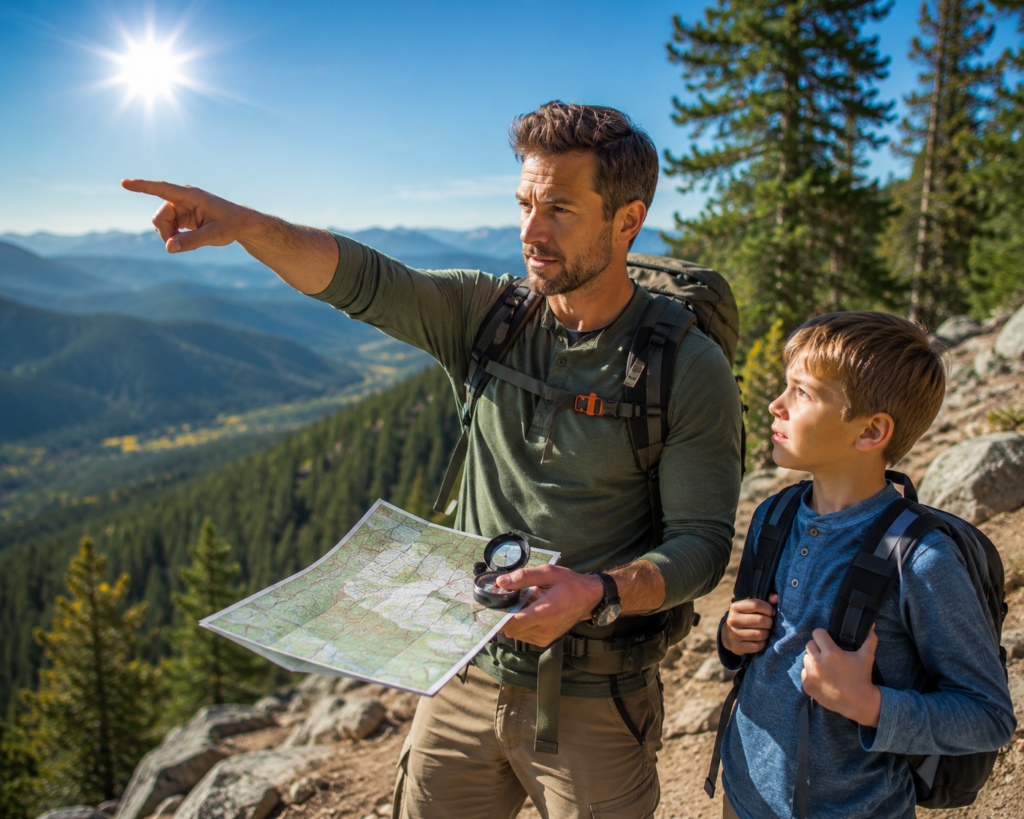
GPS is brilliant.
Until it isn’t.
Learning how to navigate using:
- A map
- Compass
- Landmarks
- The sun
is surprisingly simple.
The team at Ordnance Survey provides excellent beginner resources for learning map reading and navigation.
Even basic navigation skills dramatically improve confidence outdoors.
Plus your kids will think you’re some sort of wizard when you know where you’re going without asking Siri.
3. Knot Tying
This sounds boring.
Until you actually need it.
Useful knots include:
- Bowline
- Clove Hitch
- Taut-Line Hitch
- Square Knot
I use knots constantly around our property.
They’re useful for:
- Securing loads
- Camping
- Tarp shelters
- Hanging equipment
- Emergency repairs
Most can be learned in an afternoon.
Far quicker than assembling flat-pack furniture with instructions translated through seven languages.
4. Basic First Aid
This might be the most valuable skill on the list.
Every dad should know:
- How to stop bleeding
- CPR basics
- Treat minor burns
- Treat sprains
- Handle cuts and scrapes
The official resources available through the American Red Cross Learning Center are excellent.
Kids have an incredible ability to injure themselves in ways that defy physics.
Basic first aid knowledge provides enormous peace of mind.
5. Building a Simple Shelter
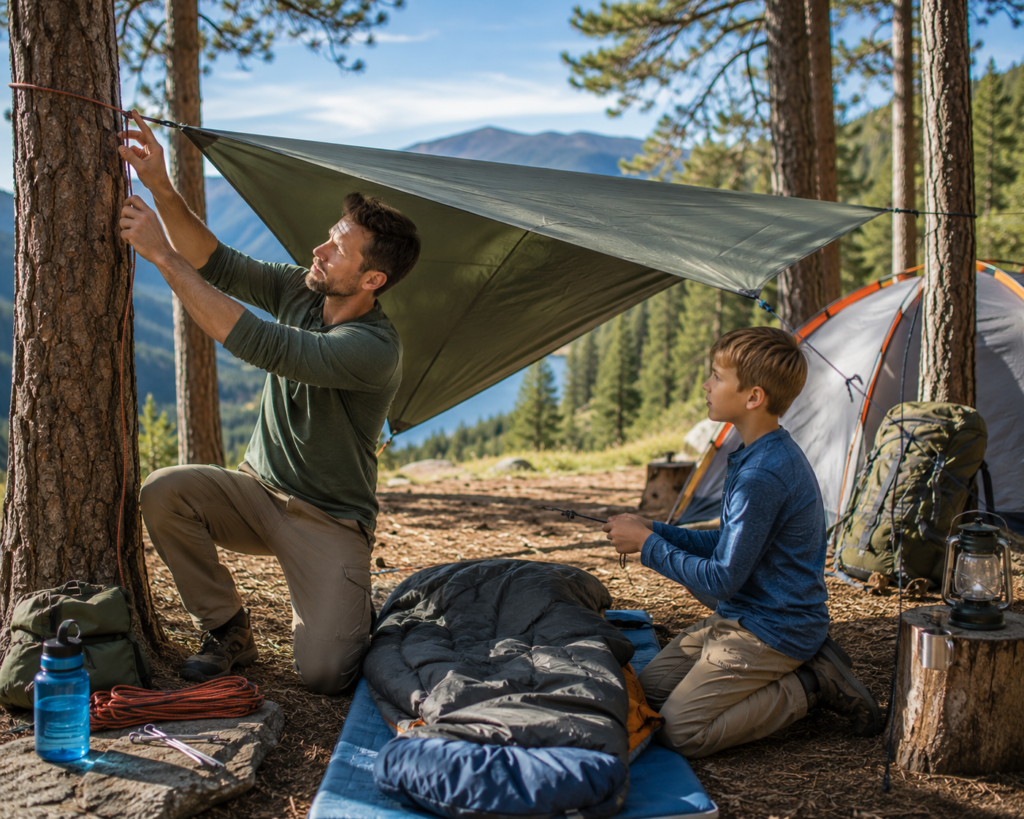
You don’t need to construct a luxury cabin.
Learning basic shelter construction teaches:
- Problem solving
- Resourcefulness
- Planning
Simple tarp shelters are ideal for beginners.
They’re affordable, lightweight and easy to set up.
Many family camping trips become significantly more enjoyable when you’re not relying entirely on the weather forecast.
6. Tool Sharpening
A sharp tool is safer than a blunt one.
That’s something many people don’t realise.
I use:
- Sharpening stones
- Diamond plates
- Honing tools
for:
- Axes
- Knives
- Garden tools
- Pruners
As a tradesman, I’ve learned that properly maintained tools last longer and perform better.
The same principle applies whether you’re using a chainsaw or a kitchen knife.
7. Growing Your Own Food
Gardening is one of the most underrated outdoor skills.
It’s also one of the most rewarding.
Even a small garden can produce:
- Herbs
- Tomatoes
- Lettuce
- Spinach
- Strawberries
Kids are far more likely to eat vegetables they’ve helped grow.
Although they’ll still somehow reject broccoli like you’ve offered them radioactive waste.
8. Wildlife Identification
Learning to identify:
- Birds
- Trees
- Plants
- Insects
makes every outdoor experience more interesting.
This skill costs nothing.
It simply requires curiosity.
Apps help, but I encourage learning without constantly reaching for your phone.
Being observant is becoming a lost skill.
9. Collecting and Purifying Water
Clean water is essential.
Learning how to:
- Collect rainwater
- Filter water
- Boil water safely
- Store water
is useful knowledge for camping and emergencies.
This isn’t about preparing for the end of civilization.
It’s simply practical preparedness.
10. Reading Weather Patterns
Before smartphones existed, people paid attention to the sky.
Odd concept, I know.
Learning to recognize:
- Storm clouds
- Wind shifts
- Pressure changes
- Rain indicators
helps you make better decisions outdoors.
Farmers have been doing this successfully for generations.
Meanwhile modern society receives weather alerts and still gets caught in the rain.
11. Basic Fishing Skills
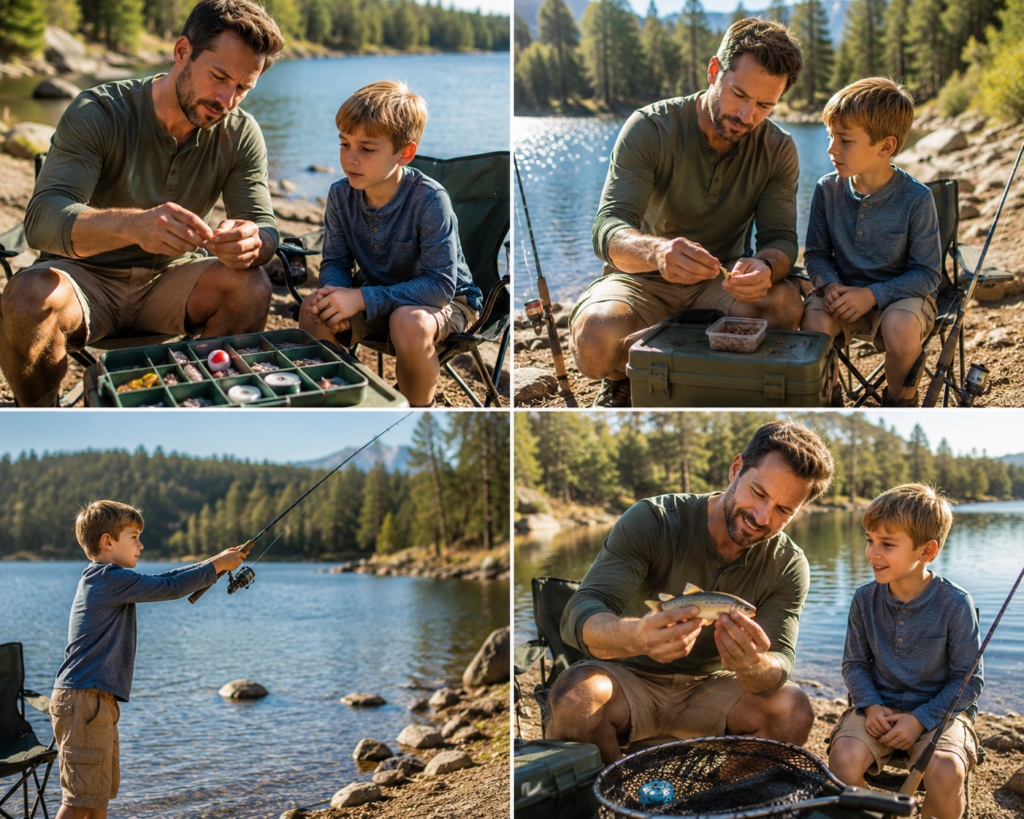
Fishing teaches patience.
A skill many adults desperately need.
Basic fishing includes:
- Knot tying
- Bait selection
- Casting
- Fish handling
Even if you never catch much, spending time outdoors with your kids is worthwhile.
Some of my favourite childhood memories involved fishing.
Mostly because nobody expected me to answer emails.
12. Splitting and Storing Firewood
Wood splitting is surprisingly satisfying.
It’s also great exercise.
Learning:
- Safe axe technique
- Wood selection
- Proper storage
can save money and improve self-sufficiency.
Plus it’s one of the few socially acceptable ways for middle-aged men to hit things with an axe.
13. Outdoor Cooking
Outdoor cooking is a genuine life skill.
Learning to cook over:
- Fire pits
- Camp stoves
- Charcoal grills
adds another level of enjoyment to family adventures.
Some meals actually taste better outdoors.
Or perhaps everything tastes better after spending the day chasing children around a campsite.
14. Tracking and Observation
Tracking isn’t just for hunters.
Learning to identify:
- Animal tracks
- Scat
- Feeding signs
- Movement patterns
improves awareness.
It teaches kids to slow down and observe.
Something modern life rarely encourages.
15. Emergency Preparedness
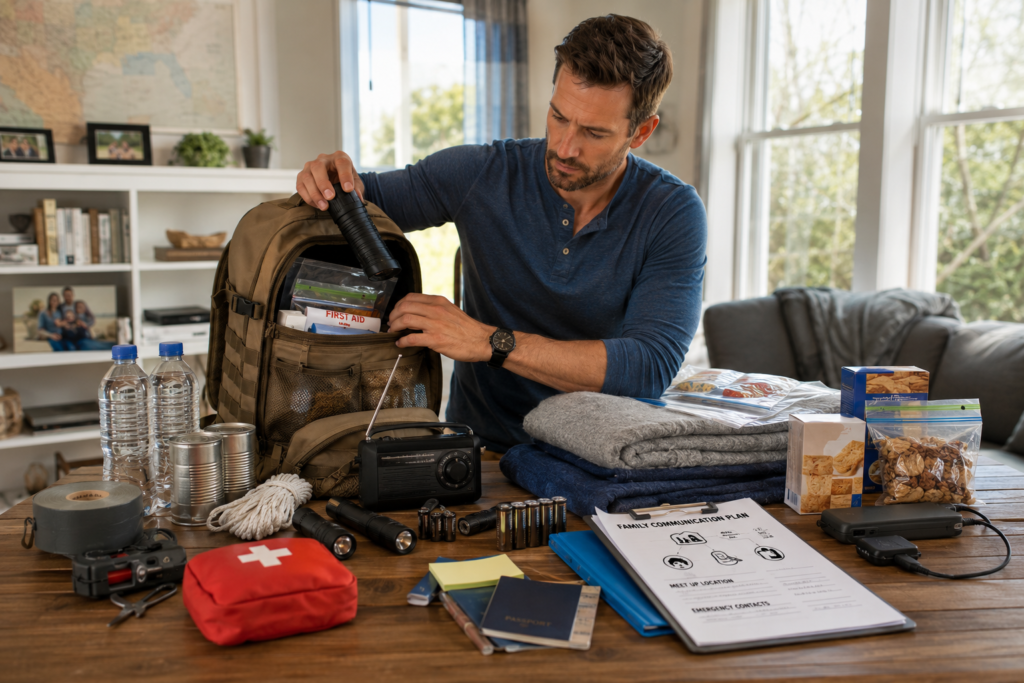
Preparedness doesn’t mean paranoia.
It means reducing risk.
Every dad should know how to:
- Build an emergency kit
- Create communication plans
- Store basic supplies
- Handle power outages
Simple preparation removes unnecessary stress during unexpected situations.
The Skills I Teach My Kids First
If I had to choose just five skills to teach first, they would be:
- Basic First Aid
- Fire Starting
- Navigation
- Gardening
- Emergency Preparedness
Why?
Because these skills provide immediate real-world value.
They build confidence and independence.
More importantly, they teach responsibility.
Outdoor Skills Build More Than Practical Ability
Something I’ve noticed over the years is that outdoor skills don’t just teach practical knowledge.
They build character.
When kids learn outdoor skills they develop:
- Patience
- Resilience
- Problem solving
- Confidence
- Emotional control
Interestingly, these qualities also contribute to emotional intelligence.
The ability to remain calm, think clearly and solve problems under pressure is valuable whether you’re fixing a campsite problem or navigating challenges at home.
Combining Outdoor Skills With Family Adventures
One of the easiest ways to teach outdoor skills is through camping.
You don’t need expensive equipment.
You simply need opportunities.
If you’re planning family camping trips, I recommend checking out best camping gear.
The right equipment makes outdoor experiences significantly more enjoyable.
Poor equipment tends to create lifelong family stories.
Usually the kind involving rain, frustration and someone sleeping in a collapsed tent.
Pros and Cons of Learning Outdoor Skills
Pros
- Builds confidence
- Improves self-reliance
- Strengthens family relationships
- Reduces screen dependence
- Improves physical health
- Enhances mental wellbeing
- Develops practical problem-solving skills
- Creates valuable memories
Cons
- Requires time investment
- Some skills require practice
- Occasional equipment costs
- Children may initially complain
That last point is temporary.
Most kids eventually enjoy outdoor activities once they realise they’re actually fun.
Frequently Asked Questions
What are the easiest outdoor skills to learn?
Fire starting, knot tying, gardening, navigation and basic first aid are among the easiest outdoor skills for beginners.
How long does it take to learn outdoor skills?
Many basic skills can be learned within a few hours or a weekend. Mastery takes longer, but becoming competent is surprisingly achievable.
Why should dads learn outdoor skills?
Outdoor skills improve confidence, preparedness, resilience and provide opportunities to teach children practical life lessons.
Do I need expensive equipment?
No.
Many outdoor skills require little or no equipment.
Some of the most valuable skills cost absolutely nothing to learn.
What outdoor skill is most useful for families?
Basic first aid is probably the most universally useful skill for families.
Can outdoor skills improve mental health?
Yes.
Research consistently shows that spending time outdoors improves mood, reduces stress and supports overall wellbeing.
Are outdoor skills still relevant today?
More than ever.
Technology is helpful, but practical skills provide independence when technology fails.
Final Thoughts
Learning Easy to Learn Outdoor Skills isn’t about becoming a survival expert.
It’s about becoming more capable.
The older I get, the more I appreciate practical competence.
Not because I want to impress anyone.
Because life becomes easier when you know how to solve problems yourself.
As dads, we spend a lot of time teaching our kids.
What I’ve discovered is that children learn far more from what we do than what we say.
When they see us learning new skills, solving problems and spending time outdoors, they naturally become curious themselves.
Start with one skill.
Learn it well.
Then move on to the next.
Before long you’ll have a collection of practical abilities that improve everyday life, strengthen family relationships and make you far less dependent on technology.
And if nothing else, you’ll finally have something useful to do when the Wi-Fi goes down and civilisation briefly collapses for seven terrifying minutes.
Ready to build more than just a campfire? At alphadadmode.com, we focus on the practical skills and mindset that forge capable fathers and resilient men. Visit alphadadmode.com to find resources and a community dedicated to helping you become the leader your family deserves.
