


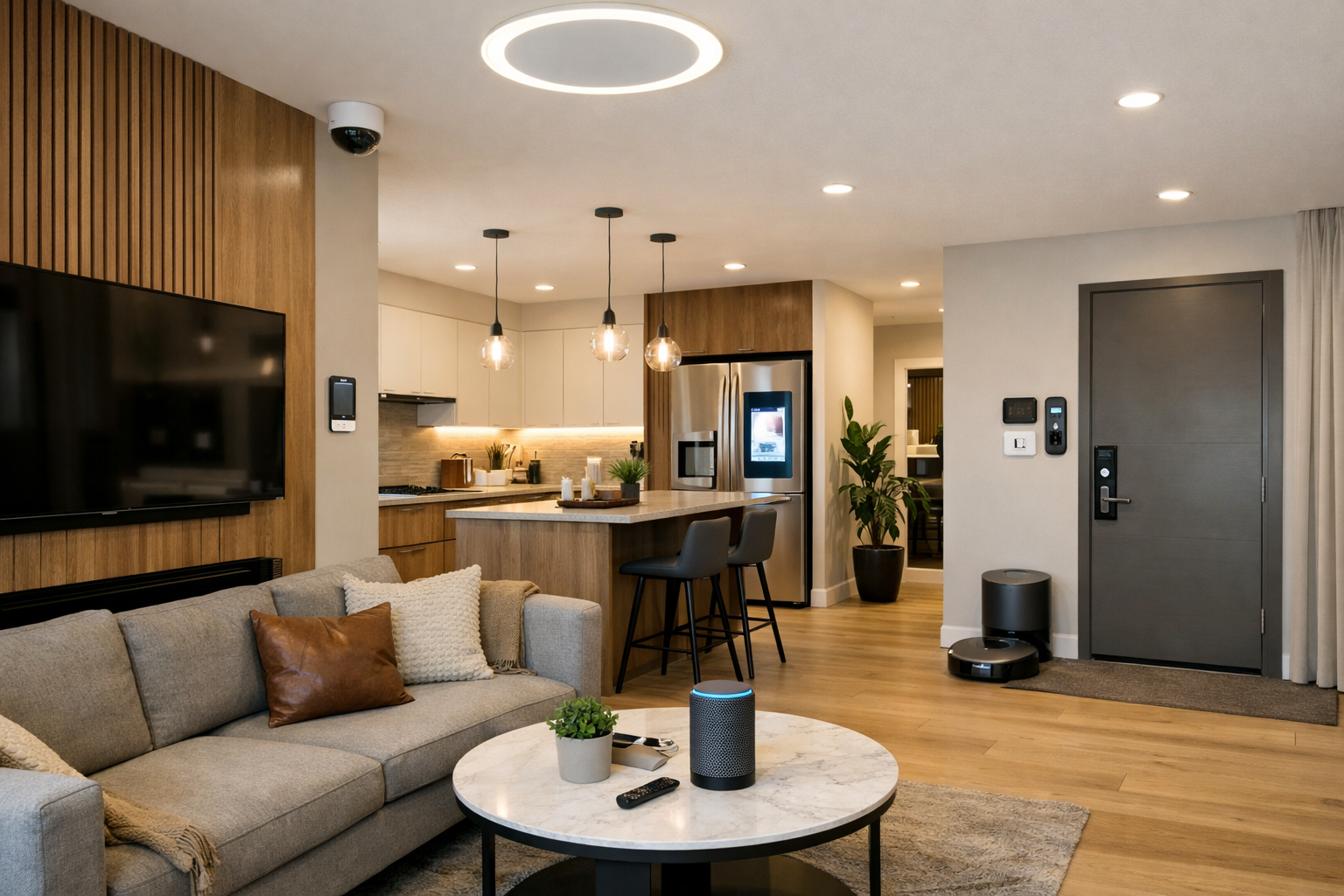
Think about the typical morning rush. Getting the kids out the door, juggling schedules, and trying to get your own day started can feel like a marathon. Now, what if your home could actually help you with all that instead of just being another thing to manage? That’s the real idea behind smart home interior design. It’s the practice of weaving smart technology so seamlessly into your home’s look and feel that it becomes practically invisible, leaving you with only the benefits: convenience, safety, and a home that anticipates your family's needs.
From Gadgets to Genuinely Smart Living

In the early days, a "smart home" just meant having a few cool gadgets. A smart speaker here, a Wi-Fi plug there. But true smart home interior design is a much more thoughtful, holistic approach. It’s not about adding more clutter to your countertops.
Think of it like this: anyone can put a portable speaker on a bookshelf. But a designer integrates a high-fidelity sound system directly into the ceilings, making the audio a natural part of the room itself. That's the difference. The goal is to create a home that works for your family without constantly needing to be tinkered with.
The best smart home design isn’t about showing off the tech. It’s about making the technology disappear, so all that’s left is the feeling of convenience, safety, and a home that just works.
What Does This Actually Look Like?
When you take this integrated approach, you start seeing your home differently. It’s no longer about just adding a smart plug to a lamp; it’s about designing the entire lighting experience for a room.
Here are a few real-world examples:
- Automated "Scenes": Imagine a "Good Morning" scene. With one tap—or even automatically at a set time—the lights in the kids' rooms slowly brighten, the blinds gently rise to let in natural light, and the thermostat kicks on to a comfortable temperature.
- Built-in Safety: Think beyond a simple smoke detector. Integrated air quality monitors can track CO2 levels and automatically tell your HVAC system to circulate fresh air if things get stuffy, keeping your family healthier while they sleep.
- Invisible Convenience: Picture coming home with arms full of groceries and a tired kid. A smart lock that recognizes your phone as you walk up the driveway and unlocks the front door for you isn't just cool—it's a genuine lifesaver.
At its heart, smart home interior design is where good looks meet smart function. It's about creating spaces that aren't just beautiful, but are also incredibly intuitive and responsive to the real rhythm of your family's life. You're not just adding tech; you're upgrading your lifestyle by making your home an active partner in managing the day-to-day.
The Pillars of a Smartly Designed Home
To really get what smart home interior design is all about, it helps to break it down into four key parts. Think of these as the building blocks that, when put together correctly, create a home that’s not just smart, but also intuitive, beautiful, and genuinely helpful for a busy family.
Pillar 1: The Devices
First up are the physical devices themselves—the hands, eyes, and ears of your smart home. These are the tangible pieces of hardware you actually see and install: smart light bulbs, automated window shades, smart locks, and all sorts of sensors. Each one has a specific job, whether it’s changing the mood of a room or sending you a notification that the garage door was left open.
These components are the front line of your system, gathering information and carrying out commands. For example, a motion sensor notices when you walk into a room and triggers the lights to turn on. Keeping this hardware in good shape is non-negotiable; for a practical example, check out our guide on garage door sensor cleaning.
Pillar 2: The Central Hub
If the devices are the body, then the central hub is the brain. This is the software or dedicated piece of hardware that acts as the command center, allowing all your different gadgets to talk to each other. Popular systems you've likely heard of are Google Home, Amazon Alexa, and Apple HomeKit.
Think of it like an orchestra conductor making sure every instrument plays in sync. The hub does the same thing for your home. It coordinates actions so that a single command—like saying "Movie Night"—can dim the lights, lower the shades, and turn on the TV all at once. Without this brain, you’d just have a pile of disconnected tech.
This all comes together to deliver on the core promises of a smart home: safety, convenience, and efficiency.

As you can see, the technology isn't just for show—it serves a clear purpose in making daily family life better.
Pillar 3: The User Experience
The third pillar is all about the user experience (UX). Let's be honest, a smart home is only "smart" if everyone in the family—from your kids to your parents—can actually use it without getting frustrated. This is where we focus on intuitive apps, simple voice commands, and automated routines that just happen in the background without you having to do a thing.
A great smart home experience doesn't require a user manual. It should feel natural and anticipate your needs, making daily routines smoother without adding complexity.
The goal is to simplify, not complicate.
Pillar 4: The Aesthetic Integration
Finally, there’s aesthetic integration. This is the element that ensures technology actually enhances your home’s design instead of just cluttering it up. This is where real interior design expertise comes into play. It means choosing stylish smart switches that match your wall plates, concealing speakers in ceilings, and selecting devices that blend seamlessly with your decor.
The smart home market is exploding, with household penetration projected to hit 28.8% by 2027. This growth isn't just because the tech is getting better—it's because it's also starting to look good. The ultimate goal is to make the technology so well-integrated that it feels like an invisible, effortless part of your home.
The Pros and Cons of Smart Home Interior Design
Bringing smart home technology into your house can be a game-changer, but it's not all futuristic magic. For any dad managing the beautiful chaos of family life, it’s crucial to weigh the genuine benefits against the potential headaches. Before you commit, it helps to understand both sides of the coin.

The Pros: Why It's Worth It
The upsides often show up right away, making life safer, easier, and more efficient. For many families, it starts with enhanced safety. Imagine getting a notification the moment your kids get home from school or a smoke alarm alert on your phone while you're at the office. This isn't just cool tech; it's genuine peace of mind.
Then there's the sheer convenience. Automating small, repetitive tasks frees up your time and energy.
- Set-and-Forget Routines: Lights that automatically dim at bedtime or a coffee maker that starts brewing the second your morning alarm rings.
- Total Remote Access: Adjust the thermostat or check if the garage door is closed from anywhere using an app.
- Smarter Energy Use: Automated thermostats and blinds learn your family's routines, leading to real savings on utility bills.
This growing appeal is why the North American market is projected to hit $57.67 billion by 2025. Families are clearly seeing the value.
The real win isn’t just the impressive technology. It's having a home that works for you, making family life safer and simpler without you having to micromanage everything.
The Cons: What to Watch Out For
Now, for the reality check. Building a smart home isn’t without its challenges. The most immediate one is the upfront cost. While you can start small with a few plugs or bulbs, a fully integrated system is a serious financial commitment.
There's also the learning curve. A system is only successful if your partner and kids can use it easily without getting frustrated. Simplicity is key.
Finally, and this is a big one, you must consider privacy and security. Every internet-connected device you add is a potential entry point for digital threats. This means being diligent with strong passwords, securing your Wi-Fi network, and understanding what data each device collects. It's a trade-off between convenience and privacy that every family needs to discuss.
At a Glance: Smart Home Pros vs. Cons
| Pros (The Wins) | Cons (The Hurdles) |
|---|---|
| Enhanced Safety: Real-time alerts from smoke detectors, security cameras, and smart locks. | Initial Cost: A fully integrated system can be a significant investment, but starting small is an option. |
| Unmatched Convenience: Automate daily routines like lighting, climate, and morning coffee. | Learning Curve: The whole family needs to be comfortable using the tech, which can take time and patience. |
| Energy & Cost Savings: Smart thermostats and lighting can significantly reduce monthly utility bills. | Privacy Risks: Requires careful security management to protect your home from digital threats. |
| Remote Control: Manage your home's locks, lights, and temperature from anywhere via your smartphone. | System Complexity: Inter-device compatibility and troubleshooting can become a time-consuming chore. |
| Future-Proofing: Increases your home's appeal and functionality for the long term. | Tech Obsolescence: Devices may need upgrading or replacing as technology evolves. |
Ultimately, integrating smart design is a balancing act. When planned thoughtfully, the benefits in safety, convenience, and peace of mind can far outweigh the initial hurdles, turning your house into a true partner in raising your family.
Alright, let's move from the abstract ideas into the real world. What does smart home interior design actually look like in your day-to-day life? This isn't about cramming your house with gadgets for the sake of it. It's about solving real problems for a busy family, one room at a time. The true magic happens when the technology blends in so well you forget it’s even there—it just becomes a natural part of how your home works.
So, let's walk through the house and see how you can apply these smart design principles. The goal here is to make each space more intuitive and genuinely helpful, turning common family frustrations into moments of seamless automation.
The Living Room: Where Everyone Connects
The living room is often the heart of the home, the central hub for family life. That makes it the perfect place to start. Smart design here can elevate everything from your big movie nights to just relaxing after a long day. Instead of fumbling with a half-dozen remotes and light switches, you can create "scenes" that set the perfect mood with a single command.
Picture this: you announce "Movie Night." Instantly, the main lights dim, the accent lights behind the TV cast a soft glow, the smart TV fires up, and the automated blinds roll down to cut the glare. This is a perfect example of what is smart home interior design in action—it's about making multiple devices work together to create a single, effortless experience.
A Smarter, More Efficient Kitchen
The kitchen is a whirlwind of activity, and a little smart tech can make it a much more functional workspace. We're not talking about flashy, futuristic gadgets, but practical helpers that streamline meal prep and daily chores.
Here are a few smart ideas that make a real difference:
- Intelligent Ovens: Start preheating the oven from your phone while you're driving home from soccer practice. It'll be ready to go the second you walk through the door.
- Smart Refrigerators: These can keep a running tally of your groceries, pull up recipes based on what you have on hand, and even add milk to your shopping list automatically.
- Leak Detectors: This is a big one. A small, simple sensor placed under the sink can shoot an alert to your phone the moment it detects moisture, stopping a tiny drip from turning into a weekend-ruining flood.
Kids' Rooms: Designed for Safety and Comfort
As any dad knows, a kid's bedroom is a space where peace of mind is the top priority. Smart design gives you some fantastic tools to build a secure and restful environment.
Smart home tech in a child's room shouldn't be intrusive. Instead, it should work quietly in the background to ensure their well-being, like a digital guardian angel.
Think about integrating features like these:
- Smart Nightlights: You can program these to turn on with a soft glow if your child gets out of bed, lighting a clear path to the bathroom.
- Temperature and Humidity Sensors: Make sure their room always stays comfortable for a good night's sleep. The sensor can talk to your thermostat and make adjustments automatically.
- Air Quality Monitors: These devices keep an eye on indoor pollutants and allergens, giving you the information you need to create a healthier space for them to sleep and play.
From the Bedroom to the Front Door
These same principles can be applied to just about every corner of your home. In the master bedroom, you could create a "Wake-Up" scene that gradually brightens the lights, opens the shades, and cues up your favorite morning playlist. In the bathroom, a smart mirror can show you the weather forecast and your calendar for the day while you brush your teeth.
And finally, let's not forget the entryway. A video doorbell and a smart lock are a powerful duo for security and convenience. You can see who’s at the door no matter where you are, let a family member in remotely, and get a notification the moment your kids get home safely from school.
Budgeting Your Smart Home Transformation
Let's talk about the money side of things. Bringing a smart home to life doesn't have to mean draining your bank account. One of the best parts about modern smart home design is just how flexible it is. You've got options, and you can choose a path that fits your budget and how much you want to get your hands dirty.
This accessibility is exactly why smart homes are taking off. The market is projected to explode from USD 147.52 billion in 2025 to a staggering USD 848.47 billion by 2034. Here in the U.S., household penetration is on track to hit 39% by 2027, which just shows you this isn't some niche hobby anymore—it's going mainstream. North America is leading the charge, by the way, with a 31.70% market share.
Getting a handle on your budget upfront is key. If you need a hand with that, our guide on how to create a family budget is a great place to start before you dive in.
Choosing Your Installation Path
When it comes to actually setting this all up, you generally have three routes you can take. Each one comes with its own price tag and level of personal involvement.
DIY (Do-It-Yourself) Path: This is your most budget-friendly option and the perfect way to dip your toes in. You can start small by picking up plug-and-play devices like smart speakers, light bulbs, or smart plugs and setting them up yourself. It's a fantastic way to show the family what's possible without a huge upfront cost.
"Done-With-You" Hybrid Model: Think of this as getting a blueprint from an expert. You hire a smart home consultant to help you map everything out—from choosing the right ecosystem to picking devices that match your family's needs. Once the plan is solid, you take over the physical installation to save a good chunk of change on labor.
Full Professional Installation: This is the "set it and forget it" route. You hire a pro to handle everything from design and purchasing to installation and programming. It's the priciest option, but it guarantees that your entire system works seamlessly right out of the gate, no headaches involved.
Where to Invest First for the Biggest Impact
So, where do you get the most bang for your buck? If you want to see a real difference right away, put your initial budget into two areas: security and energy management.
Investing in a smart lock, video doorbell, and a smart thermostat offers immediate, tangible returns. You gain peace of mind from enhanced security and see real savings on your monthly utility bills, making it easy to justify future upgrades.
Starting with these practical, high-impact items is a smart play. Once the family gets a taste of keyless entry or a thermostat that learns your routine, they'll be sold. It turns your smart home journey from one giant leap into a series of small, successful wins.
In Summary: Key Takeaways on Smart Home Interior Design
We've covered a lot of ground, but understanding what is smart home interior design boils down to a few core ideas. It’s about more than just gadgets; it’s a holistic approach to making your home more intuitive, safe, and efficient for your family.
Here are the key takeaways:
- It’s Integrated, Not Added: True smart design weaves technology seamlessly into your home’s aesthetic, rather than cluttering countertops with devices. The goal is invisible convenience.
- Focus on the "Why": Start by identifying your family’s biggest daily pain points. Your goal should be to solve real problems, not just collect technology.
- Weigh the Pros and Cons: Smart homes offer incredible benefits in safety, convenience, and energy savings, but you must also consider the upfront costs, learning curve, and privacy implications.
- Start Small, Win Big: You don't need to automate your entire house at once. Begin with a high-impact, low-cost project—like smart lighting or a smart thermostat—to prove the concept and build momentum.
- Plan Your Ecosystem: Choose a central platform like Google Home, Amazon Alexa, or Apple HomeKit early on. This ensures all your future devices will work together harmoniously.
By focusing on these principles, you can transform your house from a passive structure into an active partner in managing family life.
Conclusion: Making Your Home a Smarter Partner
At its heart, smart home interior design is about reclaiming your time and peace of mind. For busy dads, it offers a powerful way to make your home an active partner in the beautiful chaos of family life. It's not about turning your house into a sci-fi set; it's about solving real-world problems—like knowing the kids got home safely, saving money on energy bills, and simplifying daily routines with the touch of a button.
The best approach is a thoughtful one. Start by identifying what will make the biggest difference for your family, whether that's boosting security with a smart lock or adding convenience with automated lighting. You don’t have to do it all at once. By starting small and focusing on real benefits, you can gradually build a home that is not just smarter, but more supportive, secure, and enjoyable for everyone in it.
Frequently Asked Questions (FAQs)
Jumping into smart home design can feel a bit overwhelming at first. For any dad trying to figure out the best moves for his family, getting straight answers is everything. Let's clear up some of the most common questions.
How do I make sure my family’s privacy and security are protected?
This is the most important question for any parent. Start by securing your Wi-Fi network with a strong, unique password and WPA3 encryption. Choose devices from reputable brands known for security updates and always change the default passwords immediately. Think of your network as your digital front door; securing it is as crucial as locking your physical doors at night. Finally, review the privacy settings on devices like cameras and smart speakers and disable any features you don't absolutely need.
Do all my smart home devices need to be from the same brand?
No, not at all. The industry is embracing universal standards like Matter, which allows devices from different companies to work together seamlessly. As long as your devices support a common ecosystem (like Apple HomeKit, Google Home, or Amazon Alexa) or the Matter standard, you can control a Google thermostat, Philips Hue lights, and an Amazon Echo speaker from a single app.
What’s a realistic budget for a basic smart home?
You can get started for less than you think.
- Under $150: This can get you a smart speaker (like a Google Nest Mini or Echo Dot) and a few smart plugs or bulbs. It's a simple way to start using voice commands for lights and small appliances.
- $300 – $500: This budget allows you to add high-impact devices like a smart thermostat, video doorbell, or smart lock, which offer immediate returns on energy savings and security.
Can I install a smart home system in an older house?
Absolutely. Many of today's best smart devices are wireless, meaning you don't need to run new wiring. Smart light bulbs screw into existing lamps, and smart thermostats often use the same wiring as your old unit. This "plug-and-play" nature makes it easy to bring the benefits of what is smart home interior design to a home of any age. For more complex installations, like in-wall switches, you may want to consult an electrician.
At alphadadmode.com, we're creating a community for dads ready to level up their homes and their lives. Sign up for early access to our full range of resources and product guides, all built for the modern father. Be the first to know when we launch.
