

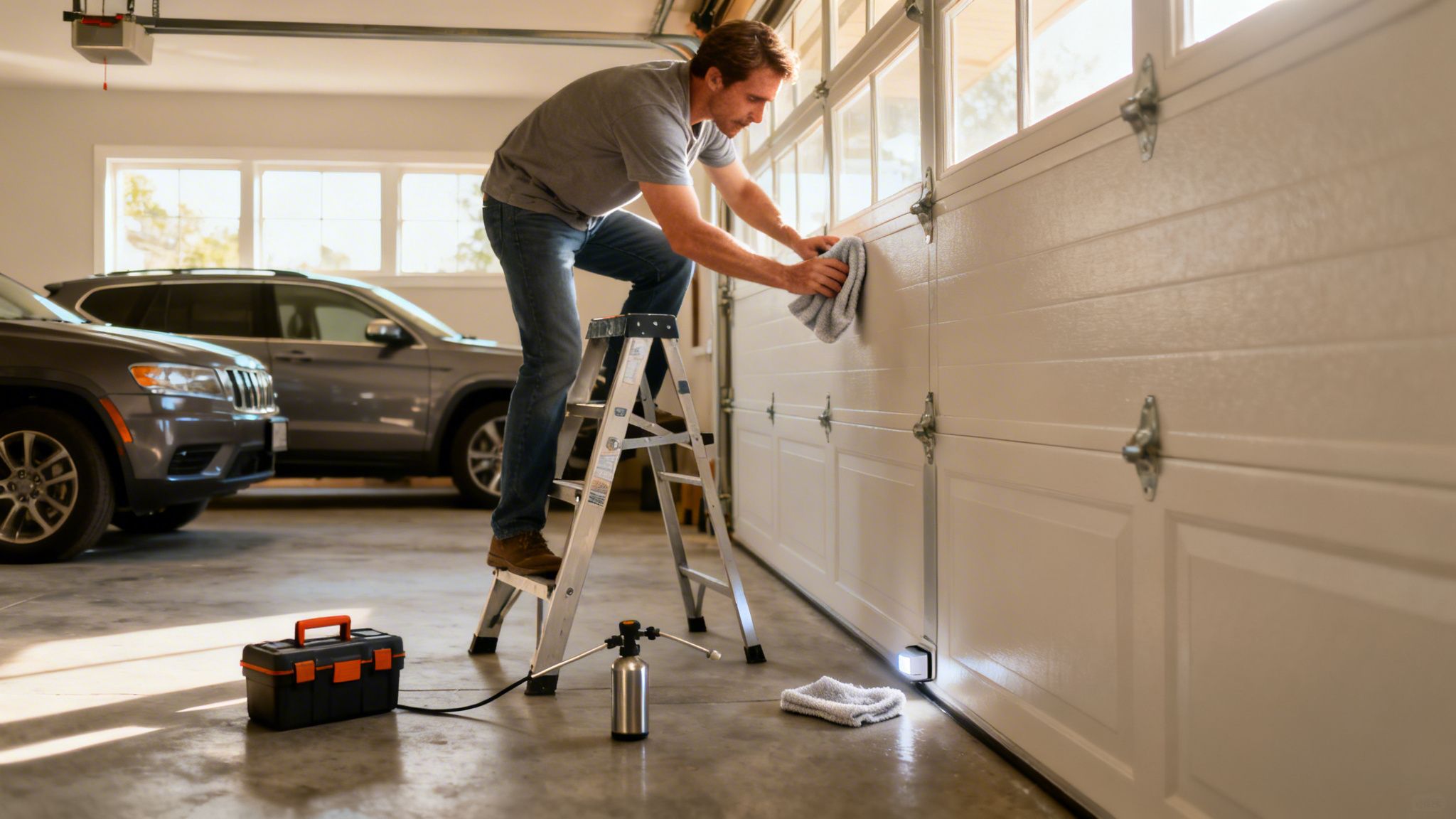
When you hit the button, the garage door should just close—no questions asked. But when it stubbornly stops halfway and reverses, the fix is often surprisingly simple. In most cases, a quick five-minute garage door sensor cleaning is all it takes to get things back on track.
Why Your Garage Door Suddenly Won’t Close
We’ve all been there. You’re running late, you hit the garage door button from your car, and… nothing. Or worse, the door starts its journey down, only to shoot right back up. It’s a classic, frustrating homeowner moment, but the culprit is usually less dramatic than a broken motor.
The problem almost always comes down to the two small “electric eyes” mounted near the bottom of your garage door tracks. These are your safety sensors, and they have one job: to detect anything in the door’s path.
They do this by shooting an invisible infrared beam across the opening. If a stray soccer ball, a broom handle, or even just a bit of grime breaks that beam, the door’s safety mechanism kicks in and reverses it. It’s a critical feature designed to keep your family, pets, and car safe from being crushed.

The Hidden Culprit Behind Most Failures
Before you start pricing out a new opener or calling in a pro, take a moment to inspect the sensors themselves. You might be surprised at what you find. Garages are magnets for dust, debris, and critters, all of which can interfere with that sensitive infrared beam.
- Dust and Dirt: It doesn’t take much. A fine layer of dust is often enough to cloud the lens and disrupt the signal.
- Cobwebs and Insects: Spiders are notorious for building their homes right in front of the sensor lenses. A single well-placed web is a common reason for a door that won’t close.
- Yard Debris: Every time the door opens, leaves, grass clippings, and pollen get blown in and can easily settle on the sensors.
The good news is that a simple wipe-down solves a huge percentage of these “malfunctions.” Taking just a minute to clean the lenses can often save you the time, headache, and expense of a professional service call.
In fact, industry pros will tell you that dirty sensors account for roughly 42% of these types of service calls. Dust, spider webs, and everyday grime are constantly blocking the infrared beams, tricking the system into thinking there’s a real obstacle.
The data backs this up: regular cleaning every 3-6 months can slash these frustrating malfunctions by up to 65%. That small bit of maintenance keeps your home running smoothly and helps you avoid those unnecessary $150-$300 repair bills. You can find more insights on garage door service trends in various market reports.
If cleaning the sensors doesn’t do the trick, don’t worry. There are a few other common culprits that are just as easy to identify and fix.
Common Garage Door Sensor Problems and Quick Fixes
This table breaks down the most frequent issues, what they mean, and what you can do about it in just a few minutes.
| Symptom | Likely Cause | Your Next Move |
|---|---|---|
| Blinking light on one sensor | Misalignment: The sensors can’t “see” each other. | Gently adjust the blinking sensor by hand until the light turns solid. |
| Blinking light on both sensors | Power issue or wiring fault: The sensors aren’t getting consistent power. | Check for loose or damaged wires. Make sure they’re securely connected at the sensor and the opener unit. |
| Garage door closes with sunlight on sensors | Direct sun interference: Bright sunlight can blind the receiving sensor. | Install a sun shield or even a simple cardboard tube around the sensor to block the direct light. |
| Garage door won’t close at all | Obstruction or complete failure: Something is blocking the beam, or a sensor has failed. | Double-check for any objects in the door’s path. If clear, you may need to replace the sensors. |
Running through this quick diagnostic checklist will help you pinpoint the exact problem and get your door working again without having to pull out your wallet.
Your Go-To Toolkit for This Job
Before you roll up your sleeves, let’s get your gear in order. The good news? You don’t need a trip to the hardware store for some fancy, specialized equipment. You’ve probably got everything you need for this fix already scattered around your garage.
Think of it as your quick-response kit. Having these few things handy will turn this little project from a head-scratcher into a five-minute win.
The Absolute Must-Haves
For the cleaning part itself, you only need a couple of basic items to get those sensor lenses back to factory-fresh condition.
- A Soft, Lint-Free Cloth: Seriously, a microfiber cloth is your best friend here. It’s gentle on the plastic lens but grabs all the gunk. Steer clear of paper towels—they fall apart and leave behind tiny fibers that can cause the exact same problem you’re trying to fix.
- A Mild Cleaner: Isopropyl (rubbing) alcohol is the gold standard. It cuts through grime and evaporates in a flash, leaving zero residue. If you’re out, a little warm water with a single drop of dish soap gets the job done too.
Pro Tip from the Trenches: Never, ever spray a cleaner directly onto the sensor. Put a small amount on your cloth first. This keeps liquid from seeping into the housing and frying the electronics inside. I’ve seen it happen.
Nice-to-Have Extras for a Pro Finish
These aren’t strictly required, but a couple of extra tools can make the job a whole lot easier, especially if it’s been a while since your sensors got any attention.
- Can of Compressed Air: This is perfect for blasting away cobwebs and dust from a safe distance before you even wipe anything down.
- Small Level: A torpedo level is ideal. You can just hold it up against the sensor bracket to see instantly if it’s standing straight and true. It’s the fastest way to check your alignment.
- A Solid Step Ladder: Safety first, always. You need a stable ladder to reach the sensors without stretching or doing a balancing act. No one needs a trip to the ER over a garage door.
Getting this simple kit together means you’re ready for whatever you find. And hey, if you’re looking to upgrade your overall DIY arsenal, we’ve put together a guide on the best tools for dads that’s worth a look.
A Practical Guide to Flawless Sensor Cleaning
Alright, you’ve got your tools, and you’re ready to tackle the problem head-on. This is where we get our hands dirty—literally. Getting the sensors clean is a simple job, but paying a little attention to detail now will save you from having to do this all over again next month.
First Things First: Kill the Power
Before you even think about touching the sensors, you absolutely have to disconnect the power to your garage door opener. The easiest way is to just unplug the main unit from the outlet on the ceiling. If yours is hardwired, head to your home’s electrical panel and flip the breaker for the garage.
I can’t stress this enough: this is a non-negotiable safety step. All it takes is for someone inside to accidentally hit the wall button while your fingers are near the track. It takes ten seconds to kill the power and guarantees that door isn’t going anywhere while you work.
Getting the Grime Off
With the power safely off, it’s time to focus on the sensors themselves. The trick here is a gentle touch. These little guys can be sensitive, and if you get too rough, you might knock them out of alignment. That just creates a whole new headache you don’t need.
-
Clear the Big Stuff: Start by clearing out any obvious obstructions. A quick blast from a can of compressed air works wonders, but just brushing away cobwebs, leaves, or dead bugs with your hand is fine. Make sure the area around the sensor brackets is clean so nothing new falls onto the lens.
-
Wipe the Lenses: Now for the important part—the “eye” of the sensor.
Crucial Tip: Always, and I mean always, apply your cleaner to the microfiber cloth, not directly onto the sensor. Spraying the lens can push moisture inside the housing and fry the electronics. That’s a much more expensive fix than a simple cleaning.
Just dampen a corner of your cloth with a bit of isopropyl alcohol or your mild cleaning solution. Gently wipe the lens on each sensor. A soft, circular motion is all it takes to lift that film of dust and grime. You don’t need to scrub. The goal is a perfectly clear, dry lens.
This simple bit of maintenance is more critical than you might think. Dirty sensors are a factor in a surprising 38% of preventable garage door accidents. In fact, many of the 1,200 garage door injuries reported in the U.S. back in 2022 were because dirty photo eyes failed to see something as simple as a misplaced toy.
One pro-level tip is to use compressed air first to dislodge any gritty debris before you touch the lens. This helps avoid the fine scratches that plague 22% of older sensor installations that have been cleaned with rougher materials over the years. You can dig into more data on the importance of sensor cleaning systems if you’re curious.
Once both lenses are sparkling, give them one last look to make sure you didn’t leave any cloth fibers or smudges behind. Now you can plug the opener back in, restore the power, and test your work. This straightforward approach to garage door sensor cleaning almost always gets the job done.
Getting Your Garage Door Sensors Back in Line
If a good cleaning didn’t get your door moving, the next stop is alignment. Don’t sweat it; this happens all the time. A stray soccer ball, an errant lawnmower, or even just vibrations can knock these sensors out of whack. The good news is that realigning them is usually a quick fix.
The secret is learning to read the little LED lights on each sensor. They’re your diagnostic tool, telling you exactly what’s going on without any guesswork.

Decoding Your Sensor’s Indicator Lights
Before you start twisting brackets, just take a look at the lights. One sensor is the “sending” unit (usually with an amber or yellow light), and the other is the “receiving” unit (the one that should be green). Their status tells the whole story.
This little table breaks down exactly what those lights are trying to tell you.
| LED Light Status | What It Means | What You Need To Do |
|---|---|---|
| Solid Green Light | Perfect Alignment. The receiver sees the sender’s beam loud and clear. | Nothing! Your sensors are correctly aligned. If the door still won’t close, the issue lies elsewhere. |
| Blinking Green Light | Partial Alignment. The receiver is getting a weak or intermittent signal. | This is a classic misalignment. Gently adjust the sensor until the light turns solid. |
| No Green Light | No Signal. The receiver isn’t detecting the sender’s beam at all. | Check for major obstructions first, then adjust the sensor. It might also indicate a wiring or power problem. |
| Solid Amber/Yellow Light | Power On. The sending unit has power and is emitting its beam. | This is normal for the sender. If the green light on the receiver is out or blinking, you know the problem is with alignment, not power. |
See? A blinking light is your clear signal to get hands-on and make a small adjustment.
The Gentle Art of Sensor Adjustment
Adjusting these sensors is all about finesse, not force. The brackets are designed to be moved by hand, so you won’t need any heavy-duty tools.
Start with the receiving sensor—the one with the green light. Just loosen the wing nut on its bracket enough so you can move it, but not so much that it’s flopping around.
Now, slowly pivot the sensor up, down, left, and right. Keep your eye on that LED light the entire time. You’re looking for the exact moment that blinking light turns solid and stays that way.
Once you find that sweet spot, hold it steady and tighten the wing nut firmly with your fingers. That’s all it takes to re-establish the connection. Honestly, it’s a simple skill that can save you a lot of grief, kind of like how knowing the basics of changing a tire can save you from being stranded.
Here’s a pro dad hack: Always align the sensors first until both LED lights are steady. Only then should you perform your garage door sensor cleaning, preferably with dedicated lens wipes. Using water can leave residue that leads to nearly 19% of repeat faults.
This proactive approach is what separates the rookies from the pros. In fact, a recent surge of 13.2% in smart garage retrofits shows that more and more homeowners are getting smarter about this kind of proactive maintenance to save money and hassle.
After you’ve got a solid light and have tightened everything down, give the door a test run. A smooth, uninterrupted close is your signal for a job well done.
Knowing When to Throw in the Towel and Call a Pro
Part of being a smart DIYer is knowing your limits. You’ve done everything by the book—the lenses are sparkling, the alignment looks dead-on, and you’ve got two solid LED lights staring back at you. But the blasted door still won’t close.
This is that frustrating point where persistence starts to look a lot like a wasted weekend. If you’ve run through all the steps and the door is still acting up, you’re probably looking at a problem that goes beyond a simple cleaning.
Red Flags: Time to Pick Up the Phone
Don’t let a stubborn garage door ruin your Saturday. If you see any of these signs, it’s a pretty clear signal that it’s time to call in a professional.
-
Damaged or Frayed Wiring: Take a close look at the thin wires running from each sensor back to the motor unit. If you spot any breaks, chew marks from pests, or wires that have been pinched or severed, that’s your culprit. A bad wire means a dead signal, no matter how clean or aligned the sensors are.
-
The LED Lights are Completely Dead: You’ve checked the wiring, and it looks solid, but one or both of the sensor lights simply refuse to turn on. This usually points to an internal failure in the sensor itself. They don’t last forever.
-
Problems Started After a Power Surge: Did this whole mess start right after a big thunderstorm or a power outage? A surge can easily fry the sensitive electronics on the opener’s main logic board, and no amount of sensor tweaking is going to fix that.
It’s worth remembering that these sensors eventually just wear out. They live a tough life, exposed to moisture, dust, and constant vibrations. A pro can quickly diagnose a failed sensor and will have the right replacement part on their truck.
Look, your time is valuable. Recognizing when a problem is bigger than a simple DIY fix is just as crucial as knowing how to handle the small stuff yourself. It’s a skill that translates to all sorts of projects around the house, from plumbing repairs to figuring out the basics of baby proofing a house.
Making the right call saves you from a world of frustration and, more importantly, ensures your garage door is fixed safely and correctly.
Got Questions About Your Garage Sensors? We’ve Got Answers.
Even a simple job like cleaning garage sensors can bring up a few questions. I get it. You want to make sure you’re doing it right. Here are the most common things people ask, with straight-to-the-point answers from someone who’s been there.
How Often Do I Really Need to Clean These Things?
For most garages, a quick wipe-down every 3 to 6 months is plenty. That’s usually enough to keep the dust and cobwebs from causing a false alarm. It’s a five-minute job that prevents a lot of future frustration.
Now, if your garage is also your workshop, or it just seems to attract more dust than a thrift store couch, you might want to check them every couple of months. An easy trick to remember is to tack it onto another household chore you already do, like when you swap out your furnace filter or test the smoke alarms.
Can I Just Grab the Windex?
Hold on a second. I’d recommend skipping the Windex or other household glass cleaners for this job. A lot of those sprays contain ammonia or other harsh stuff that can actually damage the plastic lens over time, leaving it cloudy and less reliable.
Pro Tip: The best tool for the job is just a soft microfiber cloth with a little bit of isopropyl (rubbing) alcohol. It cleans off any gunk without leaving a sticky film that just ends up attracting more dirt. Simple and effective.
My Sensor Lights Are Solid, But the Door Won’t Close. What Gives?
Ah, the classic mystery. This one can be a real head-scratcher. If both of your little LED lights are glowing steadily—meaning they think they’re perfectly aligned—but the door still reverses, there’s likely another culprit. The number one offender? Direct sunlight.
If the sun is hitting one of the sensors at just the right angle, it can blind it. Try this: stand in a way that your body casts a shadow over the sensor and see if the door closes then. If it does, you’ve found your problem. You can buy little sun shields for them or just rig something up yourself. If that’s not it, the issue might be with the door’s force settings, which could be a sign it’s time to call in a pro.
Do I Have to Realign the Sensors Every Time I Clean Them?
Nope, you shouldn’t have to. As long as you’re just gently wiping them down and not knocking the brackets around, they’ll stay right where they are.
Once you’re done, just give the LED lights a quick glance. If they’re both solid, you’re good to go. You only need to break out the level and start adjusting things if one of the lights is blinking or completely off.
At alphadadmode.com, we’re all about helping dads master their domain, one project at a time. If you dig practical guides, honest tool reviews, and real-world advice, you’ll want to be on our list. Sign up at alphadadmode.com and we’ll let you know the second we go live.
