



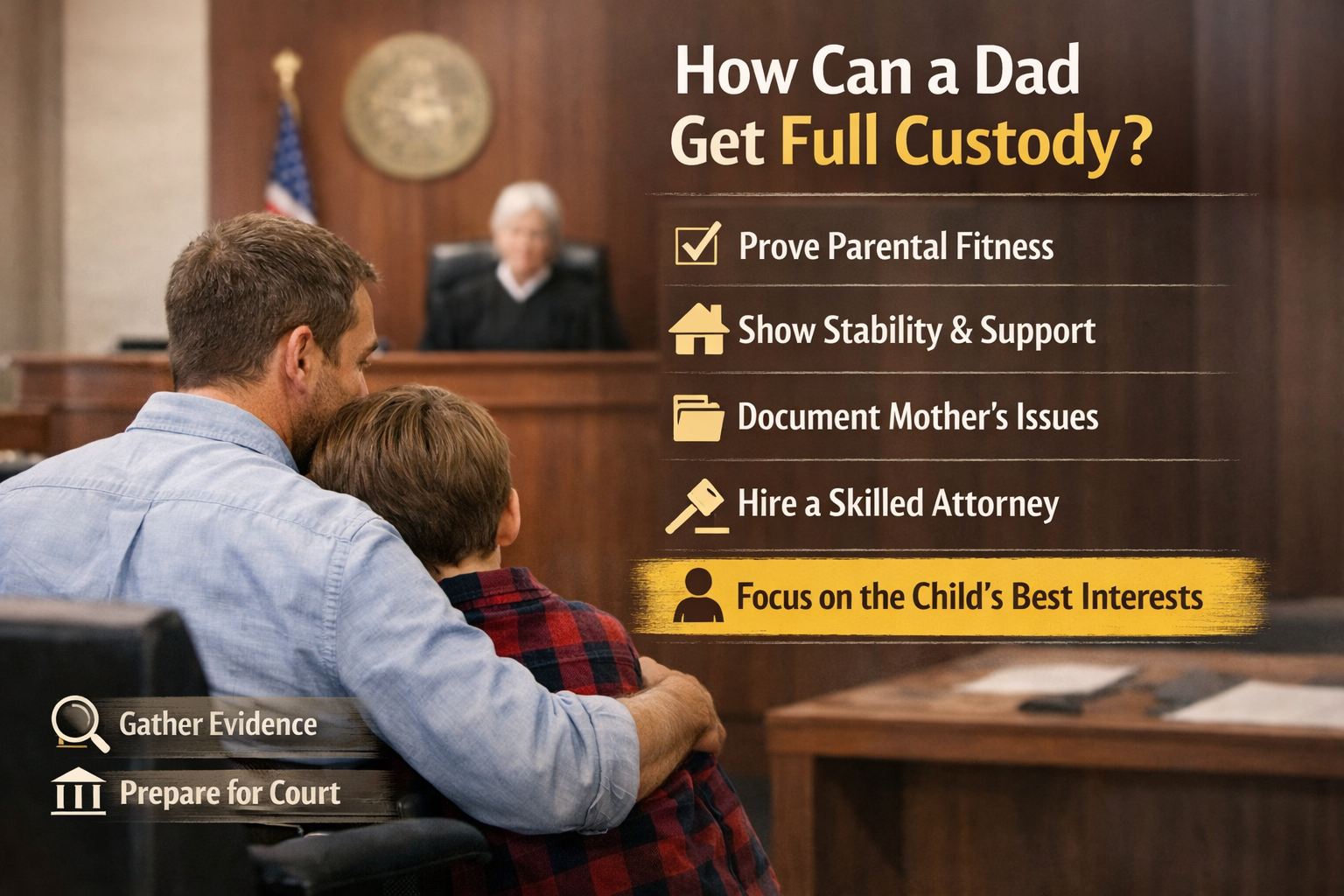
So, you're a dad wondering how you can get full custody. The short answer? By systematically showing the court that your home is the most stable, secure, and nurturing place for your child to thrive. It has nothing to do with being a mom or a dad—it's about proving you are the best choice for your child's future.
Debunking the Myth That Dads Can't Win Custody

Let's get one thing straight right away: the old belief that family courts always side with mothers is just that—old and outdated. This myth discourages so many good fathers from even trying, but it simply doesn't match the legal reality today.
Every single decision a judge makes is guided by one core principle: the “best interests of the child.”
This legal standard is completely gender-neutral. It forces judges to look past who the mother and father are and focus on a single question: which parent is better equipped to meet the child’s physical, emotional, and developmental needs? Your entire case hinges on proving that parent is you.
The Modern Legal Landscape
This isn't just talk; the numbers back it up. In the U.S., there are now over 3 million children under 18 living solely with their fathers. That accounts for about 20% of all single-parent households, and that number is climbing.
Courts are finally recognizing the essential role dads play in providing a stable home. You can discover more insights about these child custody statistics to see just how much the trends have shifted.
What this data really means is that dedicated, prepared fathers are winning full custody more often than ever. Your job is to build such a powerful case that the judge sees you not just as a capable parent, but as the primary anchor for your child's stability and happiness.
Understanding the Pillars of a Strong Case
To win, you need a smart strategy from the very beginning. Getting full custody isn't about one dramatic moment in the courtroom. It’s about patiently building a mountain of evidence that demonstrates your consistent, reliable, and loving parenting.
Think of your case as the story of your relationship with your child. Every school drop-off, every doctor's visit, and every late-night homework session is a new chapter proving your unwavering commitment.
Before we get into the step-by-step actions, it helps to understand the fundamental components of a successful case. These are the pillars a judge will lean on when making their decision. This is your high-level game plan.
Pillars of a Successful Full Custody Case for Fathers
To give you a clearer picture, here’s a breakdown of the core elements you must prove to the court. These are the cornerstones of your argument.
| Pillar | What It Means | Why It Matters to the Court |
|---|---|---|
| Active Involvement | Consistently participating in your child’s daily life—school, healthcare, and extracurriculars. | The court wants to see a history of hands-on parenting, not just a recent interest. It shows you are, and have been, a primary caregiver. |
| Stable Home Environment | Providing a safe, consistent, and predictable home that is physically and emotionally secure. | Stability is paramount for a child's well-being. A judge will heavily favor the parent who can provide a calm and reliable home life. |
| Co-Parenting & Communication | Your willingness to foster a positive relationship between your child and their other parent (unless there are safety concerns). | Courts value parents who can put their child’s needs above personal conflicts. It shows maturity and focus on the child's emotional health. |
| Child's Best Interests | Demonstrating that every decision you make prioritizes your child's health, happiness, and overall welfare above all else. | This is the ultimate legal standard. Your entire case must be framed around proving that awarding you full custody directly serves this principle. |
Mastering these four pillars is the key. Everything you do, every piece of evidence you gather, should be aimed at strengthening one or more of them.
When you're fighting for full custody, you have to understand one thing right out of the gate: family court runs on proof, not on promises. A judge can't just take your word for it that you're the better parent. It becomes a "he said, she said" stalemate, and those rarely go anywhere.
To build a winning case, you need to shift your mindset. You're no longer just Dad; you're the lead investigator and chief archivist of your child's life. Every little thing you do—from packing a lunch to scheduling a check-up—is a piece of evidence that tells the story of your commitment.

This isn't about manufacturing a narrative. It's about meticulously documenting the truth so that a judge can see the reality of the situation: that you are the stable, consistent, and primary caregiver in your child’s life.
The Parenting Journal: Your Single Most Powerful Tool
If you do nothing else, do this: start a parenting journal today. I'm not talking about a diary for your feelings. This is a logbook, a factual, date-stamped record that will become the foundation of your entire case.
So, what goes in it?
- The Day-to-Day Grind: Who gets the kids up, dressed, and fed? Who handles school drop-offs, homework duty, and the bedtime routine? Note it all down. Consistency here is gold.
- The Big Events: Log every single doctor's appointment, parent-teacher conference, soccer game, and birthday party you manage or attend. And don't just write it down—keep the appointment card, the school email, the receipt for the birthday gift.
- The Financials: Keep track of every dollar you spend on your child outside of court-ordered support. Think clothes, school supplies, sports fees, you name it.
- Co-Parenting Communication: This is huge. Keep a factual log of every conversation. Stick to dates, times, and a brief, objective summary. This is especially critical when it comes to disagreements or missed visitations.
Expert Tip: The power of a journal is in the details and the consistency. Simply telling a judge you're "more involved" is fluff. Showing them a log that proves you've handled every single sick day for the last six months? That's hard, undeniable evidence.
This journal will be your attorney's best friend. It transforms your argument from "I'm a great dad" to "Here are 37 documented instances this month alone that prove I am the primary parent."
Keep Your Communications Clean
Every text and email you send to the other parent can—and likely will—be used as evidence. Angry, emotional, or accusatory messages can absolutely kill your case. They paint a picture of you as unstable or difficult to work with, even if you feel completely justified.
Your mission is to always be the calm, reasonable, child-focused parent on record.
For example, let's say the other parent is an hour late for pickup. The urge is to fire off a text like, "You let our son down again!" Don't do it. Instead, document the tardiness in your private journal and send a calm, fact-based message.
What Not To Do:
- "Why are you always late? You obviously don't care about the kids."
How To Do It Right (Email or Text):
- "Hi, just confirming our exchange was scheduled for 6 PM. It's 6:45 PM now. Can you please give me an ETA so I can let Johnny know when to expect you?"
This approach does two crucial things. First, it creates a clean record for the court that shows you being reasonable under pressure. Second, it avoids pouring fuel on the fire. How you conduct yourself in these moments says everything about your maturity. If you struggle with this, our guide on anger management techniques for parents is a valuable resource.
Turning Actions into Legal Ammunition
Everything you document has one purpose: to prove to the court that you are serving the "best interests of the child." A judge needs to see a clear, direct line between what you do and your child's well-being.
Let's look at a few real-world examples of how to connect the dots:
- The School Dad: You're the go-to parent for teachers and you never miss a school event. Great. Now prove it. Save every email from the teacher. Snap a photo of the science fair project you worked on together. Keep the program from the school play. This collection of small items builds an undeniable pattern of educational involvement.
- The Healthcare Manager: You handle all the doctor and dentist visits. Don't just log the dates. Create a file with the after-visit summaries, prescription receipts, and notes from the doctor. This shows you are the parent responsible for your child’s physical health.
- The Reliable Parent: The other parent is consistently late or a no-show for their scheduled time. Your journal is now an official record. A simple log showing they've missed 5 of the last 8 scheduled weekends is a powerful piece of evidence that contrasts their unreliability with your stability.
Your job is to gather such an overwhelming mountain of objective proof that the judge's decision becomes obvious. You want them to see that awarding you full custody isn't a drastic change—it's just the court legally recognizing the stable, nurturing reality you've already created.
How to Address the Other Parent's Unfitness
When you're fighting for your child, proving the other parent is unfit is one of the toughest, most emotionally charged parts of the process. This isn't about airing dirty laundry or settling old scores. It’s about methodically presenting the court with cold, hard facts that show why your child is not safe or properly cared for in the other parent's home.
This is where custody battles are often won or lost. A judge doesn't care about your personal disagreements. What they do care about are specific, provable risk factors that directly harm a child. Your entire job is to connect the other parent's actions to your child's well-being so clearly that the judge has no other choice but to see the danger.
What Does "Unfit" Actually Mean in Court?
"Unfit parent" isn't just a label you can throw around; it's a legal standard. And while the exact definition changes a bit from state to state, it always boils down to a parent's inability to provide a safe, stable, and nurturing home. We're not talking about disagreements over bedtime or too much screen time.
Courts are looking for serious, documented patterns of behavior that make an environment toxic or dangerous for a child.
- Substance Abuse: A real history of drug or alcohol dependency, especially when it happens around the child or makes them incapable of parenting.
- Neglect: Failing to provide the absolute basics—food, a safe place to live, medical care, or even just keeping an eye on them.
- Abuse: Any evidence of physical, emotional, or sexual harm. Period.
- Chronic Instability: A chaotic lifestyle with constant moves, a revolving door of new partners, or frequent job changes that yank the rug out from under your child's life.
- Untreated Mental Illness: A severe mental health condition that is not being managed and directly prevents the parent from being able to safely care for the child.
Just saying these things are happening is not enough. You have to prove it with objective, verifiable evidence.
From Accusation to Evidence
Walking into court and simply telling the judge, "She's an unfit mother," is the fastest way to lose your credibility. It sounds like a bitter ex-partner, not a concerned father. The real strategy is to show, not tell. You need to build a case with evidence so compelling that the judge reaches the conclusion of unfitness on their own, based on the facts you lay out.
A personal journal where you track incidents is a great place to start, but it's the third-party proof that will win your case.
Key Takeaway: An official police report is worth a hundred times more than your personal testimony. A documented DUI, a formal report from Child Protective Services (CPS), or a medical record is a fact the court can't easily ignore.
Put yourself in the judge's shoes. They're stuck between two people, each telling a different story. Who are they going to believe? They will almost always trust official documents and neutral professionals over the parents themselves.
Gathering Credible Proof of Unfitness
When your goal is to prove unfitness, the quality of your evidence is everything. You have to focus your energy on collecting documents and getting testimony from sources the court will see as credible and unbiased.
Checklist for Documenting Unfitness
Here's a breakdown of the kind of evidence that actually makes a difference in court when you’re arguing that the other parent is unfit to have custody.
Official Records:
- Police Reports: Did you ever have to call the police for a domestic issue, a welfare check, or because of substance abuse? Get a copy of every single report.
- Criminal Records: A background check showing arrests or convictions—especially for things like DUIs, drug charges, or assault—is incredibly powerful.
- CPS Reports: If Child Protective Services has ever investigated, their case files and official findings can be absolute gold for your case.
Third-Party Testimony:
- Teachers & School Counselors: These are mandatory reporters. They can provide unbiased testimony about your child showing up to school dirty, being constantly absent, or exhibiting behavioral problems that only appear after time with the other parent.
- Therapists & Doctors: Your child's therapist can speak to their emotional state, while a doctor can document any signs of physical harm or neglect.
- Neighbors & Family: While the court might see them as biased, testimony from people who have actually witnessed dangerous or neglectful behavior can help corroborate your other evidence.
Digital Evidence:
- Texts & Emails: You need to save every message that shows instability, makes threats, or admits to substance use or neglect. A text like, "Sorry, was too drunk to get the kids from school," is an open-and-shut piece of evidence.
- Social Media: Public posts showing endless partying, illegal drug use, or other questionable behavior can be useful, but tread carefully here. It can sometimes backfire if not handled correctly.
Remember, presenting this isn't about launching a smear campaign. Every single piece of evidence you bring forward has to be tied directly back to one core message: this behavior puts my child's safety and well-being at risk. Keeping that child-centric focus is the only way a judge will see you as the protective parent, not just a vindictive one.
Navigating the Legal System with Confidence
Walking into family court for the first time can feel incredibly intimidating. It's a world with its own rules, language, and key players. But getting a handle on the process and the people involved is the first step toward taking control of your case. When you know what to expect, you can shift from feeling overwhelmed to being a confident, proactive advocate for your child.
Your job is to build a solid, persuasive case. That starts by getting the right team on your side and understanding the two main roads this journey can take: mediation and litigation.
Assembling Your Legal Team
Securing full custody is almost never something you can do alone. You need a team of professionals who can help you navigate the system, build your case, and speak for your child's best interests. It's vital to know who does what.
- Family Law Attorney: This is your MVP. A great family law attorney does more than file motions; they help you shape your story, identify the evidence that truly matters, and fight for you in court. When looking for one, seek out a lawyer with direct experience in fathers' rights and a proven history of winning full custody cases for dads.
- Custody Evaluator: Think of this person as a neutral investigator for the court. Typically a psychologist, the evaluator is appointed to do a deep dive into your family's situation. They'll interview you, the mother, and your children, and might also do home visits or talk to teachers. Their final report and recommendation to the judge carry a ton of weight.
- Guardian ad Litem (GAL): A GAL is an attorney with one client: your child. They are appointed by the court to represent the child's best interests, not yours or the mother's. They investigate everything and tell the court what they believe is the best outcome for the child.
A huge mistake I see fathers make is viewing the custody evaluator or GAL as the enemy. Don't do it. They are your opportunity to show who you are. Be open, be cooperative, and in every single interaction, bring the focus back to your child's well-being.
Preparing for a Custody Evaluation
The custody evaluation can make or break your case. That report lands on the judge's desk with a thump, and its contents can heavily influence the final decision. You have to be prepared.
For example, the home visit isn't a white-glove inspection. The evaluator is checking for a safe, stable, and child-focused environment.
Make sure your home clearly shows:
- A proper place for your child to sleep.
- Good, healthy food in the fridge and pantry.
- A spot for homework or creative play.
- Basic safety features, like working smoke detectors.
When you're interviewed, stay cool and be honest. Always pivot back to your child. Don't just list the other parent's flaws; instead, explain how you getting full custody will provide the stability, support, and environment your child needs to thrive.
Mediation vs. Court Battle: Which Path Is Right for You?
Long before a judge bangs a gavel, you’ll most likely be directed toward mediation. This is where you and the mother sit down with a neutral third party to try and hammer out an agreement on your own terms. The alternative is litigation—a full-blown court battle where a judge hears both sides and makes the decision for you. Knowing the pros and cons of each is critical.
A court battle can feel like the only way forward, but it's important to weigh your options carefully.
| Factor | Mediation | Court Litigation |
|---|---|---|
| Control | You and the other parent decide the outcome together. It's your agreement. | The judge has 100% of the control and issues a final, binding order. |
| Cost | Significantly cheaper. You're typically just splitting the mediator's fee. | Costs can skyrocket with attorney's fees, expert witness costs, and court filings. |
| Timeline | Can be wrapped up in a few sessions, sometimes in just a few weeks. | Can easily drag out for months, sometimes even years. |
| Atmosphere | Designed to be collaborative and problem-solving. | Adversarial by nature. It's a fight, and it can permanently scar your co-parenting relationship. |
Mediation has clear advantages, but it takes two to tango. If the other parent is completely unreasonable, or if you're dealing with serious issues like abuse or addiction, going to court might be the only way to protect your child. Learning how to communicate effectively can sometimes make mediation possible; you can check out our guide on co-parenting communication tools for some practical tips.
If you have to prove the other parent is unfit, the process generally looks like this.
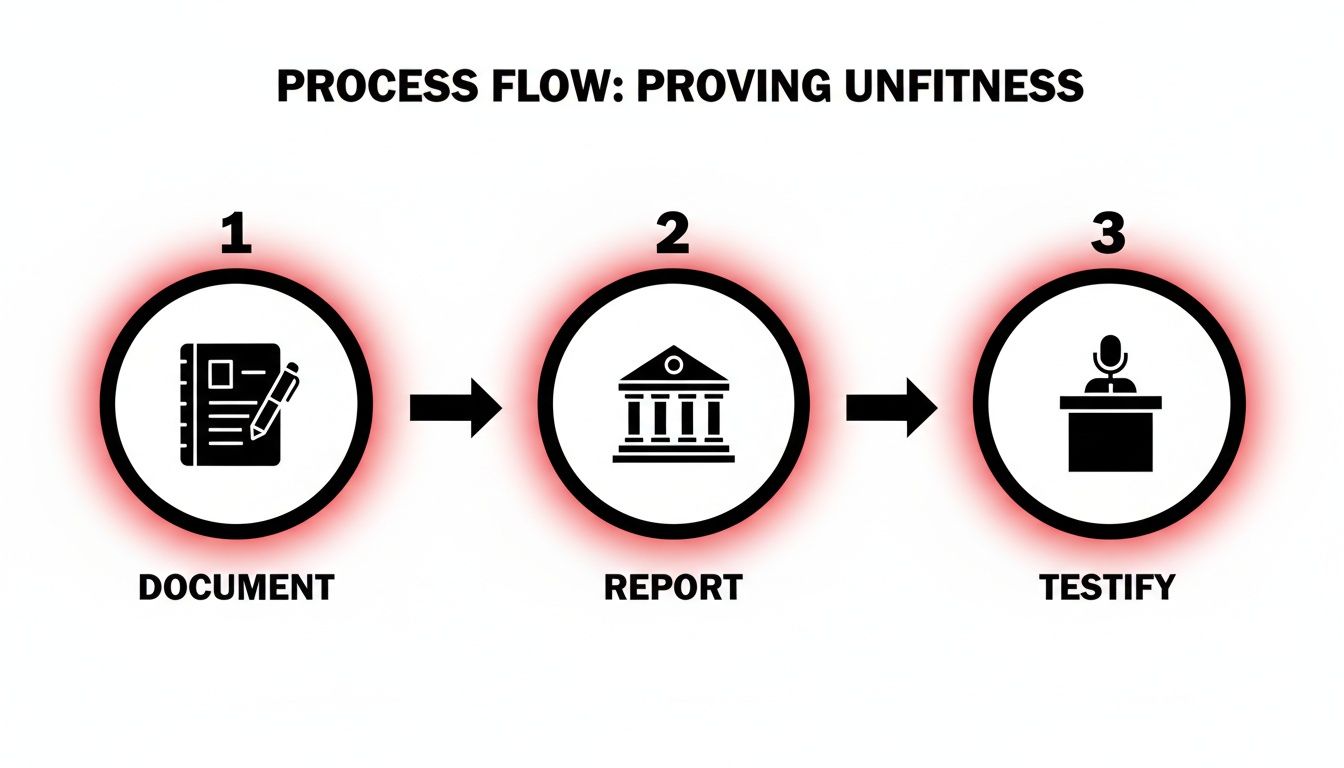
Each of these steps—documenting what happened, reporting it to the right authorities, and being ready to testify—is a building block for your case. Courts are definitely leaning more toward shared parenting, but when one parent can clearly prove they are the better choice, sole custody is still very much on the table. A 2021 European study noted that while joint custody is on the rise, nearly 80% of children from separated families were still in a sole custody situation. Fathers who can powerfully demonstrate they offer a more stable and nurturing home have a real shot.
Life as the Primary Custodial Father

The judge's ruling is in, and the legal battle is finally over. You did it. While winning your case is a monumental victory, it’s really just the starting line for the next chapter of your life. The focus now shifts from proving you’re the best choice to being the best parent you can be, day in and day out.
This journey is incredibly rewarding, but it brings its own set of challenges. It's about so much more than just managing schedules and logistics—it’s about creating a new sense of normalcy, stability, and happiness for you and your child.
Establishing New Routines and Stability
Kids absolutely thrive on predictability. After the emotional rollercoaster of a custody case, the single most powerful thing you can do is establish consistent routines to restore their sense of security. This is job number one.
Think about the pillars of your child's day and start building a reliable rhythm around them. This isn't about running a boot camp, but about creating a flow they can count on.
- Consistent Wake-Up and Bedtimes: This simple anchor helps regulate their sleep, mood, and even how well they do in school.
- Structured Meal Times: Making family dinner a priority, even if it's just the two of you, creates a dedicated space to connect and talk about the day.
- Designated Homework Hours: A set time and place for schoolwork cuts down on the daily arguments and helps build good study habits for the long haul.
This structure becomes an anchor for your child in a world that might have felt pretty chaotic. It shows them that even though big things have changed, their home with you is a safe, predictable space.
Managing Your Child's Emotional Adjustment
Your child has been through a lot. They might be feeling a tangled mess of relief, sadness, confusion, or even guilt about the situation. Your role now is to be a patient, empathetic listener and give them the space to process it all.
Don't be surprised if you see some changes in their behavior. They might act out, become withdrawn, or regress to younger habits like bedwetting. This is a completely normal reaction to a major life change.
A Critical Insight: Your child's emotional well-being is everything. Constantly reassure them that the custody situation was an adult issue and had nothing to do with them. Let them know they are loved by both parents and that it's okay to miss their other parent.
If you notice your child is really struggling, reaching out to a child therapist or school counselor is a sign of strength. It gives them a neutral person to talk to and helps them learn healthy ways to cope.
Building Your Support System
Listen, you cannot and should not try to do this all by yourself. Single-parent burnout is a very real thing, and building a strong support network is non-negotiable—for your sanity and your child’s well-being. This is your lifeline.
Think about who can be in your corner:
- Family and Friends: Lean on trusted relatives and close friends who can offer practical help, like picking the kids up from school, or just be there to listen when you need to vent.
- Other Dads: There's a unique camaraderie that comes from connecting with other single fathers. They just get it in a way no one else can.
- Community Groups: Local parenting groups or clubs can be a fantastic resource. We have some great tips on finding the right fit in our guide to stay-at-home dad support groups.
Prioritizing your own mental and physical health isn’t selfish; it’s a necessity. You have to recharge your own batteries to be the calm, present father your child needs you to be. Remember, this is a marathon, not a sprint.
Tough Questions Dads Ask About Getting Full Custody
When you're fighting for your kids, you're going to have a ton of questions that don't fit into a neat little checklist. These are the kinds of concerns that keep you up at night. Let’s tackle some of the most common ones I hear from fathers who are trying to navigate the path to full custody.
Is This Just About Who Makes More Money?
A lot of guys think the custody battle comes down to who has the bigger paycheck. It doesn't. While your finances absolutely matter, the court isn't just comparing W-2s.
What a judge really wants to see is stability. Can you provide a safe, consistent, and supportive home? That's the million-dollar question. A higher income is meaningless if you're never around or can't provide a reliable environment. In fact, a dad with a steady, moderate income who is deeply involved in his child's life often has a stronger case than a high-earning father who is barely present.
The goal isn't to prove you're wealthy; it's to prove you're reliable. The court needs to be confident that you can meet your child's needs day in and day out without chaos or disruption.
What if She Starts Making Things Up About Me?
It’s a nightmare scenario, but false allegations are a weapon that gets used far too often in heated custody fights. The absolute first rule here is to stay calm and let your lawyer handle it. Do not confront her about it. Don't send angry texts. Engaging directly will only make you look unstable and could escalate the situation.
Instead, you and your attorney need to start building a case to dismantle the lies. Focus on gathering concrete evidence that tells the real story.
- Get statements from credible witnesses—think teachers, neighbors, family friends, or coaches who can vouch for your character and your parenting.
- Pull your communication records. Sometimes a text or email thread can completely contradict a false claim she's making.
- Keep a detailed journal of your daily activities and every interaction you have. This can be crucial for establishing timelines and proving where you were and what you were doing.
Follow every court order to the letter and keep your composure. Judges have seen this tactic before. A calm, methodical, evidence-based defense is your best and only strategy.
Can My Kid Just Tell the Judge They Want to Live with Me?
A child's preference definitely plays a role, but it's almost never the single deciding factor. The weight of their opinion really depends on their age and maturity level. Once a child hits 12 or 14 years old, most judges will start to listen more closely to what they have to say.
But even then, the judge has the final call and will always rule based on the child's best interests. A judge will also be looking to see if the child has been coached or pressured by one parent. So while your child’s wishes are important and will likely be considered, they are just one part of a much larger picture.
Should I Move Out of Our House?
My advice is almost always no—unless a court has ordered you to leave for safety reasons, like in a domestic violence case. Moving out of the family home can be a critical mistake.
From a legal standpoint, leaving can be twisted to look like you're abandoning your children or giving up your role as an active parent in their primary home. Staying put shows the court your commitment to providing stability for your kids during a time when their world is being turned upside down. Before you even think about packing a bag, talk to your family law attorney. It's a decision with major legal consequences.
At alphadadmode.com, we're building a community for fathers who are ready to take control and build a better future for their families. To get exclusive updates, resources, and pre-launch access, sign up at https://alphadadmode.com.
