

Keeping a toddler engaged, learning, and happy at home can feel like a monumental task. For dads determined to create meaningful, hands-on experiences, finding the right activities for toddlers at home is essential. This isn't just about filling the hours; it's about building foundational cognitive and motor skills, strengthening your bond, and making lasting memories without requiring elaborate setups or expensive gear. This guide is your blueprint for transforming everyday moments into impactful opportunities for growth and connection.
We've curated a comprehensive list of ten proven activities specifically designed for fathers to lead with confidence. From the creative chaos of sensory play that builds focus to indoor obstacle courses that productively burn off endless energy, each idea is practical, developmental, and genuinely fun. For dads ready to step up and make their time together truly count, this guide provides actionable strategies.
You'll find everything you need to know, including simple how-to instructions, required materials, key learning goals, and important safety tips. Let’s dive into the activities that will turn your living room into a launchpad for learning, laughter, and an unbreakable father-child connection.
1. Sensory Play Bins
Sensory play bins are a cornerstone of engaging activities for toddlers at home, offering a contained world of tactile exploration. These are simply shallow containers filled with materials like dry rice, pasta, or kinetic sand that invite toddlers to scoop, pour, and discover. This self-directed play is crucial for developing fine motor skills and hand-eye coordination as they manipulate small objects and tools.
Why It Works for Dads
For fathers looking to create focused, independent play moments, sensory bins are invaluable. They allow a toddler to become deeply engrossed in a safe activity, giving you a chance to supervise from nearby while you read, work, or simply decompress. This fosters independence in your child while keeping them within arm's reach.
How to Implement It
- Materials: Start simple with a base of uncooked rice or pasta in a large, shallow plastic bin. Add in scoops, funnels, and small, non-choking hazard toys for them to find.
- Setup: Place a large sheet or tablecloth underneath the bin to make cleanup manageable. Spills are part of the process, and this step makes it stress-free.
- Safety: Always supervise, especially with smaller materials or water beads. Establish a clear rule: "We keep the rice in the bin."
Pro-Tip: Rotate the bin's contents monthly to keep the activity fresh and exciting. Swapping rice for oats or adding new "treasures" like large plastic gems or animal figurines can reignite your toddler's interest.
2. Indoor Obstacle Courses
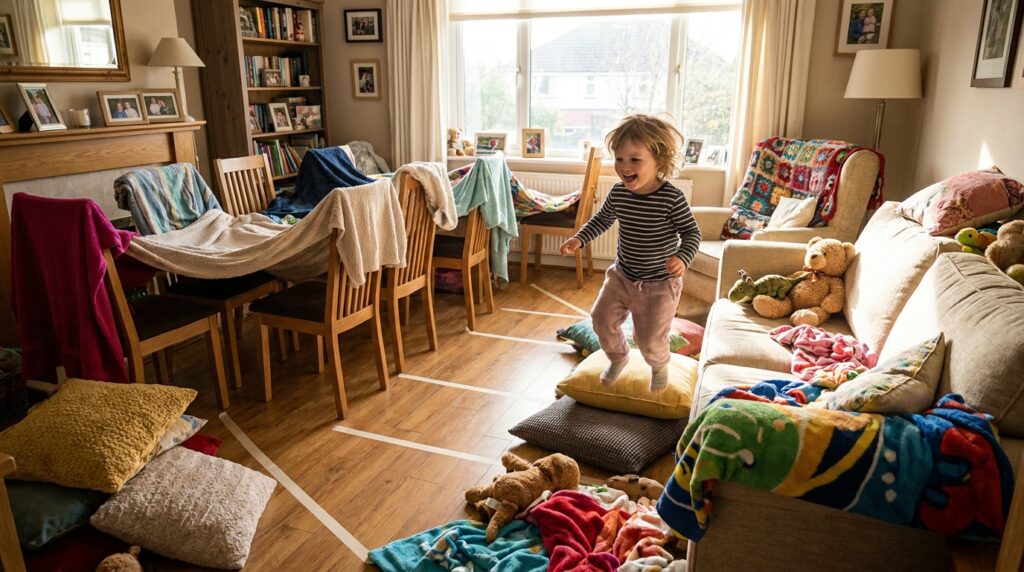
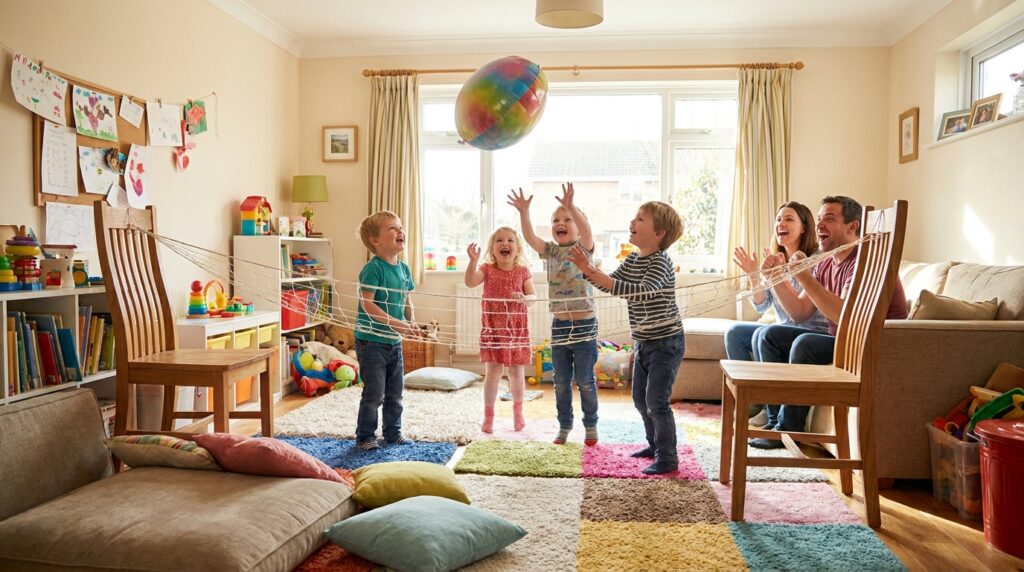
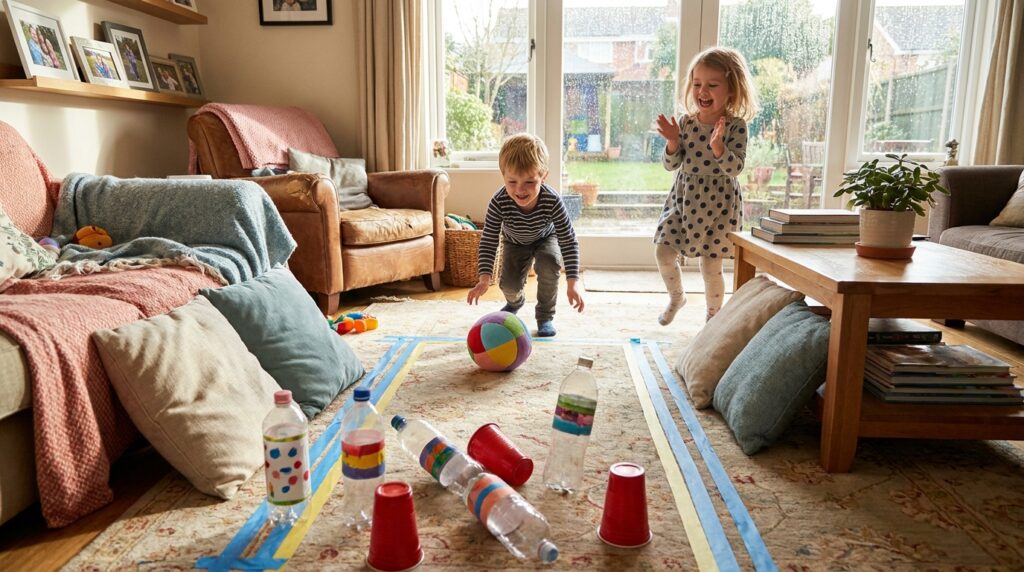
Indoor obstacle courses transform your living room into an adventure zone, providing a fantastic outlet for a toddler’s boundless energy. This activity uses household items like pillows, blankets, and furniture to create a path for toddlers to crawl, climb, jump, and balance through. It’s an ideal way to develop crucial gross motor skills, body awareness, and problem-solving abilities, especially on rainy days when outdoor play isn't an option.
Why It Works for Dads
This is one of the best activities for toddlers at home for dads who want to engage in active, physical play. Building the course is a collaborative project, and guiding your child through it creates a strong bonding experience. It allows you to be hands-on, offering encouragement and support while burning off that pre-nap or pre-bedtime energy in a structured, fun way.
How to Implement It
- Materials: Use what you have. Couch cushions become stepping stones, chairs and blankets form tunnels, and painter's tape on the floor can create a balance beam.
- Setup: Start with a simple three-step course (e.g., crawl under a table, walk the tape line, jump on a pillow pile). Demonstrate each step first to show your toddler what to do.
- Safety: Ensure the play area is clear of sharp corners or hard objects. Use yoga mats or soft rugs for landing zones and always supervise closely, especially during climbing or jumping sections.
Pro-Tip: Narrate the adventure as your toddler goes through the course. Phrases like "You're climbing the mighty mountain!" or "Quick, crawl through the secret cave!" can turn a simple physical task into an exciting, imaginative journey.
3. Painting and Art Projects
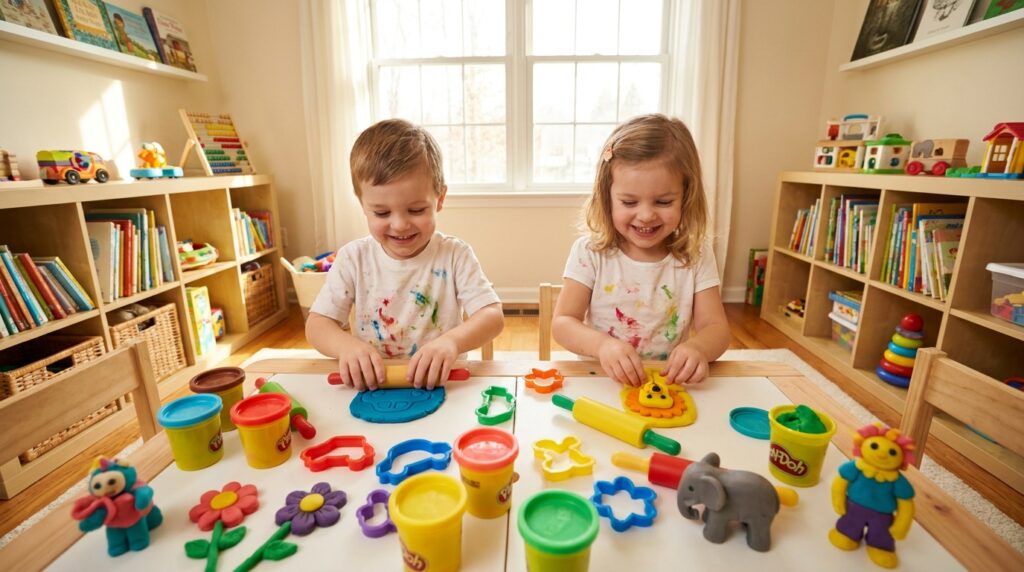
Structured art projects using washable paints, crayons, and craft supplies are fantastic activities for toddlers at home that go beyond simple entertainment. These creative sessions are powerful tools for developing fine motor control, hand-eye coordination, and color recognition. Whether it’s finger painting or using a brush, art allows toddlers to express themselves in a tangible and exciting way.
Why It Works for Dads
For fathers, setting up a designated art station creates a perfect opportunity for contained, messy fun. It allows you to guide a structured activity that builds creativity while teaching your toddler about process and cleanup. It's a hands-on way to bond, celebrate their creations, and show them that making a mess is okay when it's part of a creative plan.
How to Implement It
- Materials: Stock up on washable, non-toxic paints and markers. Butcher paper, sponges, and old clothes or a smock are essential for a stress-free experience.
- Setup: Cover your work surface (and the floor) with a plastic tablecloth or old newspapers. Pour small amounts of paint into a muffin tin or shallow dish to prevent spills and waste.
- Safety: The focus is on the process, not the final product. Always supervise to ensure supplies are used safely and kindly redirect any attempts to taste the paint.
Pro-Tip: Introduce crayon-resist art for a touch of magic. Have your toddler draw heavily on paper with a white or light-colored crayon, then let them paint over it with watercolors to see their secret drawing magically appear.
4. Cooking and Baking Together
Bringing your toddler into the kitchen for simple cooking and baking is one of the most rewarding activities for toddlers at home. It transforms a daily chore into a hands-on learning experience. Toddlers can help with age-appropriate tasks like stirring, pouring pre-measured ingredients, or decorating cookies, turning food preparation into a collaborative and fun project. This activity builds foundational math and literacy skills as you count, measure, and follow recipe steps together.
Why It Works for Dads
For fathers, cooking together creates a powerful bonding opportunity and establishes a tradition you can own. It’s a chance to teach life skills, patience, and the joy of creating something tangible from start to finish. Leading this activity builds your child’s confidence in you as a guide and nurturer, strengthening your connection over a shared, delicious accomplishment.
How to Implement It
- Materials: Choose a simple recipe like no-bake cookies, fruit kabobs, or pancake mix. Gather all ingredients, a large mixing bowl, and child-safe utensils like silicone spatulas.
- Setup: Designate a safe workspace, like a sturdy chair pulled up to the counter or a small, low table. Prepare for mess by laying down a mat and having wipes ready.
- Safety: The cardinal rule is kitchen safety. Clearly define "hot" zones like the stove and oven. Always handle sharp tools and hot items yourself, giving your toddler tasks far from any danger.
Pro-Tip: Focus on the process, not perfection. Spills and messes are part of the learning curve. Talking through each step ("Now we pour the flour!") turns the activity into a rich language lesson and can even encourage adventurous eating. If you're struggling with a picky eater, this involvement can make a huge difference. Find out more on how to handle picky eaters and make mealtimes more peaceful.
5. Building with Blocks and Stacking Toys
Building with blocks is a classic among activities for toddlers at home for a good reason. Construction play, whether with wooden blocks, stacking cups, or magnetic tiles, is a powerhouse for development. Toddlers learn about balance, gravity, and cause and effect every time a tower wobbles or falls. This focused play builds crucial spatial awareness, problem-solving abilities, and fine motor skills as they grasp, place, and adjust each piece.
Why It Works for Dads
For fathers seeking a calm yet constructive activity, block play is a perfect choice. It provides a shared focus where you can build together or an independent task that allows your toddler to concentrate deeply. This quiet engagement is ideal for winding down before a nap, managing solo parenting time, and creating moments of focused, collaborative fun without high energy or extensive cleanup.
How to Implement It
- Materials: Start with large, easy-to-grip blocks like classic wooden sets, soft foam blocks, or DUPLO bricks. Stacking rings and cups are also excellent for younger toddlers.
- Setup: Designate a comfortable floor space with a rug or play mat. Keep the blocks in an open, accessible bin so your toddler can easily start playing on their own.
- Engagement: Get on the floor and build alongside them. You can introduce simple challenges like, "Can we make a tower as tall as your knee?" or simply narrate their actions to build vocabulary.
Pro-Tip: Don’t just focus on building up. Show your toddler how to build bridges, enclosures for toy animals, or long, flat "roads." This introduces new engineering concepts and expands their imaginative play possibilities.
6. Music and Movement Activities
Music and movement activities are some of the most joyful and beneficial activities for toddlers at home. This involves structured play using songs, dancing, and simple instruments to develop rhythm, coordination, and emotional expression. From a simple freeze dance game to exploring the sounds of a xylophone, this activity taps into a toddler’s natural energy and love for sound.
Why It Works for Dads
For fathers, leading a music session is a fantastic way to engage in high-energy, active play that strengthens your connection. It provides an outlet for your toddler's boundless energy in a constructive way and allows you to be silly and expressive together. This kind of shared joy is fundamental to building strong bonds, and you can explore more father-son bonding activities to complement these musical moments.
How to Implement It
- Materials: You don't need much to start. Use a speaker for music and your own bodies for dancing. Simple, durable instruments like maracas, a small drum, or colorful scarves can enhance the experience.
- Setup: Clear a safe space in a room for free movement. Put on a curated toddler playlist from Spotify or YouTube Music, featuring songs with clear actions like "If You're Happy and You Know It."
- Safety: Ensure the play area is free of tripping hazards. If using instruments, check that they are age-appropriate and do not have small parts that could break off.
Pro-Tip: Use music as a powerful tool for daily transitions. Play an upbeat "cleanup song" to make tidying up fun or a calm, slow song to signal that it's time to wind down for a nap or bedtime.
7. Water Play and Sensory Water Activities
Supervised water play is one of the most versatile activities for toddlers at home, turning a simple element into a powerful tool for learning and sensory exploration. Whether in the bathtub, a shallow bin, or a small kiddie pool, activities involving pouring, splashing, and scooping help toddlers understand concepts like volume and temperature. This type of play is fantastic for developing fine motor skills and can have a wonderfully calming effect on a busy toddler.
Why It Works for Dads
For dads, water play is a go-to for managing high-energy moments or difficult transitions, like the lead-up to bath time. It provides a contained, engaging activity that can cool down a hot summer day or make an indoor afternoon feel special. It’s also an excellent way to connect with your child in a low-pressure, high-fun environment, turning a simple task into a shared adventure.
How to Implement It
- Materials: Gather floating toys, sponges, funnels, and various-sized plastic cups or containers. Washable bath crayons can add a creative twist to tub time.
- Setup: For indoor play, lay towels down around the bathtub or a shallow bin. For outdoors, a small kiddie pool on a flat surface is perfect. Always test the water temperature first.
- Safety: Never leave a child unattended near water, even for a second. Stay within arm's reach at all times and use non-slip mats to prevent falls.
Pro-Tip: Add a few drops of food coloring or a colored bath drop to the water to make it more visually stimulating. This simple addition can transform a familiar activity into an exciting new sensory experience, capturing your toddler’s attention for longer.
8. Story Time and Interactive Reading
Story time is more than just reading words on a page; it's a dynamic, interactive experience that builds a powerful foundation for literacy and emotional connection. This quiet, bonding activity involves reading aloud, using expressive voices for characters, and encouraging your toddler to participate by asking questions or pointing to pictures. It’s one of the most effective activities for toddlers at home for developing language skills, vocabulary, and a lifelong love of reading.
Why It Works for Dads
For fathers, interactive reading is a perfect way to build a deep, personal connection in a calm setting. It’s an ideal transition activity, perfect for winding down before a nap or bedtime. This shared ritual creates cherished memories and provides a special space for one-on-one time, strengthening the father-child bond through shared stories and discovery.
How to Implement It
- Materials: Gather a small collection of sturdy board books, lift-the-flap books, or touch-and-feel books. Titles like Dear Zoo or Brown Bear, Brown Bear, What Do You See? are excellent starting points.
- Setup: Create a comfortable, distraction-free "reading nook" with a comfy chair or some pillows on the floor. Let your toddler choose the book sometimes to give them a sense of ownership over the activity.
- Safety: Ensure books are age-appropriate with no small, detachable parts. Board books are durable and can withstand a toddler's enthusiastic page-turning and even chewing.
Pro-Tip: Make it interactive by asking, "What do you think happens next?" or "Where is the blue car?" Point to objects in the illustrations and name them to actively build your toddler's vocabulary during each session.
9. Pretend Play and Dramatic Play Stations
Pretend play stations are dedicated areas in your home where toddlers can immerse themselves in imaginative scenarios, from a bustling play kitchen to a busy doctor's office. By providing props like dress-up clothes, toy tools, or a cash register, you create a framework for them to explore adult roles, emotions, and social interactions. These activities for toddlers at home are fundamental for boosting language skills, problem-solving, and empathy.
Why It Works for Dads
For fathers, these stations offer a unique window into a toddler's mind. Observing how they "cook" dinner or "fix" a toy reveals their understanding of the world. It’s a low-pressure way to engage; you can be a customer at their restaurant or a patient at their clinic, allowing your child to take the lead. This type of play also helps children process new or challenging experiences, building resilience in a safe environment.
How to Implement It
- Materials: Gather items to create a specific scene. For a grocery store, use a small shelf, play food, a toy cash register, and reusable bags. A doctor's kit and a few stuffed animal "patients" are all you need for a vet clinic.
- Setup: Designate a corner of a room for the station. Use a small, child-sized table or a few storage bins to organize the props, making them accessible and inviting for independent play.
- Safety: Ensure all props are age-appropriate and free of small, detachable parts that could be choking hazards. Regularly check toys for any damage.
Pro-Tip: Rotate the theme of the play station every few weeks to maintain excitement. Involve your toddler in setting up the new station; letting them help organize the props for a "car repair shop" gives them ownership and enhances the fun.
10. Puzzle and Fine Motor Skill Activities
Puzzles and other fine motor activities are fundamental for building crucial developmental skills in toddlers. These focused tasks, like fitting shapes into a sorter or completing a simple chunky puzzle, directly support problem-solving, spatial awareness, and hand-eye coordination. They are quiet, engaging activities for toddlers at home that challenge their minds and refine the small muscle movements in their hands and fingers.
Why It Works for Dads
For fathers looking to engage in focused, skill-building play, puzzles are perfect. They provide a structured activity with a clear goal, allowing you to guide your toddler through the process of trial and error. This shared effort builds concentration and patience in your child and offers a rewarding moment of connection when a puzzle is finally solved together.
How to Implement It
- Materials: Start with age-appropriate options. A single-piece lift-out puzzle is great for younger toddlers, while a 4-8 piece chunky puzzle suits an older toddler. Shape sorters and large threading beads are also excellent choices.
- Setup: Find a quiet, well-lit space on the floor where you can sit together without distractions. Keep puzzles in their original boxes or in resealable bags to avoid losing pieces.
- Safety: Regularly inspect puzzles and toys for loose or splintering parts. Ensure all pieces are large enough to not be a choking hazard for your child's specific age.
Pro-Tip: Celebrate the effort, not just the completion. If your toddler tries to fit a piece in the wrong spot, use it as a teaching moment by saying, "That's a good try! Let's see if it fits somewhere else," to encourage persistence without frustration.
Top 10 Toddler Home Activities: Quick Comparison
| Activity | Implementation Complexity 🔄 | Resources & Setup ⚡ | Expected Outcomes 📊⭐ | Ideal Use Cases 💡 | Key Advantages ⭐ |
|---|---|---|---|---|---|
| Sensory Play Bins | Low–Medium — prepare materials and contain mess 🔄 | Low cost; shallow bins, fillers (rice, sand), tarp; close supervision ⚡ | 📊 Sensory processing, fine motor, tactile discrimination — ⭐⭐⭐⭐ | Independent supervised play; quiet exploration while dad nearby 💡 | Highly engaging; customizable; portable |
| Indoor Obstacle Courses | Medium — arrange furniture, ensure safety padding 🔄 | Household items, mats/padding, open floor; moderate space and supervision ⚡ | 📊 Gross motor, balance, spatial awareness — ⭐⭐⭐⭐ | High-energy outlets (rainy days); active father-child play 💡 | Burns energy; promotes confidence and risk assessment |
| Painting & Art Projects | Medium — prep, cover surfaces, manage cleanup 🔄 | Washable paints, paper/smocks, coverings; time for setup/cleanup ⚡ | 📊 Fine motor, creativity, color recognition — ⭐⭐⭐⭐ | Creative time, before/after naps; keeps toddlers engaged 💡 | Strong creative expression; tangible keepsakes |
| Cooking & Baking Together | Medium–High — safety planning and adult involvement 🔄 | Kitchen tools, simple recipes, child-safe tasks; time and supervision ⚡ | 📊 Sequencing, early math, independence, bonding — ⭐⭐⭐⭐⭐ | Shared routines, meal prep, teaching life skills 💡 | Real-world learning; edible rewards; strong bonding |
| Building with Blocks & Stacking Toys | Low — simple setup, easy rotation 🔄 | Blocks/stackers, storage bins; minimal space; age-appropriate sizes ⚡ | 📊 Spatial reasoning, problem-solving, fine motor — ⭐⭐⭐⭐ | Quiet focused play, calming before transitions; solo playtime 💡 | Open-ended play; low mess; long toy longevity |
| Music & Movement Activities | Low — minimal setup, time-limited sessions 🔄 | Playlists/instruments, open space; 10–15 min sessions; low cost ⚡ | 📊 Rhythm, coordination, language through song — ⭐⭐⭐⭐⭐ | High-energy breaks, transitions, bonding through song 💡 | Fast energy release; mood boosting; adaptable |
| Water Play & Sensory Water Activities | Medium — strict supervision and containment 🔄 | Shallow bins/kiddie pool, towels, non-slip mats; constant supervision ⚡ | 📊 Fine motor, cause-and-effect, calming regulation — ⭐⭐⭐⭐ | Summer/outdoor play or bath-time exploration 💡 | Highly engaging; soothing sensory input |
| Story Time & Interactive Reading | Low — minimal prep, routine-based 🔄 | Books (library/own), cozy spot; short sessions to match attention ⚡ | 📊 Language, pre-literacy, emotional bonding — ⭐⭐⭐⭐⭐ | Transition times (before bed), quiet bonding moments 💡 | Builds vocabulary; portable; minimal cost |
| Pretend & Dramatic Play Stations | Medium — curate props and rotate themes 🔄 | Props/toys, small furniture, storage; periodic rotation for novelty ⚡ | 📊 Imagination, social skills, emotional processing — ⭐⭐⭐⭐⭐ | Extended focused play; role exploration with dad participation 💡 | Encourages narrative language; processes emotions |
| Puzzle & Fine Motor Activities | Low — setup simple, supervise for small pieces 🔄 | Age-appropriate puzzles, peg/toy sets, labeled containers; table space ⚡ | 📊 Fine motor, problem-solving, concentration — ⭐⭐⭐⭐ | Quiet skill-building sessions; pre-writing preparation 💡 | Clear progression; durable; measurable skill gains |
Building a Legacy, One Playtime at a Time
The hours spent with your toddler can feel long, but the years are incredibly short. As we've explored, the key to transforming these moments into meaningful milestones lies not in elaborate setups or expensive toys, but in purposeful engagement. The collection of activities for toddlers at home detailed in this guide, from sensory bins to indoor obstacle courses, are more than just boredom busters; they are the fundamental building blocks of cognitive, motor, and emotional development. Each time you build a block tower, you're teaching physics and patience. Every story you read aloud expands vocabulary and sparks imagination.
The true value of these interactions, however, extends far beyond developmental checklists. It's about forging a bond that will serve as the foundation for your child's entire life. Your presence, attention, and enthusiasm are the most critical materials you can bring to any activity. You are not just facilitating play; you are modeling curiosity, resilience, and connection.
The Real Takeaway: Presence Over Perfection
If you remember only one thing from this article, let it be this: your active participation is the secret ingredient. A perfectly curated art project means little if you’re distracted or disengaged. Conversely, a simple game of stacking couch cushions becomes an epic adventure when you are fully present, cheering on your little explorer and sharing in their triumphs. The goal isn't to execute a flawless activity every time. It’s about showing up, embracing the mess, and celebrating the process of discovery alongside your child.
Actionable Next Steps for the Modern Dad
Don't let this list become just another article you've read. Put it into action and start building momentum.
- Choose Your "Play of the Week": Look at your schedule and pick just one or two activities from this list to try this week. Don't overcommit. Maybe Tuesday is for a sensory water table, and Saturday morning is dedicated to building the ultimate fort.
- Prep Ahead: Take five minutes the night before to gather the necessary supplies. Having everything ready removes the friction that can derail a well-intentioned plan when a toddler's patience is running thin.
- Focus on the "Why": Before starting, remind yourself of the goal. Are you working on fine motor skills with puzzles? Fostering creativity with paint? The purpose will guide your interaction and help you appreciate the small wins.
By consistently integrating these kinds of activities for toddlers at home, you are actively shaping your child’s future while creating a repository of memories that you will both cherish. You are proving that fatherhood is not a passive role but an active, powerful force. This is your opportunity to build a legacy, not of things, but of time, attention, and unwavering love. It's a legacy built one messy, joyful, and unforgettable playtime at a time.
Ready to elevate your parenting game and connect with a community of fathers dedicated to excellence? At alphadadmode.com, we provide the tools, resources, and insights you need to master every aspect of fatherhood, from hands-on activities to personal growth. Join the movement and become the father your family deserves by visiting us at alphadadmode.com.