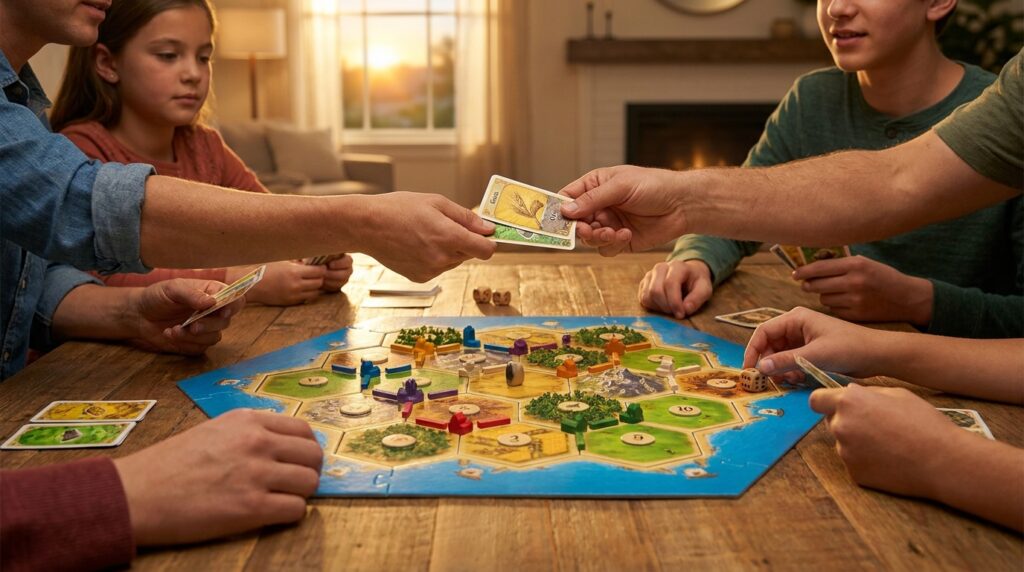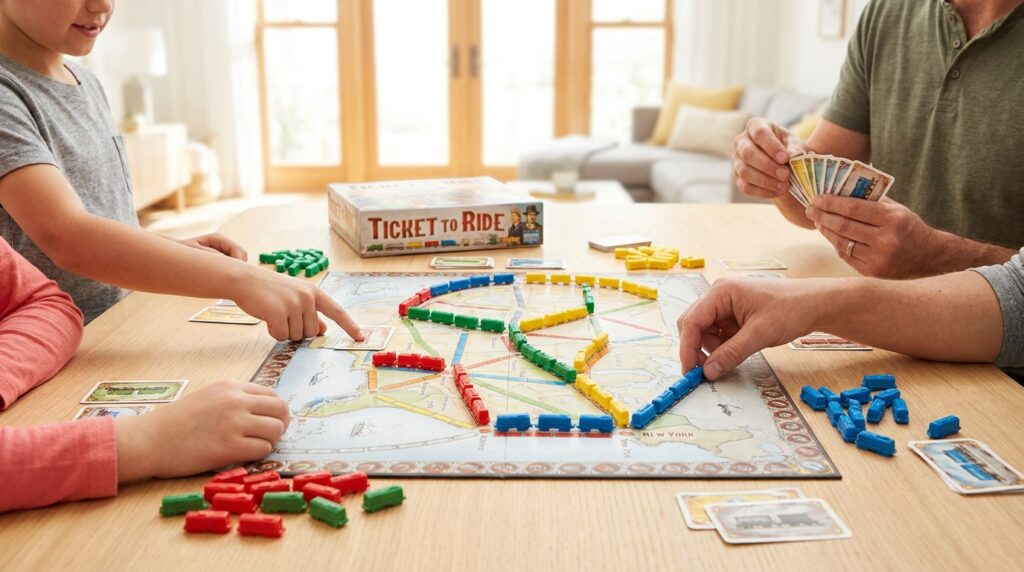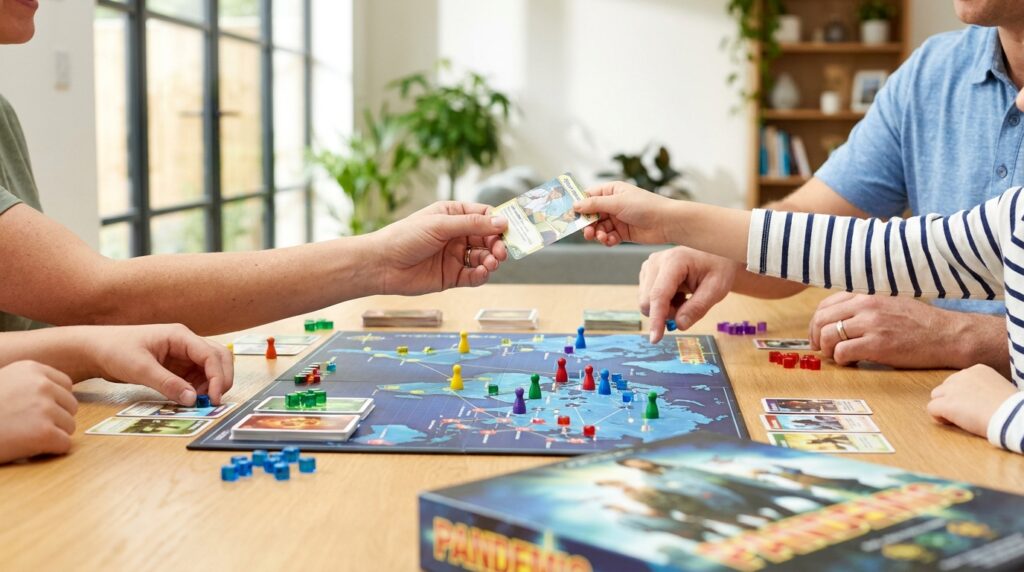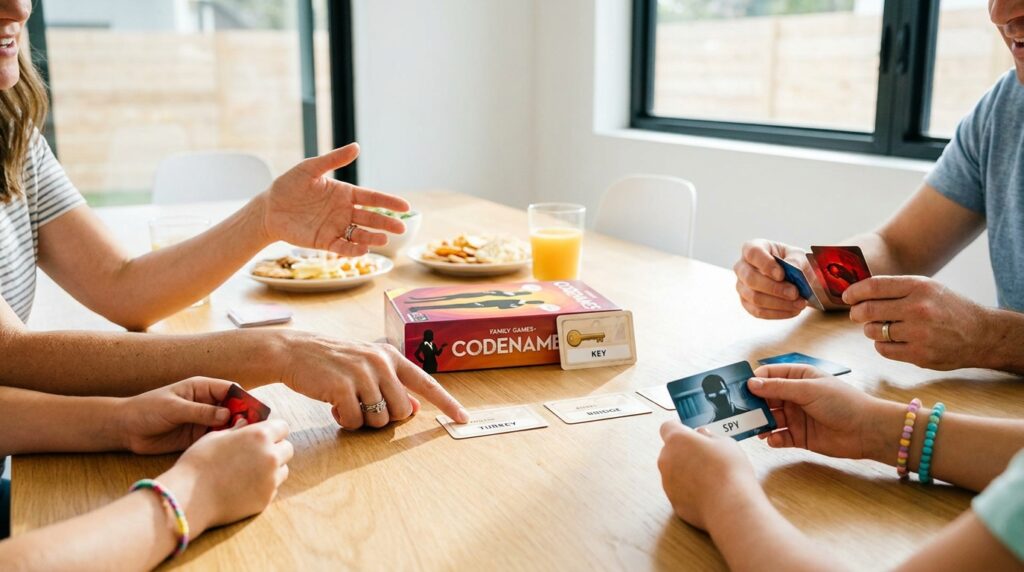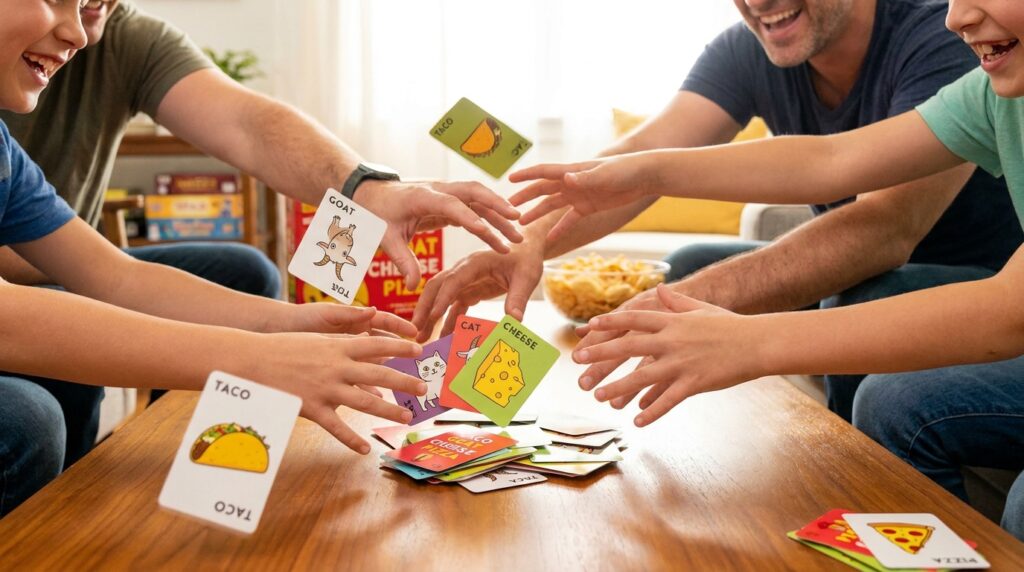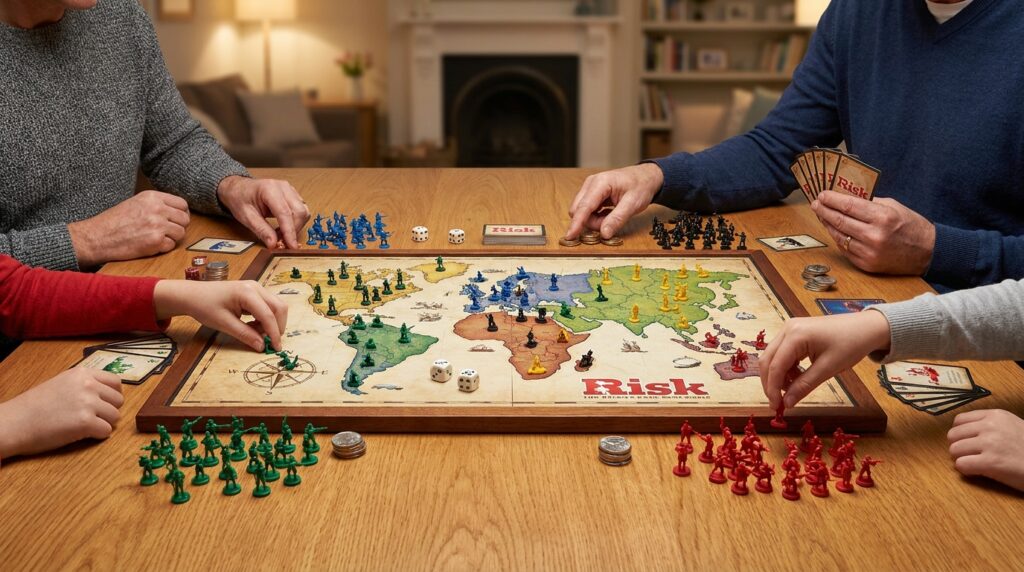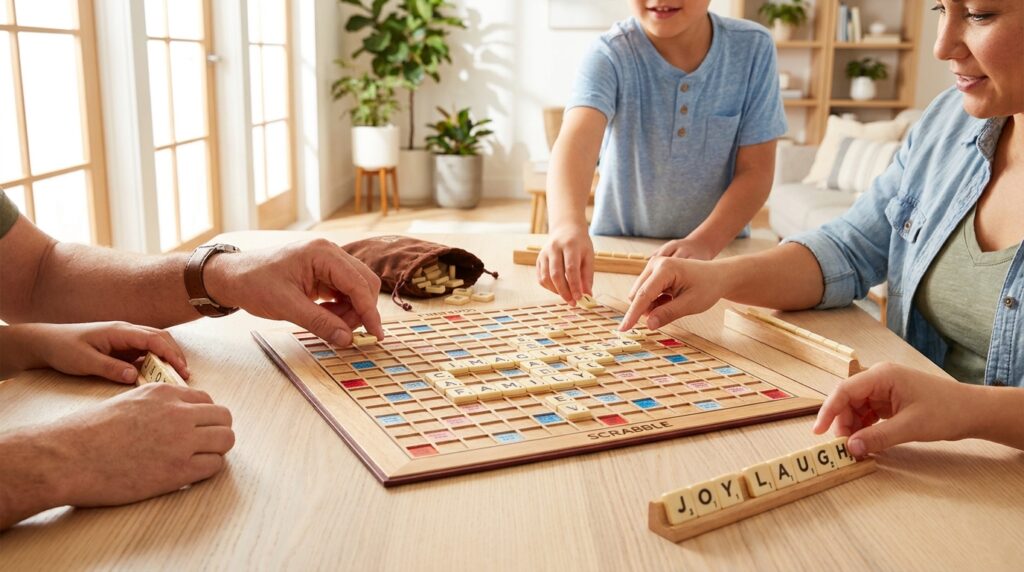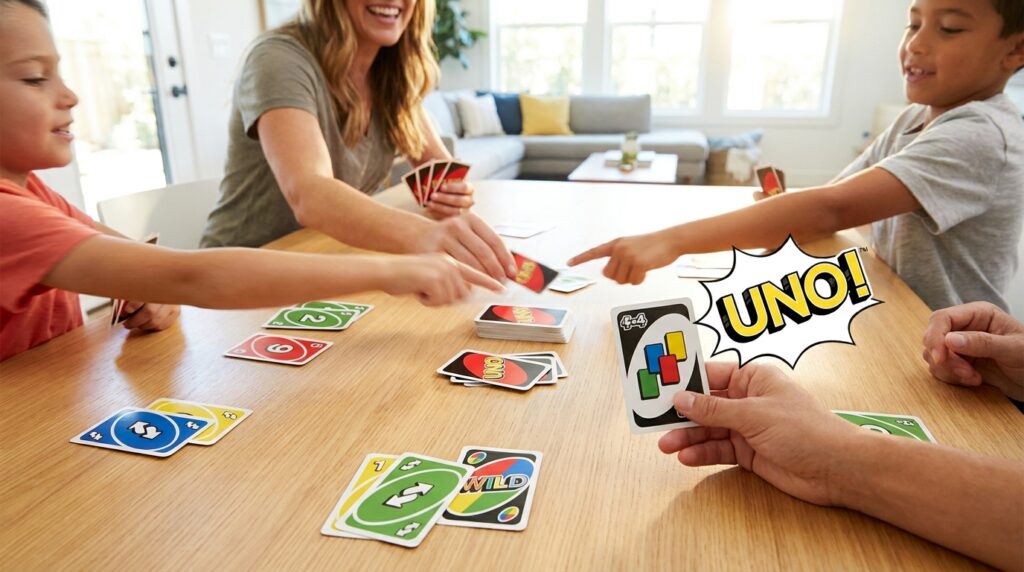

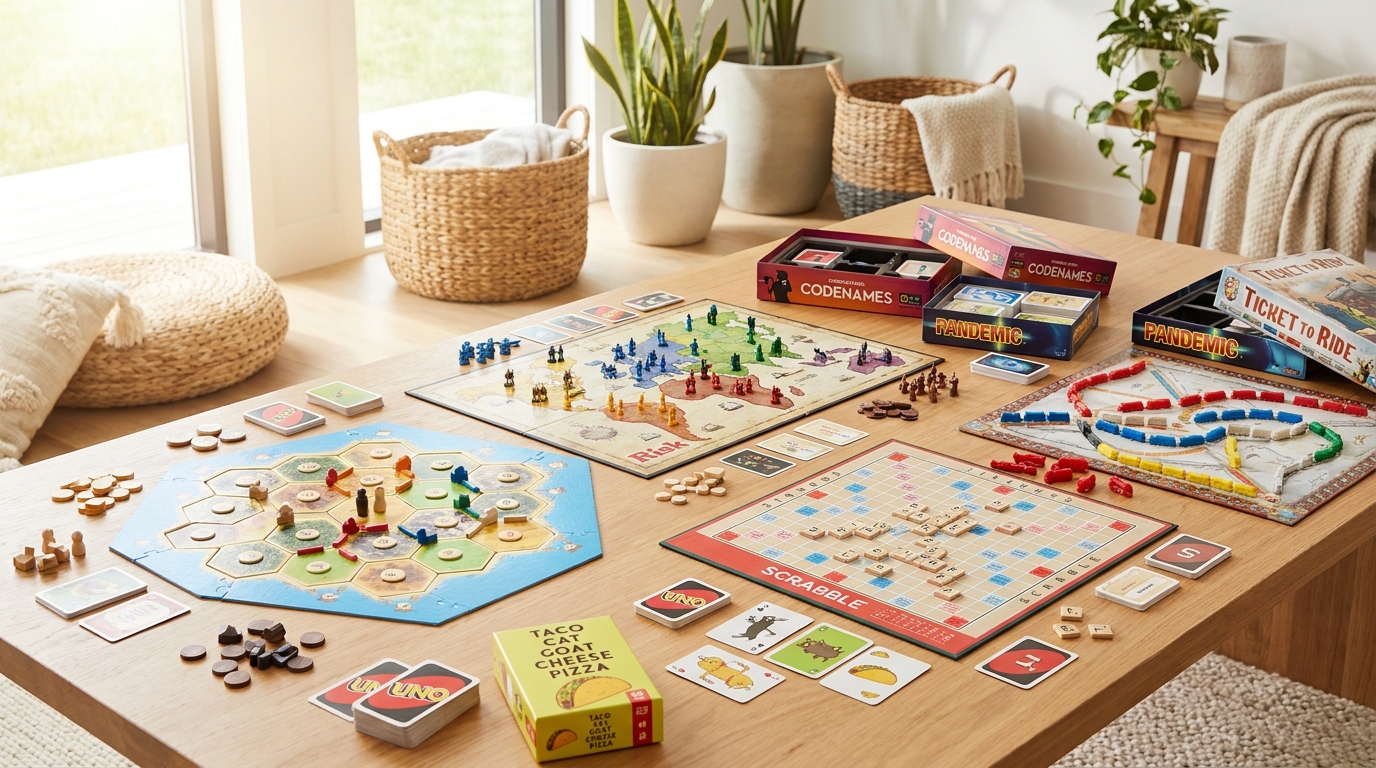
The best family board games aren't just titles you grab off a shelf. They're the ones that feel like they were made just for your family—hitting that sweet spot of your kids' ages, their quirky interests, and the energy in the room. It’s about finding the right key to unlock real connection, belly laughs, and memories that don’t involve a single screen.
This guide is for the dad who’s ready to be the architect of a truly legendary game night.
Building a Legacy One Game Night at a Time
In a world overflowing with digital noise, carving out dedicated, unplugged family time is a deliberate act of fatherhood. Board games are way more than just a throwback to our own childhoods; they're a powerful way to connect and teach crucial life skills without your kids ever feeling like they're in a lesson. The right game can turn a regular Tuesday night into a stage for teamwork, sharp thinking, and pure, shared joy.
This comeback of tabletop gaming is a dad's secret weapon for quality time, and the numbers back it up. The family board game market was a massive $13.1 billion industry in 2023 and is on track to hit $22.3 billion by 2032. This isn't just a fleeting trend; it’s a full-blown movement of parents choosing real-life interaction over another evening of passive screen time.
More Than Just Winning or Losing
Let’s be honest, the real prize of family game night isn't found at the finish line. It's a low-stakes training ground for the social skills that will serve your kids their entire lives. Think of it as a workshop for the heart, where every roll of the dice and every card played builds a little more character.
Through a simple game, your kids learn to:
- Navigate Disappointment: Learning to lose with your head held high is a skill, and a board game is the safest place on earth to practice it.
- Practice Strategic Thinking: Games get those little gears turning, encouraging kids to plan ahead and react when things don't go their way—the very essence of problem-solving.
- Communicate Effectively: Whether it’s explaining a rule, trying to make a trade, or just cheering on a sibling, games get everyone talking and listening.
- Experience Shared Victory: Cooperative games are especially brilliant for this, teaching kids that working together for a common goal feels even better than winning alone.
Activities like this are the foundation of strong family bonds. Finding things you can consistently do together is what builds those lasting memories. For more inspiration, you might want to check out our guide on father-son bonding activities to keep strengthening those family ties.
The goal isn't just to play a game; it's to create an experience. The laughter, the friendly arguments over the rules, the shared groan when the bad guy makes a move—these are the moments that become family legends.
Ultimately, this guide isn't about just listing a bunch of popular games. It's about giving you, as a dad, a framework to thoughtfully choose the games that will click with your crew. It’s about turning your dining room table into the epicenter of connection, learning, and unforgettable fun.
Understanding What Makes a Great Family Game
Ever wonder what separates a game that becomes a weeknight ritual from one that just collects dust on the shelf? It’s not about flashy plastic miniatures or a hot movie theme. The best family board games share a common DNA, a recipe of core ingredients that just clicks for everyone at the table, from the squirrely seven-year-old to a visiting grandparent.
Think of it like cooking a great meal for the family. You need the right balance. A game that’s all luck can feel pointless and frustrating, while a heavy, brain-burning strategy game might leave the younger kids (and maybe even some adults) feeling completely lost. The magic happens right in that sweet spot in the middle.
The "Low Floor, High Ceiling" Secret
The absolute gold standard for a family game is something designers call a "low floor, high ceiling." Honestly, if you remember nothing else, this concept is your secret weapon for picking a winner every time.
Low Floor: The game is simple to learn. Anyone, from your kid to a relative who hasn't played a board game since Monopoly, can get the gist in under ten minutes. You can open the box and start playing without a 45-minute lecture on the rules.
High Ceiling: While the rules are simple, the potential for strategy runs deep. A new player can have a blast right away, but an experienced player can discover clever tactics and new ways to win. This is what keeps the game interesting for you and your older kids, play after play.
This combination is what makes a game truly inclusive. It welcomes everyone to the table and ensures nobody feels dumb or bored. It’s the difference between a one-and-done game and one that creates real, lasting memories.
Key Ingredients for a Winning Game Night
Beyond that core principle, a few other elements really make a game shine as a family favorite. When you're scanning the shelves or browsing online, keep an eye out for these tell-tale signs of a great experience.
Player Interaction
Think about how much you actually engage with each other during the game. Some games are basically "multiplayer solitaire," where everyone is just quietly doing their own thing. The best family games, though, get you talking, trading, or reacting to what everyone else is doing. It can be cooperative (all of us against the game!) or friendly-competitive (like blocking a key spot or making a savvy trade).
Replayability
A great game shouldn't feel "solved" after you've played it twice. High replayability comes from variety—maybe the board is built differently every time, or there are tons of unique characters to try, or a deck of event cards keeps every game unpredictable. A game with great replayability offers incredible value and stays fresh for years.
Accessibility
This is about more than just easy rules. It's about practical stuff. Are the pieces easy for small hands to handle? Is the text on the cards easy to read from across the table? And crucially, what’s the playtime? A two-hour epic is a hard sell on a school night, but a zippy 30-minute game? That’s perfect.
A game’s true measure isn't its complexity, but its ability to generate shared moments. The best family board games are engines for creating stories, inside jokes, and friendly rivalries that strengthen your family bond with every turn.
Fellow dads, there’s a reason games like Wingspan or Carcassonne always top the "must-play" lists. They absolutely nail these core principles. Their success is a big part of why strategy and Euro-style games captured a massive 28.4% of the global market share in 2024, helping push the whole board game sector toward an estimated $15.83 billion in 2025. If you're curious, you can find more insights about this growing trend on icon-era.com.
Once you get a feel for these fundamentals, you’re no longer just buying a box with pretty art. You’re becoming a savvy curator, able to spot the potential for connection and fun before you even punch out the pieces.
Matching the Right Game to Your Family's Age
Ever tried to get a teenager excited about a simple color-matching game? You probably got a world-weary sigh and an epic eye-roll for your efforts. On the flip side, dropping a complex strategy game in front of a five-year-old is a fast track to a full-blown meltdown.
A "one-size-fits-all" approach to your family's game collection is a guaranteed way to ensure it gathers dust on a high shelf. The real secret is to stop thinking about the game and start thinking about your kid's brain. You're not just picking a game; you're picking an activity that lines up perfectly with their developmental stage, sharpening their skills while feeling like nothing but fun.
Toddlers And Preschoolers (Ages 2-5)
At this age, the world is a giant, hands-on science experiment. Abstract rules are gobbledygook, but tangible actions are pure magic. The best games for this crew are less about winning and more about simply doing.
These games are all about building the absolute bedrock of all future gaming skills:
- Color and Shape Recognition: Simple matching games are the bread and butter here, building crucial visual discrimination.
- Fine Motor Skills: Picking up chunky pieces, stacking wobbly blocks, or using a little toy fishing rod—it’s all about developing dexterity.
- Turn-Taking: This is a huge social milestone. A game provides a simple, structured way to practice the agony of waiting for your turn.
- Following Simple Directions: Games like Monkey Around give them a card with an action, teaching them to listen and respond.
Cooperative games are your secret weapon. Think about games like First Orchard, where everyone scrambles to harvest fruit before a pesky raven gets there. It completely removes the "I won, you lost" dynamic, preventing meltdowns and teaching the invaluable lesson of teamwork from day one.
The goal here is participation over competition. A successful game is one where everyone gets to play, laugh, and touch the pieces, no matter who "wins."
Young Kids (Ages 6-9)
Welcome to the golden age of family gaming. Kids in this bracket are finally ready for rules, can handle a bit of friendly competition, and their attention spans have (thankfully) stretched out. They can start to wrap their heads around simple strategies, making this the perfect time to introduce games that involve more than just a lucky roll of the dice.
This is where you can start planting some seriously useful seeds. For example, some games subtly introduce the idea of resource management—a core skill for financial literacy down the road. If you're looking for more ways to build these real-world skills, our guide on how to teach kids about money has some great practical advice.
At this stage, look for games that offer a gentle on-ramp to strategy. You want games where kids have to make simple choices that actually matter, like deciding which path to take or which card to play. The rules are still straightforward, but the gears of critical thinking are starting to turn.
Pre-Teens And Teens (Ages 10+)
Now we're talking. As kids get older, their capacity for complex thought just explodes. They're ready for deep strategy, nuanced rules, and games that offer a real mental workout. This is your chance to move beyond the simple stuff and introduce them to the rich, rewarding world of modern board games that you can all enjoy on a more equal footing.
Just imagine gathering the family for a night of genuine laughter and strategic showdowns with modern classics like Catan or Ticket to Ride. This isn't just a niche hobby; family board games are a booming market powerhouse. In 2025, the global board games market hit a staggering $12.8 billion, with family-oriented titles driving a huge part of that growth at a steady 5.5% CAGR projected through 2034. You can check out more industry insights at accio.com.
For this age group, you can dive into some incredible genres:
- Engine-Building Games: Players build a "machine" of abilities or resources that gets more powerful and efficient over time.
- Cooperative Strategy Games: These are a massive step up from the preschool versions, requiring serious teamwork and planning to defeat a tough, game-driven opponent.
- Legacy Games: These are the binge-watchable TV shows of the board game world. The game board, rules, and story change permanently every time you play.
As you build out your game collection, it’s helpful to see how different game mechanics align with your kids’ abilities.
Game Mechanics for Different Developmental Stages
| Age Group | Ideal Game Mechanics | Developmental Skills Nurtured | Example Game Type |
|---|---|---|---|
| Toddlers (2-5) | Matching, Turn-Taking, Roll-and-Move, Cooperative Play | Color/Shape Recognition, Fine Motor Skills, Patience, Teamwork | Cooperative Games, Dexterity Games |
| Kids (6-9) | Set Collection, Simple Strategy, Card Drafting, Push-Your-Luck | Basic Planning, Risk Assessment, Pattern Recognition | Gateway Strategy Games, Card Games |
| Teens (10+) | Engine Building, Worker Placement, Area Control, Legacy | Long-Term Strategy, Resource Management, Critical Thinking | Eurogames, Legacy Games |
This table is a great starting point, but remember every kid is different. The key is to observe and adapt.
Building a game library that grows with your children ensures that game night remains a relevant, engaging, and cherished family tradition. By thoughtfully picking games that hit that sweet spot for their age, you're not just buying entertainment—you're investing in connection, learning, and years of unforgettable memories.
Curated Game Picks for Modern Dads
Forget those generic "top ten" lists. Let's look at a few hand-picked examples as case studies, not a shopping list. Each one perfectly demonstrates a key principle we've talked about, showing you why certain games become family legends. This is about learning to spot the DNA of a great game out in the wild.
This decision tree can help you visualize which game categories are a good fit for your kids based on where they are developmentally.
It’s a simple reminder that the best place to start is always with your kids' age and abilities. This helps you find mechanics that will click, not cause frustration.
Case Study 1: The Cooperative Champion
Illustrates: Cooperative Play for Young Families
Example Game: First Orchard
With toddlers and preschoolers, direct competition can be a recipe for tears. First Orchard cleverly sidesteps this by making the game itself the opponent. Everyone works together, rolling a colored die to harvest fruit from four trees before a hungry raven gets to the end of its path.
There’s no "I win, you lose." The family either wins together, or that sneaky raven gets a snack. This simple shift is a game-changer. It teaches teamwork and shared goals, and it gets kids cheering for their siblings instead of against them. It’s the perfect embodiment of participation over competition and one of the best ways to introduce board games to the little ones.
Case Study 2: The Gateway to Strategy
Illustrates: "Low Floor, High Ceiling" for Mixed Ages
Example Game: Ticket to Ride
There's a reason Ticket to Ride is a modern classic—it's the ultimate gateway game. The idea is incredibly easy to get: collect colored train cards to claim routes on a map and connect the cities on your secret tickets. My seven-year-old figured out the basics in about five minutes.
But under that simple surface is a deep well of strategy. Do you go for the big points on long routes or grab the short ones before someone else blocks you? Should you risk drawing more tickets, hoping for an easy score? This "high ceiling" keeps teens and adults hooked, making it a fantastic choice for families with a wide age gap.
A truly great family game doesn't just entertain the kids; it respects the intelligence of the adults at the table. It creates a shared challenge where everyone, regardless of age, can feel clever and competitive.
Case Study 3: The Engine of Replayability
Illustrates: High Replayability and Player Interaction
Example Game: King of Tokyo
What makes a game hit the table year after year? Variety and interaction. King of Tokyo has both, wrapped in a loud, chaotic, and hilarious package. You’re all giant monsters battling to be the last one standing, rolling chunky dice to score points, heal, or wallop each other.
The replayability comes from two key places:
- The Dice Rolls: Every turn is a fun "push-your-luck" puzzle. Do you keep those attack rolls or try again for some much-needed health? The dice make sure no two turns are ever the same.
- Power-Up Cards: You can buy special cards that give you unique monster powers, completely changing your strategy and how you mess with everyone else.
The constant, direct player interaction means everyone is invested in every single roll. It’s a loud, rowdy experience that’s impossible to play passively. You’ll be creating exactly the kind of memorable, high-energy moments that make game night a success.
Case Study 4: The Compact Powerhouse
Illustrates: Simplicity and Portability
Example Game: Sushi Go!
You don't need a huge box and a two-hour commitment for a fantastic game night. Sushi Go! is a brilliant little "filler" game that packs a strategic punch into just 15 minutes. It uses a simple card-drafting mechanic: you pick one card from your hand and pass the rest to the person next to you.
This single action creates surprisingly tough decisions. Do you take the card you need, or do you grab the one you know your opponent is desperate for? It’s a great way to teach set collection and planning ahead, all in a tiny, adorable package. Its speed and small footprint make it perfect for weeknights, waiting for food at a restaurant, or as a warm-up for a bigger game, proving the best family board games sometimes come in the smallest boxes.
How to Host a Game Night That Actually Works
Picking out a great family board game is just the first step. The real magic happens when you turn that box of cardboard and plastic into a full-blown family tradition. As the dad, you're the architect of the experience, the one setting the stage for laughter, a bit of friendly competition, and memories that will stick around long after the game is put away.
Think of yourself as the family’s “Chief Fun Officer.” A little bit of planning is all it takes to make game night something everyone genuinely looks forward to, instead of just another thing on the calendar.
Set the Stage for Success
The right atmosphere can make or break a game night. You’re essentially creating a mini-event where the only goal is to connect and have a good time. No need for streamers or confetti—just a few simple touches to signal that this time is special.
First up, snacks are non-negotiable. Seriously. A big bowl of popcorn, some cookies, or a plate of apple slices instantly creates a relaxed, communal vibe. It keeps everyone’s energy up and just makes the whole evening feel like a treat. If you're looking for ways to keep those favorites in stock without breaking the bank, figuring out how to save money on groceries is a huge win.
Next, you have to eliminate distractions. This is the golden rule of quality time. Make a "phone basket" where everyone parks their device, turn off the TV, and make sure homework is done. Carving out this focused little bubble sends a clear message: for the next hour or so, we're all in this together.
Manage the Players Not Just the Game
Every family has its own cast of characters, and a board game can really bring out those big personalities. A good host knows how to navigate these dynamics to keep the mood light and fun for everyone.
You'll probably recognize a few of these at your own table:
- The Sore Loser: When the tears start welling up after a tough loss, validate their feelings first ("I get it, that's frustrating!") before you change the subject. Gently shift the focus to the funniest moment of the game or a really clever move someone made. It helps separate the fun of playing from the pressure of winning.
- The Rules Lawyer: This is the kid (or adult!) who has memorized every line of the rulebook and loves to call people out. Give them a job! Make them the official Rule Keeper. This channels that energy in a helpful way, but you can still remind them that the real goal is just to have fun.
- The Checked-Out Teen: Getting an older kid to engage can be tough. The secret is ownership. Let them pick the music, choose the next game, or even teach the family one of their favorites. When they feel like they have a stake in it, apathy can quickly turn into real participation.
The point of family game night isn't to follow a rulebook perfectly. It's about creating a fun, safe space for your kids to practice being good sports, thinking strategically, and winning (and losing) gracefully—all while you're right there to guide them.
Master the Art of the House Rule
Here’s the thing: you bought the game, so you own the experience. Don't ever be afraid to change the rules to fit your family. If a specific rule is causing meltdowns or making the game drag on too long for the little ones, just change it!
A few well-placed "house rules" can make almost any game better for your crew:
- Simplify for Speed: For kids with short attention spans, try removing complex scoring rules or skipping certain steps to make the game move faster.
- Add a Catch-Up Mechanic: Is one player falling way behind? Throw them a bone. Give them a small bonus or a free turn to keep them in the game and feeling hopeful.
- Team Up: Let a younger kid partner with an adult or an older sibling. It’s a great way to keep them involved and help them learn the strategy without feeling totally overwhelmed.
By engineering a positive, flexible environment, you’re doing more than just playing a game. You’re building a beloved ritual that strengthens your family bond, one successful game night at a time.
Your Family Board Game Questions Answered
Stepping into the world of modern board games can feel a bit like learning a new language. You're trying to create those awesome game night memories, but a few questions might be holding you back. Don't worry, that's completely normal. Let's tackle the most common concerns dads have when building their family's game collection.
How Do I Keep My Kids Engaged with Short Attention Spans?
This is the number one challenge, especially with younger kids. The secret is to meet them where they are. You can't force a long, complex game on a mind that’s wired for short bursts of action. It’s all about picking the right tool for the job.
Start with games that are over and done in about 15-20 minutes. Seriously, many of the best family games are designed specifically for this. Also, look for titles that get kids moving—stacking blocks, flicking discs, or rolling big, chunky dice. Giving restless hands something to do is a huge win for keeping them focused.
Cooperative games are another secret weapon. When everyone is working together toward the same goal, kids stay invested even if their personal attention starts to wander. They feel like part of a team, and that’s a powerful motivator.
Remember, the goal is connection, not a perfect, by-the-book performance. If a rule is causing frustration or just slowing things down, change it or ditch it. You own the game; the game doesn't own you.
How Do I Handle a Child Who Gets Upset When They Lose?
Look, dealing with a "sore loser" is one of the best parenting moments a board game can give you. It’s a low-stakes training ground for resilience—a skill they'll need for life. Your kitchen table is the safest place on earth for your child to practice handling disappointment.
First things first: validate their feelings. A simple, "I know it sucks to lose, I've been there too," shows you get it and tells them it's okay to be upset. That alone can de-escalate things instantly.
Next, you have to intentionally shift the focus from winning to the experience itself. After every game, win or lose, make it a habit to talk about the highlights. Try asking things like:
- "What was the funniest thing that happened?"
- "Who made the smartest move of the night?"
- "What was your favorite part of us playing together?"
This reframes the whole point of game night. It teaches them that the real prize wasn't the victory, but the shared moments of laughter, strategy, and just being together. And once again, cooperative games are your best friend here. When the whole family wins or loses as a single unit, it spreads out the disappointment and doubles down on the joy of teamwork.
How Can I Build a Collection on a Budget?
Board games can seem like an expensive hobby, but building a great library doesn’t have to break the bank. It's about being smart and knowing where to find real value. Forget the idea that you need shelves overflowing with giant, expensive boxes.
Start with highly replayable "gateway" games that pack a ton of fun for a reasonable price. You'd be surprised how many of the best family board games are actually small card games that offer deep, interesting choices in an affordable and portable package.
Here are a few practical, budget-friendly tips:
- Go Second-Hand: Check out local thrift stores, Facebook Marketplace, and board game forums online. You can often find fantastic, popular games in great shape for a fraction of what they cost new.
- Visit Your Library: A lot of public libraries now have great board game lending programs. This is a 100% free way to test-drive a game before you even think about buying it.
- Organize a Swap: Chat with other families in your neighborhood or at your kids' school. A simple game swap is an awesome way for everyone to get something "new" to play without spending a penny.
What Is the Best Way to Learn the Rules of a New Game?
A dad's prep work is the secret ingredient for a smooth first playthrough. The absolute worst time to learn a new game is with the whole family staring at you, getting bored and restless. That’s a one-way ticket to frustration city.
Before you ever bring a new game to the table, take a little time to learn it yourself. The single most effective way to do this is to watch a "How to Play" video on YouTube. Seeing the game in action is way faster than trying to decipher a dense rulebook. After the video, set the game up and play a few turns by yourself. This helps you get a feel for the flow and figure out where the tricky spots might be.
When it's time to teach the family, keep it simple and follow this structure:
- Start with the Goal: Tell them why they're playing. "Okay, the goal is to be the first person to connect these two cities with your trains."
- Explain the Core Actions: Cover the main things they can do. "On your turn, you can do one of two things: draw more cards or use the cards you have to claim a route on the board."
- Start Playing Immediately: Get the game moving. Don't get bogged down in every little detail. You can explain the smaller, more specific rules as they pop up during the actual game.
This approach gets everyone into the action right away, which makes learning feel active and fun instead of like a lecture.
At alphadadmode.com, we're building a community for dads who want to be intentional about creating meaningful family experiences. Sign up for our newsletter to get updates, resources, and more insights delivered directly to you. Join the movement at https://alphadadmode.com.